U.S. Diplomacy in the Middle East 2026: Navigating Complex Regional Conflicts
Anúncios
U.S. Diplomacy in the Middle East 2026: Navigating Complex Regional Conflicts and Promoting Lasting Stability
Anúncios
The Middle East remains a crucible of geopolitical complexities, a region where historical grievances, ideological divides, and resource competition converge to create an ever-shifting landscape of conflict and cooperation. As we look towards 2026, US Middle East Diplomacy faces a critical juncture. The United States, with its long-standing interests in regional stability, energy security, counter-terrorism, and the promotion of human rights, is continually challenged to adapt its diplomatic strategies to address evolving threats and opportunities. This article delves into the multifaceted approach the U.S. is expected to employ in 2026 to navigate three particularly complex regional conflicts, aiming to promote lasting stability and safeguard American interests.
The Enduring Challenge of the Israeli-Palestinian Conflict
No discussion of US Middle East Diplomacy can bypass the perennial Israeli-Palestinian conflict. By 2026, the contours of this conflict are likely to remain deeply entrenched, albeit with potential shifts in regional and international dynamics. The U.S. diplomatic strategy will likely continue to focus on de-escalation, humanitarian assistance, and the long-term goal of a two-state solution, even as the pathway to achieve it grows increasingly opaque. The immediate challenges include managing the ongoing humanitarian crisis in Gaza, addressing settler expansion in the West Bank, and mitigating the political polarization within both Israeli and Palestinian societies.
Anúncios
Key Diplomatic Avenues for 2026:
- Revitalizing Dialogue: The U.S. will likely seek to reinvigorate direct negotiations between Israeli and Palestinian leadership, potentially through multilateral forums or by leveraging regional partners. This would involve a concerted effort to rebuild trust, which has eroded significantly over recent years.
- Economic Support and Development: A crucial element of U.S. diplomacy will be continued economic support for the Palestinian Authority and initiatives aimed at improving living conditions in both the West Bank and Gaza. This is seen as a way to foster stability and create a more conducive environment for peace talks. Infrastructure projects, job creation programs, and educational initiatives will be priorities.
- Regional Engagement: The Abraham Accords have reshaped regional alliances, and the U.S. will likely capitalize on these new relationships to encourage broader Arab engagement in promoting Israeli-Palestinian peace. Countries like the UAE, Bahrain, and Morocco could play a mediating role or offer incentives for de-escalation.
- Security Cooperation: Maintaining security coordination between Israel and the Palestinian Authority remains vital for preventing widespread violence. U.S. diplomatic efforts will focus on bolstering these mechanisms and addressing security concerns for both sides.
The U.S. approach will need to be nuanced, acknowledging the deeply held historical narratives and political realities on both sides. A one-sided approach risks alienating key stakeholders and undermining long-term stability. Success in US Middle East Diplomacy regarding this conflict will be measured not just by grand agreements, but by incremental steps towards reducing violence, improving livelihoods, and preserving the possibility of a future political settlement.
Navigating the Yemeni Civil War: A Humanitarian Catastrophe and Regional Proxy Battle
The conflict in Yemen, a devastating civil war exacerbated by regional interventions, represents one of the world’s most severe humanitarian crises. By 2026, US Middle East Diplomacy will be acutely focused on de-escalating this protracted conflict, alleviating suffering, and preventing its further destabilization of the Arabian Peninsula. The war has become a proxy battleground for regional powers, particularly Saudi Arabia and Iran, adding layers of complexity to any peace efforts.
U.S. Diplomatic Priorities for Yemen:
- Ceasefire and Political Settlement: The primary objective will be to secure a lasting ceasefire and facilitate inclusive political negotiations among all Yemeni factions. The U.S. will continue to work with the UN Special Envoy for Yemen to advance a comprehensive peace plan that addresses the root causes of the conflict and ensures broad representation.
- Humanitarian Aid and Access: Given the dire humanitarian situation, U.S. diplomacy will prioritize ensuring unimpeded access for humanitarian aid organizations to reach all parts of Yemen. This includes advocating for open ports, safe passage for convoys, and funding for critical relief efforts.
- Regional De-escalation: The U.S. will continue to engage with Saudi Arabia, the UAE, and Iran to reduce their involvement in the conflict and encourage a diplomatic resolution. This involves addressing security concerns of all parties and seeking guarantees for regional stability.
- Counter-terrorism Efforts: The chaos in Yemen has allowed extremist groups like Al-Qaeda in the Arabian Peninsula (AQAP) to flourish. U.S. diplomacy will involve working with legitimate Yemeni authorities and regional partners to counter these threats, ensuring that any peace settlement does not create a vacuum for terrorist organizations.
The challenge for US Middle East Diplomacy in Yemen is immense. It requires a delicate balance of pressure and persuasion, coupled with robust humanitarian assistance. The U.S. must leverage its influence to push for a political solution that respects Yemeni sovereignty and addresses the security concerns of all regional actors, while never losing sight of the immediate need to save lives and alleviate suffering.
The Syrian Conundrum: Fragmentation, Reconstruction, and External Influence
Syria, shattered by over a decade of civil war, presents another formidable challenge for US Middle East Diplomacy in 2026. The country remains fragmented, with various areas controlled by different actors, including the Assad regime, Kurdish forces, and Turkish-backed groups. The presence of external powers—Russia, Iran, and Turkey—further complicates any prospects for a unified, stable Syria. The U.S. approach will likely focus on containing regional spillover, preventing a resurgence of ISIS, and advocating for a political process that reflects the will of the Syrian people.
Key Diplomatic Strategies for Syria:
- Maintaining Sanctions and Diplomatic Pressure: The U.S. will likely continue to apply sanctions on the Assad regime to pressure it towards a political transition as outlined in UN Security Council Resolution 2254. This also serves to limit the regime’s ability to consolidate power without meaningful reforms.
- Support for Syrian Democratic Forces (SDF): The U.S. will likely maintain its support for the SDF in northeastern Syria, primarily to continue counter-ISIS operations and provide stability in those regions. This support, however, must be carefully managed to avoid escalating tensions with Turkey.
- Humanitarian Aid and Early Recovery: Addressing the immense humanitarian needs of the Syrian population, both internally displaced and refugees, will remain a priority. U.S. diplomacy will advocate for increased international aid and support for early recovery efforts in areas not controlled by the Assad regime, focusing on basic services and infrastructure.
- Containing External Influence: The U.S. will continue to engage with Russia, Turkey, and other regional actors to de-conflict operations in Syria and prevent direct confrontations. The goal is to limit destabilizing external interventions and encourage a unified approach to Syria’s future.
- Accountability for War Crimes: U.S. diplomacy will continue to advocate for accountability for war crimes and human rights abuses committed during the conflict, supporting international mechanisms for justice and documenting atrocities.
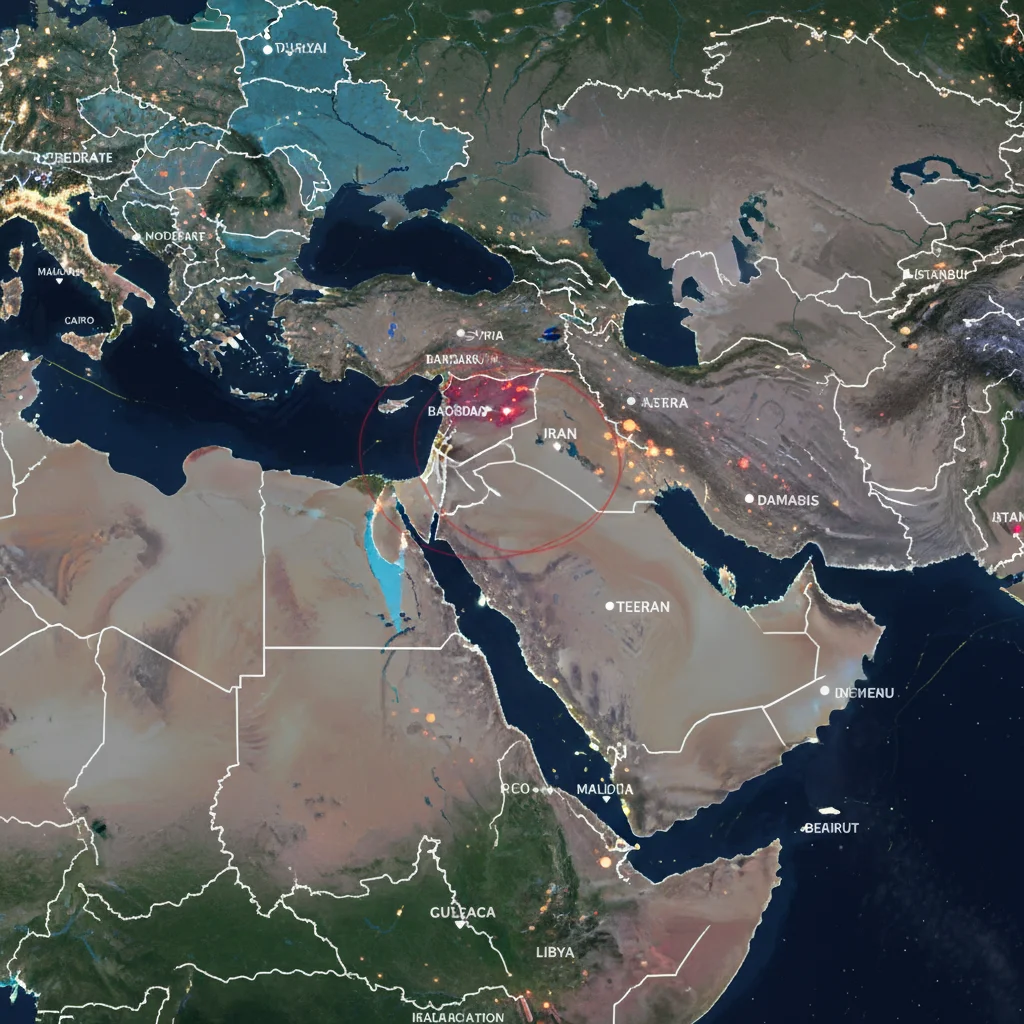
The path to a stable Syria is long and arduous. US Middle East Diplomacy will need to be patient, persistent, and pragmatic, recognizing that a comprehensive solution will require significant international coordination and a willingness from all parties to compromise. The immediate goal is to prevent further suffering and ensure that Syria does not become a haven for extremist ideologies.
Broader Strategic Considerations for US Middle East Diplomacy in 2026
Beyond these three specific conflicts, US Middle East Diplomacy in 2026 will operate within a broader strategic framework. This includes adapting to a multipolar world, managing great power competition, and responding to emerging threats and opportunities across the region.
Countering Malign Influence:
The U.S. will continue to counter the malign influence of state and non-state actors that seek to destabilize the region. This includes Iran’s ongoing support for proxy groups, which fuels regional conflicts and threatens maritime security. Diplomatic efforts will focus on strengthening regional security architectures, enforcing sanctions where appropriate, and supporting partners in defending against aggression.
Promoting Economic Integration and Development:
Economic stability is a cornerstone of peace. US Middle East Diplomacy will aim to promote economic integration, trade, and investment across the region. Initiatives like the Partnership for Global Infrastructure and Investment could be leveraged to support critical infrastructure projects, fostering economic growth and reducing the appeal of extremism. Encouraging diversification away from oil-dependent economies will also be a key focus.
Addressing Climate Change and Water Scarcity:
The Middle East is highly vulnerable to the impacts of climate change, including extreme heat, desertification, and water scarcity. These environmental challenges can exacerbate existing tensions and create new sources of conflict. U.S. diplomacy will increasingly integrate climate resilience and water management into its regional strategies, encouraging cooperation on resource sharing and sustainable development.
Human Rights and Governance:
While often challenging, the promotion of human rights, good governance, and democratic values will remain an important, albeit sometimes nuanced, aspect of U.S. diplomacy. The U.S. will seek to support civil society, advocate for political reforms, and encourage greater transparency and accountability in governance, recognizing that stable and legitimate governments are better positioned to address the needs of their populations and resist extremist ideologies.
Energy Security and Transition:
The Middle East remains vital for global energy security. US Middle East Diplomacy will continue to ensure the free flow of energy resources while also supporting regional partners in their transition towards cleaner energy sources. This duality acknowledges both immediate energy needs and long-term climate goals.
The Importance of Regional Partnerships
A central pillar of effective US Middle East Diplomacy in 2026 will be the strengthening and diversification of regional partnerships. The U.S. cannot, and should not, attempt to solve the region’s complex problems alone. Collaboration with key allies and partners is essential for sharing burdens, leveraging diverse perspectives, and achieving sustainable outcomes.
Key Partners Include:
- Gulf Cooperation Council (GCC) States: Collaboration on security, counter-terrorism, and economic development remains paramount. The U.S. will work to address ongoing tensions within the GCC and encourage greater regional cohesion.
- Jordan and Egypt: These long-standing allies play crucial roles in regional stability, particularly concerning the Israeli-Palestinian conflict and counter-terrorism efforts. U.S. support for their economic stability and security will continue.
- Iraq: Supporting Iraq’s sovereignty, stability, and its ability to resist external interference will be crucial for regional balance. U.S. diplomacy will focus on strengthening Iraqi institutions and its security forces.
- European Allies: Coordinating with European partners on issues such as the Iran nuclear deal, humanitarian aid, and political transitions in conflict zones will amplify diplomatic effectiveness.
The U.S. must demonstrate reliability and consistency in its engagements, avoiding abrupt policy shifts that can undermine trust and empower adversaries. Building strong, resilient partnerships requires sustained commitment and a willingness to listen to and understand the perspectives of regional actors.
Challenges and Opportunities for 2026
Looking ahead to 2026, US Middle East Diplomacy faces a complex array of challenges and opportunities:
Challenges:
- Evolving Geopolitical Landscape: The rise of new global powers and the shifting allegiances within the region mean that the U.S. must constantly adapt its strategies.
- Internal Instability: Many Middle Eastern nations face internal pressures from economic grievances, political repression, and social unrest, which can quickly spill over into regional conflicts.
- Proxy Warfare: The prevalence of proxy conflicts makes direct diplomatic engagement difficult and often requires indirect approaches to de-escalation.
- Information Warfare: The spread of disinformation and propaganda can exacerbate tensions and undermine diplomatic efforts.
Opportunities:
- Regional Integration: Despite conflicts, there is a growing recognition among some regional actors of the benefits of economic and security cooperation.
- Youth Demographics: A large youth population, if properly empowered and educated, can be a force for positive change and innovation.
- Technological Advancements: New technologies can offer solutions for resource management, economic development, and even conflict resolution.
- Shared Threats: Common threats like climate change, terrorism, and pandemics can create surprising avenues for cooperation.
The U.S. must be agile enough to seize these opportunities while effectively mitigating the challenges. This requires a proactive and adaptive diplomatic corps, supported by robust intelligence and analysis.
Conclusion: A Path Towards Lasting Stability
In 2026, US Middle East Diplomacy will be defined by its ability to navigate the intricate web of regional conflicts, from the Israeli-Palestinian stalemate to the humanitarian crisis in Yemen and the fragmentation of Syria. The pursuit of lasting stability demands a comprehensive, nuanced, and persistent approach. It involves not only addressing immediate crises but also fostering long-term economic development, promoting human rights, and strengthening regional partnerships.
The U.S. role in the Middle East is not merely about protecting its own interests; it is about contributing to a more peaceful and prosperous world. While the challenges are formidable, the commitment to diplomacy, coupled with strategic foresight and collaborative action, offers the best hope for transforming conflict into cooperation and instability into lasting peace. The success of US Middle East Diplomacy in 2026 will ultimately hinge on its capacity to adapt, innovate, and build bridges in a region that desperately needs them.