The digital landscape is in a constant state of flux, but few technologies have driven as much profound change as cloud computing. For US businesses, the cloud is no longer just an option; it’s the foundational bedrock for innovation, scalability, and competitive advantage. As we hurtle towards 2026, the pace of digital transformation is only accelerating, fueled by a new wave of advanced Cloud Computing Trends. These trends are not merely incremental improvements; they represent paradigm shifts that will redefine how enterprises operate, interact with customers, and leverage data.
Understanding these evolving Cloud Computing Trends is paramount for any US business looking to stay ahead of the curve. This comprehensive guide will dissect the top three trends poised to dominate the cloud sphere by 2026: the pervasive integration of Artificial Intelligence (AI) and Machine Learning (ML) into cloud services, the continued ascent of serverless computing, and the strategic expansion of edge computing. We will explore the nuances of each trend, their implications for various industries, and the actionable strategies businesses can adopt to harness their full potential. By aligning with these burgeoning trends, companies can unlock unprecedented efficiencies, foster groundbreaking innovation, and secure a resilient future in an increasingly digital world.
Anúncios
The Pervasive Integration of AI/ML into Cloud Services
The synergy between Artificial Intelligence (AI) and Machine Learning (ML) with cloud computing is arguably the most impactful of the current Cloud Computing Trends. What began as specialized services has now evolved into a pervasive integration, making AI/ML capabilities accessible and scalable for businesses of all sizes. By 2026, it’s expected that nearly every major cloud platform will offer a comprehensive suite of AI/ML tools, from pre-trained models to sophisticated development environments, democratizing AI for the enterprise.
Anúncios
AI-Powered Cloud Infrastructure Optimization
One of the immediate benefits of this integration is the optimization of cloud infrastructure itself. AI algorithms are increasingly being used to manage and optimize cloud resources, predicting usage patterns, dynamically allocating computing power, and even identifying potential security threats before they materialize. This leads to more efficient resource utilization, reduced operational costs, and enhanced system reliability. For US businesses, this means less time spent on infrastructure management and more resources dedicated to core business innovation.
Democratization of AI Development
The cloud has become the primary enabler for the democratization of AI. Cloud providers offer AI-as-a-Service (AIaaS) platforms that abstract away the complexities of underlying infrastructure, allowing developers and even non-technical business users to build, deploy, and scale AI models with relative ease. Services like Google Cloud AI Platform, AWS SageMaker, and Azure Machine Learning provide robust tools for data preparation, model training, evaluation, and deployment. This empowers businesses to integrate AI into their products and services without requiring a massive upfront investment in specialized hardware or highly skilled data scientists.
Enhanced Business Intelligence and Analytics
The integration of AI/ML with cloud data warehousing and analytics platforms is revolutionizing business intelligence. Cloud-native AI tools can process vast datasets at incredible speeds, identifying patterns, predicting future outcomes, and generating actionable insights that would be impossible for human analysts to uncover. From predictive sales forecasting and customer churn analysis to personalized marketing campaigns and fraud detection, AI-powered cloud analytics are transforming decision-making processes across industries. US businesses leveraging these capabilities gain a significant competitive edge by making data-driven decisions with greater accuracy and speed.
Industry-Specific AI Solutions
As Cloud Computing Trends mature, we are seeing a proliferation of industry-specific AI solutions built on cloud platforms. For instance, in healthcare, AI-powered cloud services are assisting with medical image analysis, drug discovery, and personalized treatment plans. In finance, they are enhancing algorithmic trading, risk assessment, and compliance. Manufacturing benefits from AI for predictive maintenance and quality control. These tailored solutions, often delivered as managed services, allow businesses to adopt cutting-edge AI without having to build everything from scratch, accelerating their digital transformation journeys.
Ethical AI and Governance in the Cloud
As AI becomes more integral, the focus on ethical AI and governance within cloud environments is intensifying. Cloud providers are developing tools and frameworks to help businesses ensure fairness, transparency, and accountability in their AI models. This includes features for bias detection, explainable AI (XAI), and robust data privacy controls. For US businesses, adhering to ethical AI principles is not just a regulatory requirement but also a critical factor in building customer trust and maintaining brand reputation.
The Ascent of Serverless Computing
Serverless computing, often misunderstood as ‘no servers,’ is one of the most transformative Cloud Computing Trends, fundamentally altering how applications are built and deployed. It’s not about the absence of servers, but rather the abstraction of server management away from the developer. In a serverless architecture, cloud providers dynamically manage server allocation and provisioning, allowing developers to focus solely on writing code (functions) that execute in response to specific events. By 2026, serverless will be a mainstream choice for a wide array of applications, moving beyond niche use cases to become a default for agile development.
Cost Efficiency and Scalability
The primary drivers behind the rapid adoption of serverless computing are its unparalleled cost efficiency and inherent scalability. Businesses only pay for the compute time their functions actually consume, eliminating the need to provision and pay for idle servers. This ‘pay-per-execution’ model can lead to significant cost savings, especially for applications with fluctuating or unpredictable traffic patterns. Furthermore, serverless platforms automatically scale resources up and down based on demand, ensuring applications can handle sudden spikes in traffic without manual intervention, a critical advantage for dynamic US businesses.
Faster Time to Market and Developer Productivity
Serverless computing significantly boosts developer productivity and accelerates time to market. By removing the burden of server management, patching, and scaling, developers can concentrate entirely on writing business logic. This streamlined development process allows teams to iterate faster, deploy new features more frequently, and respond quickly to market demands. For startups and enterprises alike, this agility is a key competitive differentiator in the fast-paced US market.
Event-Driven Architectures and Microservices
Serverless is a natural fit for event-driven architectures and microservices. Applications can be broken down into small, independent functions that communicate with each other through events. This modular approach enhances fault isolation, makes applications easier to develop and maintain, and allows different parts of an application to scale independently. This architectural pattern is ideal for building highly resilient and scalable applications, such as real-time data processing pipelines, chatbots, IoT backends, and API services.
Challenges and Considerations
Despite its advantages, serverless computing presents certain challenges. Vendor lock-in can be a concern, as serverless functions are often tied to specific cloud provider services. Debugging can also be more complex due to the distributed nature of serverless applications and the lack of direct server access. Furthermore, ‘cold starts’ – the latency incurred when a function is invoked after a period of inactivity – can impact performance for latency-sensitive applications. However, cloud providers are continuously addressing these issues, offering solutions like provisioned concurrency and improved observability tools to mitigate these drawbacks.
The Future of Serverless: Beyond FaaS
While Function-as-a-Service (FaaS) is the most recognizable form of serverless, the trend is expanding to encompass broader serverless offerings, including serverless containers (e.g., AWS Fargate, Google Cloud Run) and serverless databases (e.g., AWS Aurora Serverless, Azure Cosmos DB Serverless). This evolution suggests a future where more and more components of the application stack will be available in a serverless model, further abstracting infrastructure and allowing businesses to focus purely on application development and innovation.
The Strategic Expansion of Edge Computing
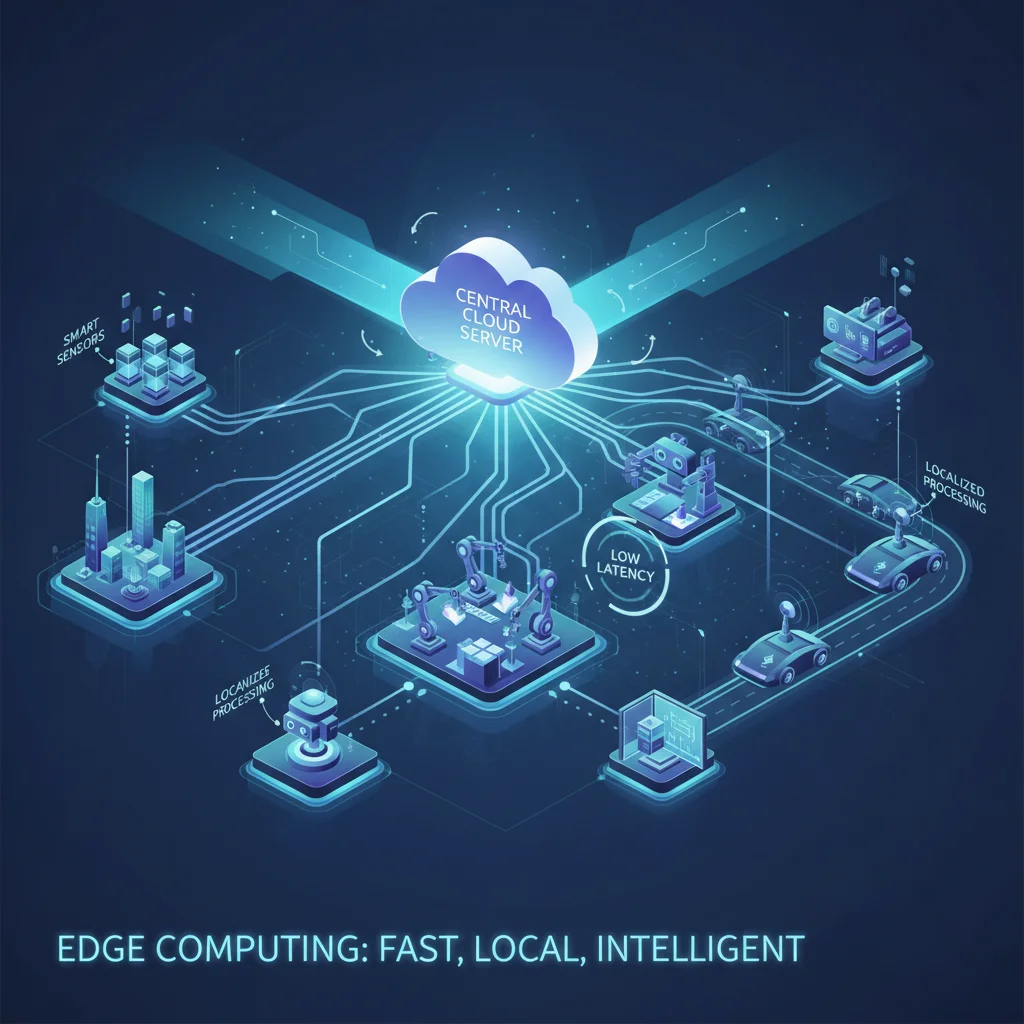
Complementing the centralized power of the cloud, edge computing is rapidly emerging as a critical component of modern IT infrastructure and one of the most impactful Cloud Computing Trends. Edge computing involves processing data closer to its source – the ‘edge’ of the network – rather than sending it all the way to a centralized cloud data center. This paradigm shift is driven by the explosive growth of IoT devices, the demand for real-time data processing, and the need for enhanced security and privacy. By 2026, edge computing will be indispensable for industries reliant on low-latency decision-making and localized data processing.
Addressing Latency and Bandwidth Constraints
The primary advantage of edge computing is its ability to significantly reduce latency. By processing data at the source, the round-trip time to a distant cloud data center is eliminated, enabling near real-time responses. This is crucial for applications where even milliseconds matter, such as autonomous vehicles, industrial automation, remote surgery, and augmented reality. Additionally, edge computing reduces the amount of data that needs to be transmitted to the cloud, alleviating bandwidth constraints and reducing data transfer costs, especially relevant for US businesses generating massive volumes of data from distributed operations.
Enhanced Security and Data Privacy
Processing data at the edge can also bolster security and privacy. Sensitive data can be analyzed and anonymized locally before any relevant insights are sent to the cloud, reducing the risk of data breaches during transit. For industries with stringent regulatory compliance requirements, such as healthcare and finance, edge computing offers a compelling solution for keeping sensitive data within defined geographical or organizational boundaries, aligning with evolving data privacy laws.
Use Cases Across Industries
Edge computing is finding diverse applications across various sectors in the US. In manufacturing, it enables predictive maintenance on factory floors by analyzing sensor data in real-time, preventing costly equipment failures. In retail, edge devices power smart stores, facilitating inventory management, personalized customer experiences, and immediate fraud detection. Smart cities leverage edge computing for traffic management, public safety, and environmental monitoring. Healthcare benefits from edge devices for remote patient monitoring and real-time analysis of medical data. The proliferation of 5G networks is further accelerating the adoption of edge computing, providing the high-speed, low-latency connectivity required for these applications.
Integration with Cloud and AI/ML
It’s important to note that edge computing doesn’t replace cloud computing; rather, it complements it. The edge processes immediate, time-sensitive data, while the cloud provides centralized storage, long-term analytics, and the computational power for training complex AI/ML models. Insights derived from the cloud can then be pushed back to edge devices to improve their local decision-making capabilities. This hybrid cloud-edge architecture is becoming the standard for modern distributed applications, creating an intelligent continuum from the edge to the core. AI/ML models, once trained in the powerful cloud, can be deployed to the edge for inferencing, bringing intelligent capabilities closer to the source of action.
Challenges and Future Outlook
Implementing edge computing comes with its own set of challenges, including managing a vast number of distributed devices, ensuring consistent security across the edge, and developing robust orchestration tools. However, as cloud providers extend their platforms to the edge (e.g., AWS Outposts, Azure Stack Edge, Google Anthos), these challenges are being addressed with integrated management solutions. The future of edge computing is bright, promising even more intelligent, autonomous, and responsive systems that will continue to shape the digital transformation of US businesses.
The Interplay and Synergy of These Trends
While we’ve discussed AI/ML in cloud, serverless computing, and edge computing as distinct Cloud Computing Trends, their true power lies in their synergistic interplay. These trends are not isolated; they are deeply interconnected, forming a cohesive ecosystem that drives comprehensive digital transformation. For US businesses, understanding this synergy is key to building resilient, scalable, and intelligent applications.
AI at the Edge, Powered by Serverless
Consider a scenario where AI models, trained in the centralized cloud, are deployed to edge devices for real-time inference. For example, a smart factory might use an edge AI model to detect defects on an assembly line. The processing at the edge ensures immediate action, preventing further errors. The deployment and management of these AI models on edge devices can be significantly streamlined using serverless functions. A serverless function could trigger an update to an edge AI model, or process the aggregated, anonymized data sent back from the edge to the cloud for further training and refinement of the AI model. This combination offers unparalleled agility and responsiveness.

Serverless as the Glue for Cloud-Native AI
Serverless computing often acts as the ‘glue’ for cloud-native AI applications. When building complex AI pipelines in the cloud, various steps—data ingestion, preprocessing, model training, and inference—can be orchestrated using serverless functions. For instance, a serverless function can be triggered whenever new data arrives in a cloud storage bucket, initiating an AI model training job. Another serverless function might handle the deployment of the trained model to an API gateway for consumption by other applications. This modularity, scalability, and cost-effectiveness make serverless an ideal backbone for sophisticated AI workloads.
Optimized Data Flow: Edge to Cloud, Cloud to Edge
The combined force of these Cloud Computing Trends creates an optimized data flow. Raw data is generated at the edge, where immediate, time-sensitive analysis occurs. Only relevant, filtered, or aggregated data is then sent to the cloud for deeper AI-driven analytics, long-term storage, and model retraining. Insights and updated AI models from the cloud are then pushed back to the edge, creating a continuous feedback loop that enhances the intelligence and autonomy of edge devices. This intelligent data management strategy minimizes latency, conserves bandwidth, and maximizes the value extracted from data at every point in the network.
Resilience and Business Continuity
The distributed nature fostered by edge and serverless computing, combined with AI-driven optimization, significantly enhances the resilience and business continuity of applications. If a central cloud region experiences an outage, edge devices can continue to operate autonomously for critical functions. Serverless architectures, by their very nature, are designed for high availability and fault tolerance, as individual functions can be independently scaled and failover seamlessly. AI-powered monitoring further detects and mitigates potential issues before they impact operations, ensuring greater uptime for US businesses.
Strategic Implications for US Businesses
The convergence of these Cloud Computing Trends presents both immense opportunities and strategic imperatives for US businesses. To thrive in this evolving landscape, companies must adopt a forward-thinking approach to their cloud strategy.
Embrace Hybrid and Multi-Cloud Architectures
The future is not about a single cloud, but a combination of public cloud, private cloud, and edge deployments. US businesses should plan for hybrid and multi-cloud architectures that allow them to leverage the best services from different providers while maintaining data sovereignty and optimizing workloads. This approach provides flexibility, avoids vendor lock-in, and enhances resilience.
Invest in AI/ML Capabilities
Businesses must actively invest in developing or acquiring AI/ML capabilities. This includes upskilling existing talent, hiring data scientists, and leveraging AIaaS platforms. Integrating AI into core business processes, from customer service to supply chain management, will be a key differentiator. The goal is to move beyond mere data collection to intelligent data utilization.
Adopt Serverless First for New Applications
For new application development, a ‘serverless-first’ mindset can yield significant benefits in terms of agility, scalability, and cost. While not every application is suitable for serverless, it should be the default consideration, especially for event-driven microservices, APIs, and real-time processing tasks. This will enable faster innovation cycles and more efficient resource allocation.
Develop an Edge Strategy
Businesses with distributed operations, IoT devices, or a need for real-time processing must develop a clear edge computing strategy. This involves identifying which workloads are best suited for the edge, how edge devices will be managed and secured, and how data will flow seamlessly between the edge and the cloud. Partnerships with telecommunications providers for 5G connectivity will also become increasingly important.
Focus on Data Governance and Security
As data proliferates across cloud and edge environments, robust data governance and security frameworks are non-negotiable. Businesses must ensure compliance with evolving data privacy regulations, implement strong encryption, and adopt zero-trust security models. The complexity of managing data across diverse environments necessitates comprehensive and automated security solutions.
Foster a Culture of Continuous Innovation
Ultimately, navigating these Cloud Computing Trends successfully requires a culture of continuous learning and innovation. Technology is evolving rapidly, and businesses must be agile enough to adapt. Encouraging experimentation, cross-functional collaboration, and a willingness to embrace new paradigms will be crucial for long-term success.
Conclusion
The year 2026 promises a cloud landscape that is more intelligent, distributed, and agile than ever before. The pervasive integration of AI/ML, the continued ascent of serverless computing, and the strategic expansion of edge computing are not just buzzwords; they are the fundamental Cloud Computing Trends that will underpin the next wave of digital transformation for US businesses. By understanding their individual strengths and their powerful synergy, enterprises can proactively shape their IT strategies to harness these technologies for competitive advantage.
Embracing these trends means more than just adopting new tools; it signifies a fundamental shift in how businesses approach innovation, operational efficiency, and customer engagement. Those US businesses that strategically invest in these areas, cultivate the necessary talent, and foster a culture of continuous adaptation will be best positioned to thrive in the dynamic, cloud-powered economy of the future. The journey towards a fully optimized, intelligent, and distributed cloud infrastructure is well underway, and the time for strategic action is now.