AI Adoption Wave: Master 3 Business Trends for a 25% Competitive Edge

Anúncios
The AI Adoption Wave: 3 Critical Business Trends U.S. Companies Must Master for a 25% Competitive Edge This Year
The landscape of global business is undergoing a profound transformation, driven by the accelerating AI adoption wave. For U.S. companies, this isn’t just another technological shift; it’s a pivotal moment demanding strategic foresight and decisive action. Those that proactively embrace and master the emerging AI business trends stand to gain a significant competitive edge, potentially boosting their market position by an astounding 25% within the year. Ignoring this wave is no longer an option; it’s a direct threat to long-term viability.
Anúncios
Artificial Intelligence, once a concept confined to science fiction, is now an indispensable tool for innovation, efficiency, and customer engagement. Its pervasive influence is reshaping industries from finance and healthcare to retail and manufacturing. This article delves into three critical AI business trends that U.S. enterprises must not only understand but actively integrate into their core strategies to thrive in this new era.
The stakes are incredibly high. Early adopters are already reporting substantial gains in productivity, cost reduction, and market share. Conversely, businesses hesitant to invest in AI risk being outmaneuvered by more agile, data-driven competitors. The goal isn’t merely to implement AI; it’s to strategically leverage it to solve complex problems, create new opportunities, and fundamentally redefine value propositions.
Anúncios
Understanding these trends requires more than just technical knowledge; it demands a holistic business perspective. It involves assessing current infrastructure, upskilling workforces, and fostering a culture of continuous innovation. The companies that navigate this AI adoption wave successfully will be those that view AI not as a standalone technology, but as an integral component of their overall business strategy.
Trend 1: Hyper-Personalization at Scale Through AI-Driven Customer Experience
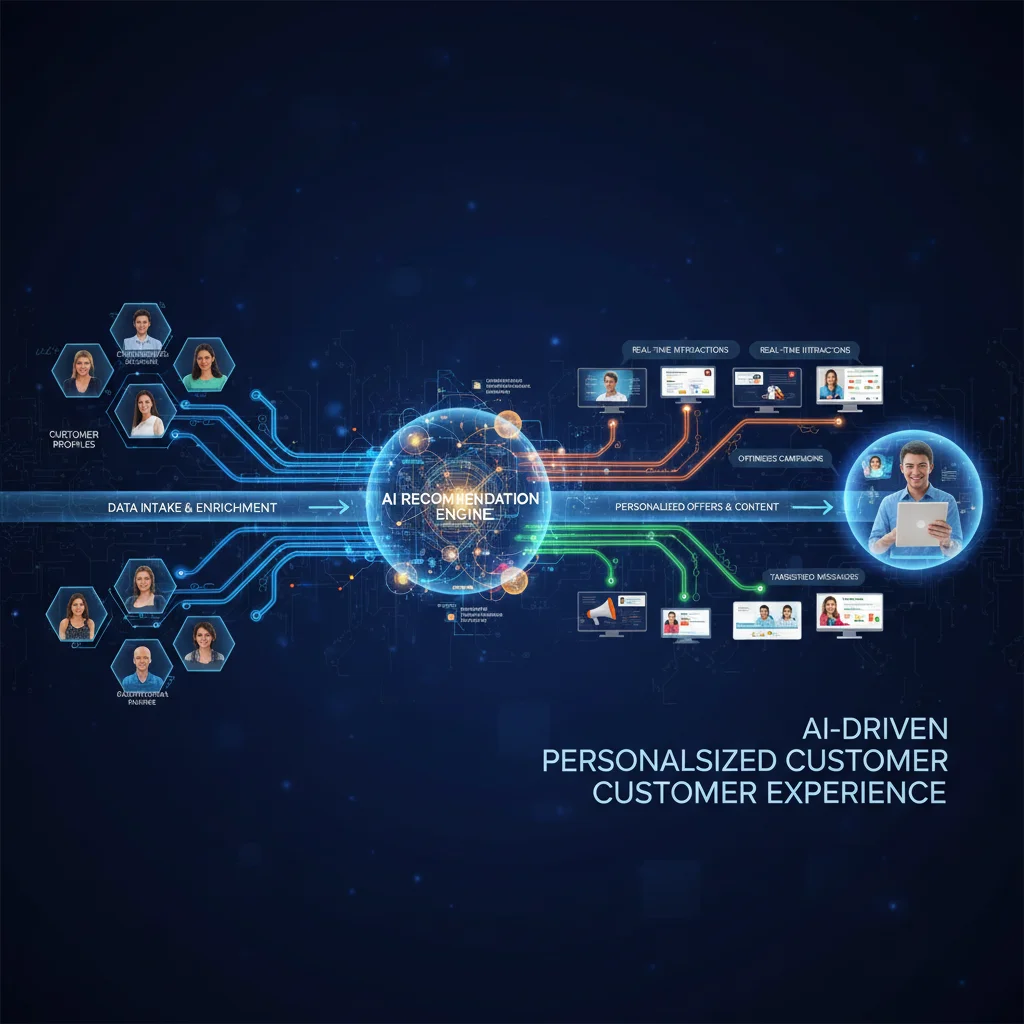
In today’s fiercely competitive market, generic customer experiences are a relic of the past. Consumers expect interactions that are not just personalized, but hyper-personalized—tailored precisely to their individual preferences, behaviors, and anticipated needs. This is where AI truly shines, enabling U.S. companies to deliver bespoke experiences at a scale previously unimaginable. This first of the critical AI business trends is revolutionizing how businesses connect with their clientele.
AI-driven hyper-personalization goes far beyond simply addressing customers by name. It involves sophisticated algorithms analyzing vast datasets, including purchase history, browsing behavior, social media interactions, and even sentiment analysis from customer service calls. This deep understanding allows businesses to:
- Deliver Predictive Recommendations: AI models can anticipate what a customer might want or need next, offering highly relevant product suggestions, content, or services before they even search for them. Think of streaming services suggesting your next binge-watch or e-commerce sites recommending complementary products.
- Automate Personalized Marketing: AI powers dynamic content generation and targeted advertising campaigns. Emails, website content, and ad placements can be automatically customized for each individual, increasing engagement and conversion rates. This level of precision ensures marketing spend is optimized for maximum impact.
- Enhance Customer Service with Intelligent Agents: Chatbots and virtual assistants, powered by natural language processing (NLP) and machine learning, can provide instant, personalized support 24/7. These AI agents can handle routine queries, guide customers through processes, and even anticipate follow-up questions, freeing human agents to focus on more complex issues.
- Optimize Pricing and Promotions: AI can analyze market demand, competitor pricing, and individual customer elasticity to offer personalized discounts or dynamic pricing strategies that maximize revenue and customer satisfaction.
For U.S. companies, mastering this trend means investing in robust data infrastructure, advanced analytics capabilities, and AI platforms that can integrate seamlessly across various customer touchpoints. The goal is to create a unified, intelligent customer journey that feels intuitive and uniquely crafted for each individual. A recent study indicated that companies leveraging AI for personalization saw a 15% increase in revenue within the first year. This demonstrates the tangible benefits of embracing this crucial aspect of the AI adoption wave.
The challenge lies in ensuring data privacy and ethical AI use while striving for personalization. Companies must be transparent about data collection and usage, building trust with their customers. Furthermore, the integration of AI should augment human capabilities, not replace the human touch where it’s most valued, especially in complex problem-solving or empathetic interactions. This nuanced approach is key to truly excelling in AI-driven customer experience.
Trend 2: AI-Driven Operational Efficiency and Automation Across the Enterprise
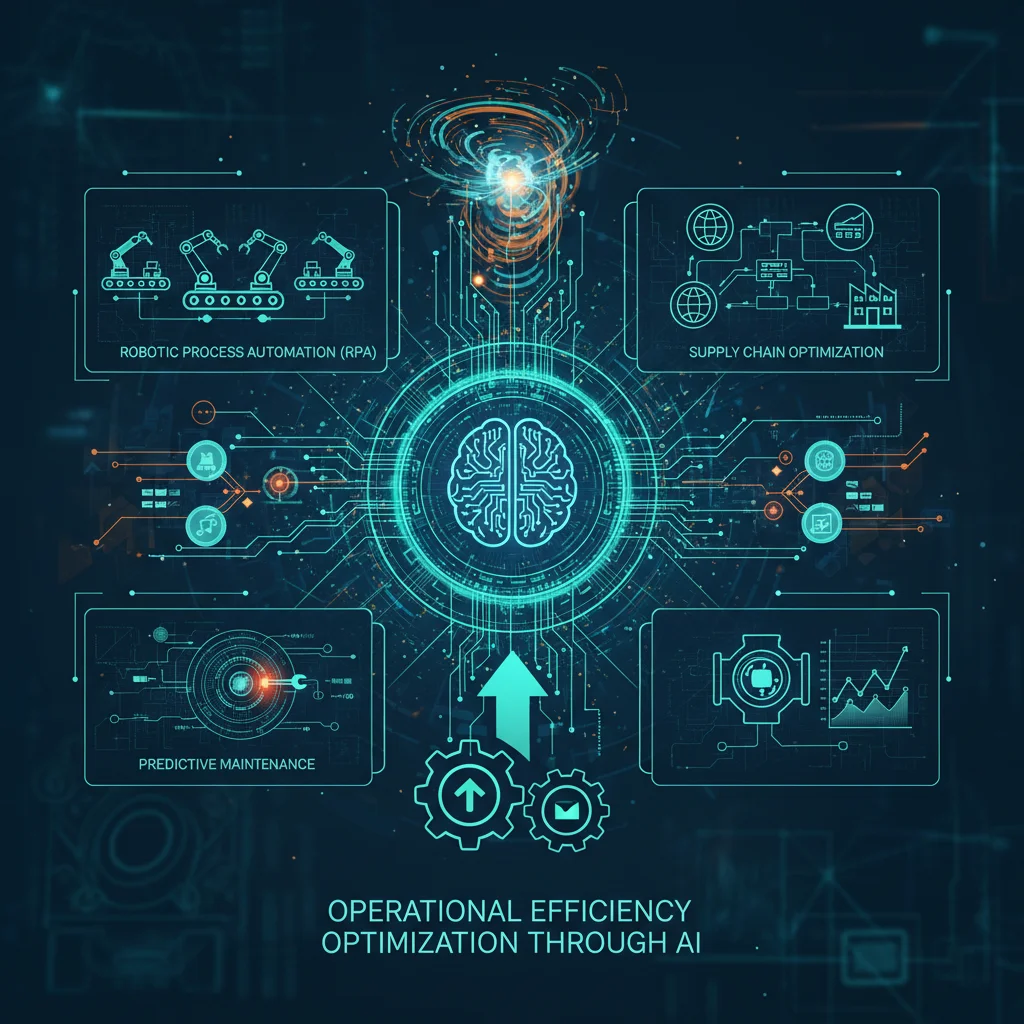
Beyond customer-facing applications, AI is profoundly transforming internal operations, driving unprecedented levels of efficiency and automation. This second critical AI business trends focuses on leveraging AI to streamline processes, reduce costs, and enhance productivity across every facet of a U.S. enterprise. The impact of this aspect of the AI adoption wave is felt directly on the bottom line.
From supply chain management to back-office functions, AI’s ability to process and analyze vast quantities of data at lightning speed allows for optimization that human analysis alone cannot achieve. Key areas where AI is making a significant difference include:
- Robotic Process Automation (RPA) with AI: While RPA automates repetitive, rule-based tasks, integrating AI (specifically machine learning and natural language processing) elevates it to ‘intelligent automation.’ This allows systems to handle unstructured data, learn from exceptions, and make more complex decisions, vastly expanding the scope of automation beyond simple tasks. This is crucial for sectors like finance, HR, and legal.
- Predictive Maintenance: In manufacturing and logistics, AI analyzes sensor data from machinery and vehicles to predict potential failures before they occur. This enables proactive maintenance, reducing downtime, extending asset lifespan, and preventing costly disruptions. This predictive capability directly translates into significant cost savings and improved operational continuity.
- Optimized Supply Chain Management: AI can forecast demand with greater accuracy, optimize inventory levels, identify potential supply chain risks, and even suggest alternative routes or suppliers in real-time. This leads to more resilient, cost-effective, and agile supply chains, a critical advantage in an increasingly volatile global market.
- Enhanced Cybersecurity: AI-powered systems can detect anomalies and identify potential cyber threats far more rapidly and accurately than traditional security measures. By continuously learning from new attack patterns, AI provides a robust defense against evolving cyber risks, protecting sensitive business data and maintaining operational integrity.
- Resource Optimization: AI can optimize energy consumption in facilities, manage workforce scheduling for maximum productivity, and even allocate computing resources more efficiently in cloud environments. These optimizations lead to substantial cost reductions and improved sustainability efforts.
Implementing AI for operational efficiency requires a careful assessment of existing workflows, identifying bottlenecks, and pinpointing areas where AI can deliver the most significant impact. It also necessitates a cultural shift towards embracing automation and empowering employees to work alongside AI tools, focusing on higher-value tasks. Companies that successfully integrate AI into their operational fabric report average efficiency gains of 20-30%, underscoring the immense potential of this trend.
The journey to AI-driven operational efficiency is iterative. It begins with pilot projects, gathering data, and refining models, gradually expanding AI’s role across the enterprise. The ultimate goal is to create a ‘smart enterprise’ where decisions are data-driven, processes are largely automated, and resources are utilized with peak effectiveness.
Trend 3: Data-Driven Decision Making and Strategic Insights Powered by Advanced AI Analytics
The third and perhaps most transformative of the critical AI business trends is the shift towards truly data-driven decision-making, facilitated by advanced AI analytics. In an era of information overload, the ability to extract meaningful, actionable insights from vast and complex datasets is the ultimate competitive differentiator. This aspect of the AI adoption wave empowers leaders to make smarter, faster, and more informed strategic choices.
Traditional business intelligence often relies on historical data and human interpretation, which can be slow and prone to bias. AI, particularly machine learning and deep learning, can analyze data with unparalleled speed and identify patterns, correlations, and anomalies that would be invisible to human analysts. This leads to:
- Predictive Analytics for Market Forecasting: AI models can analyze historical market data, economic indicators, social media trends, and geopolitical events to provide highly accurate forecasts for sales, demand, and market shifts. This allows U.S. companies to proactively adjust strategies, allocate resources, and seize emerging opportunities.
- Risk Management and Fraud Detection: AI excels at identifying unusual patterns in financial transactions, network activity, and customer behavior, making it an invaluable tool for detecting fraud, managing credit risk, and ensuring compliance. Its ability to process real-time data allows for immediate intervention, minimizing potential losses.
- Strategic Planning and Scenario Modeling: AI can simulate various business scenarios, testing the potential outcomes of different strategic decisions (e.g., launching a new product, entering a new market, adjusting pricing). This empowers executives to evaluate risks and rewards with greater precision, leading to more robust strategic plans.
- Personalized Employee Development and Talent Management: AI can analyze employee performance data, skill gaps, and career aspirations to recommend personalized training programs, optimize team compositions, and improve talent retention. This ensures a highly skilled and motivated workforce, crucial for sustained growth.
- Research and Development Acceleration: In fields like pharmaceuticals and materials science, AI can rapidly analyze vast scientific literature, simulate experiments, and identify promising avenues for research, significantly accelerating innovation cycles and bringing new products to market faster.
For U.S. businesses, embracing AI-driven strategic insights means fostering a data-first culture, investing in data science expertise, and implementing AI platforms capable of complex analytical tasks. It also requires leadership to trust and act upon the insights generated by AI, integrating them into the core decision-making processes. Companies that effectively harness AI for strategic insights consistently outperform their peers in market responsiveness, innovation, and long-term profitability.
The integration of AI into strategic decision-making isn’t about replacing human intuition, but augmenting it. AI provides the data-backed evidence and predictive power, while human leaders provide the context, ethical considerations, and creative problem-solving. This symbiotic relationship is the hallmark of a truly intelligent enterprise navigating the AI adoption wave.
Navigating the AI Adoption Wave: Challenges and Best Practices
While the benefits of mastering these AI business trends are clear, the path to successful AI adoption wave is not without its challenges. U.S. companies must proactively address several key hurdles to fully realize the 25% competitive edge:
- Data Quality and Governance: AI models are only as good as the data they’re trained on. Ensuring high-quality, clean, and well-governed data is foundational. Companies must invest in data management strategies, data cleansing tools, and robust governance frameworks to maintain data integrity and compliance.
- Talent Gap: There’s a significant shortage of skilled AI professionals—data scientists, machine learning engineers, and AI ethicists. Companies need to invest in upskilling their existing workforce, attracting top talent, and fostering partnerships with academic institutions or specialized AI consultancies.
- Ethical AI and Bias: AI systems can inherit biases present in their training data, leading to unfair or discriminatory outcomes. U.S. businesses must prioritize ethical AI development, implementing bias detection tools, ensuring transparency, and establishing clear ethical guidelines for AI deployment.
- Integration Complexity: Integrating new AI solutions with legacy systems can be complex and costly. A phased approach, starting with pilot projects and leveraging modular AI platforms, can help mitigate these challenges.
- Change Management: Introducing AI often means significant changes to workflows and job roles. Effective change management, clear communication, and employee training are crucial to ensure smooth transitions and foster acceptance rather than resistance.
To overcome these challenges and truly ride the AI adoption wave, U.S. companies should adopt several best practices:
- Start Small, Think Big: Begin with well-defined pilot projects that deliver tangible value quickly. This builds momentum and demonstrates ROI, making it easier to secure further investment for broader AI initiatives.
- Foster an AI-First Culture: Encourage experimentation, continuous learning, and cross-functional collaboration. Leadership must champion AI adoption and integrate it into the company’s strategic vision.
- Invest in Data Infrastructure: Build a robust, scalable data infrastructure that can support the demands of AI models, ensuring data accessibility, quality, and security.
- Prioritize AI Literacy: Provide training for employees at all levels, from basic AI awareness for the entire workforce to specialized skills for technical teams.
- Embrace Ethical AI Frameworks: Develop and adhere to clear ethical guidelines for AI development and deployment, ensuring fairness, transparency, and accountability.
- Seek External Expertise: Partner with AI experts, consultants, and technology providers to accelerate development, leverage cutting-edge solutions, and navigate complex implementation challenges.
The Future is AI-Driven: Secure Your 25% Competitive Edge
The AI adoption wave is not a distant future; it’s the present reality shaping the competitive landscape for U.S. companies. Mastering the three critical AI business trends—hyper-personalization, operational efficiency, and data-driven strategic insights—is no longer optional but imperative for sustained growth and market leadership. The potential to gain a 25% competitive edge is a powerful incentive, but it requires commitment, strategic investment, and a willingness to embrace transformative change.
Businesses that hesitate risk falling behind, losing market share to more agile, AI-powered competitors. Those that proactively engage, however, will unlock new levels of innovation, efficiency, and customer satisfaction, positioning themselves at the forefront of their industries. The journey into an AI-powered future is complex, but with a clear strategy, robust data foundations, and a culture of continuous learning, U.S. companies can confidently navigate this wave and emerge stronger, more resilient, and significantly more competitive.
It’s time for U.S. businesses to move beyond mere awareness of AI to active, strategic implementation. The opportunity to redefine success in the digital age is here, and AI is the key to unlocking that potential. Embrace the AI adoption wave, master these essential AI business trends, and secure your competitive future today.
About the Author: [Author Name/Company Name] is a leading expert in AI strategy and digital transformation, dedicated to helping U.S. businesses leverage cutting-edge technologies for sustainable growth and competitive advantage. Our insights empower organizations to navigate the complexities of the AI era with confidence and achieve measurable results.