U.S. Data Privacy Regulations 2026: A Business Compliance Guide
Anúncios
In an increasingly digital world, data has become the new oil, driving innovation, commerce, and communication. However, with this immense power comes significant responsibility, particularly regarding the privacy and protection of personal information. For businesses operating in the United States, the landscape of data privacy regulations is constantly evolving, presenting both challenges and opportunities. As we approach 2026, understanding and adhering to these complex legal frameworks is not merely a matter of good practice; it’s a critical imperative for survival and success. This comprehensive guide aims to demystify the intricacies of US Data Privacy 2026 regulations, providing businesses with the knowledge and tools necessary to achieve and maintain compliance.
Anúncios
The Evolving Landscape of US Data Privacy 2026
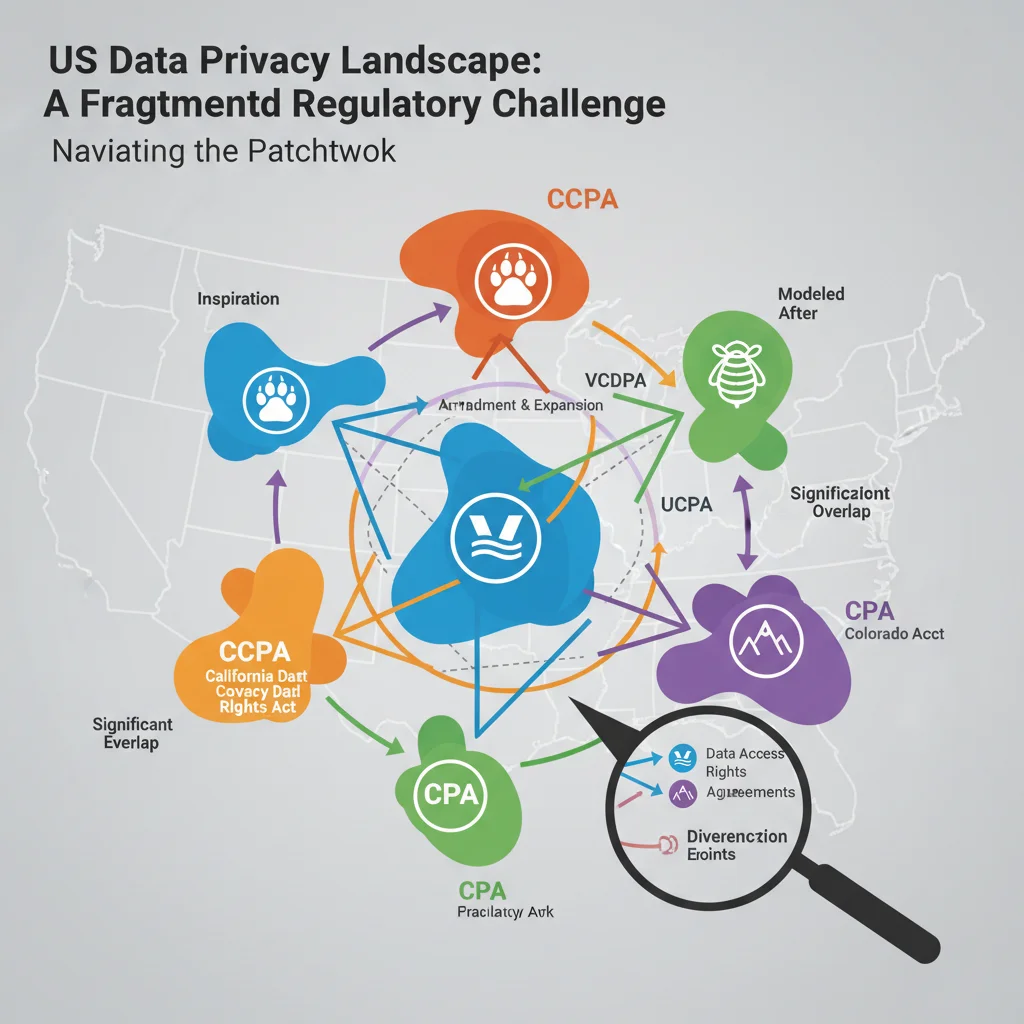
The United States, unlike the European Union with its unified General Data Protection Regulation (GDPR), operates under a patchwork of federal and state-specific data privacy laws. This fragmented approach means businesses must navigate a complex web of varying definitions, rights, and compliance requirements. By 2026, several key state laws will have matured, and new ones may be on the horizon, making proactive preparation essential for any organization handling U.S. consumer data.
Anúncios
Why is Data Privacy Compliance Crucial for Businesses?
The reasons for prioritizing US Data Privacy 2026 compliance extend far beyond avoiding hefty fines and legal repercussions. They encompass building consumer trust, protecting brand reputation, fostering ethical business practices, and even gaining a competitive edge. In an era where data breaches are common and consumers are increasingly aware of their privacy rights, a strong commitment to data protection can be a significant differentiator.
- Financial Penalties: Non-compliance can result in substantial monetary penalties, sometimes reaching millions of dollars, depending on the severity and scope of the violation.
- Reputational Damage: Data breaches and privacy violations can severely tarnish a company’s image, leading to a loss of customer loyalty and public trust.
- Legal Action: Businesses can face class-action lawsuits from affected individuals, leading to prolonged legal battles and significant settlement costs.
- Operational Disruptions: Investigating and remediating privacy incidents can consume significant resources, diverting attention from core business activities.
- Competitive Disadvantage: Companies with robust privacy practices can attract and retain customers who value data protection, positioning them favorably against less compliant competitors.
Key Federal and State Data Privacy Regulations for 2026
While a comprehensive federal data privacy law similar to GDPR remains a topic of debate in the U.S., several state laws have emerged as significant players, setting precedents and influencing the national conversation. Businesses must be acutely aware of these regulations and their implications for US Data Privacy 2026.
The California Privacy Rights Act (CPRA) – An Evolution of CCPA
The California Consumer Privacy Act (CCPA), enacted in 2018, was a landmark piece of legislation, often dubbed the “American GDPR.” However, the landscape evolved with the passage of the California Privacy Rights Act (CPRA), which significantly amended and expanded the CCPA, taking full effect in 2023 with enforcement beginning in July 2023. By 2026, the CPRA will be well-established, and businesses must ensure their compliance frameworks are robust enough to meet its stringent requirements.
Key provisions of CPRA relevant for US Data Privacy 2026:
- Expanded Consumer Rights: The CPRA introduced new consumer rights, including the right to correct inaccurate personal information, the right to limit the use and disclosure of sensitive personal information, and enhanced rights regarding automated decision-making technologies.
- Sensitive Personal Information: The CPRA defines “sensitive personal information” (SPI) to include data like racial or ethnic origin, religious or philosophical beliefs, union membership, genetic data, biometric data, health information, sexual orientation, and precise geolocation. Consumers have the right to limit the use and disclosure of their SPI.
- California Privacy Protection Agency (CPPA): The CPRA established a new dedicated agency, the CPPA, to enforce the law, conduct investigations, and issue regulations. This agency has significant power to levy fines and ensure compliance.
- Data Minimization and Storage Limitation: The CPRA introduces principles of data minimization and storage limitation, requiring businesses to collect only necessary data and retain it only for as long as reasonably necessary.
- Contractual Requirements: Service providers and contractors handling personal information on behalf of businesses are subject to stricter contractual obligations to ensure data protection.
Virginia Consumer Data Protection Act (VCDPA)
Effective January 1, 2023, the VCDPA grants Virginia consumers specific rights regarding their personal data and imposes obligations on businesses that control or process such data. Similar to CPRA, it emphasizes transparency and consumer control.
Key aspects of VCDPA for US Data Privacy 2026:
- Consumer Rights: Includes rights to access, delete, correct, and obtain a copy of personal data, as well as the right to opt out of the processing of personal data for targeted advertising, sale, or profiling.
- Data Protection Assessments: Businesses must conduct data protection assessments for certain processing activities that present a heightened risk of harm to consumers.
- Consent for Sensitive Data: The VCDPA requires obtaining affirmative consent from consumers before processing their sensitive personal data.
Colorado Privacy Act (CPA)
Also effective July 1, 2023, the CPA is another significant state-level privacy law. It shares many similarities with the VCDPA but also introduces its own nuances.
Key features of CPA for US Data Privacy 2026:
- Universal Opt-Out Mechanism: The CPA mandates that businesses recognize universal opt-out mechanisms by July 1, 2024, allowing consumers to exercise their opt-out rights automatically. This will be a critical compliance point for US Data Privacy 2026.
- Data Protection Assessments: Similar to VCDPA, businesses must conduct data protection assessments for high-risk processing activities.
- Processor Obligations: The CPA places specific obligations on data processors, requiring them to adhere to the controller’s instructions and implement appropriate security measures.
Utah Consumer Privacy Act (UCPA)
Effective December 31, 2023, the UCPA is considered more business-friendly than some of its counterparts, featuring a higher threshold for applicability and fewer explicit requirements for data protection assessments.
Key differentiators of UCPA for US Data Privacy 2026:
- Applicability Thresholds: Applies to businesses that control or process personal data of 100,000 or more consumers, or derive over 50% of their gross revenue from the sale of personal data and control or process personal data of 25,000 or more consumers.
- Opt-Out Rights: Grants consumers the right to opt out of the sale of their personal data and targeted advertising.
- No Private Right of Action: Unlike some other laws, the UCPA does not include a private right of action, meaning individuals cannot directly sue businesses for violations. Enforcement is handled by the Utah Attorney General.
Connecticut Data Privacy Act (CTDPA)
Effective July 1, 2023, the CTDPA closely mirrors the VCDPA and CPA in many respects, demonstrating a growing consensus among states on core privacy principles.
Key aspects of CTDPA for US Data Privacy 2026:
- Consumer Rights: Similar rights to access, delete, correct, and obtain a copy of personal data, and to opt out of targeted advertising, sale, or profiling.
- Consent for Sensitive Data: Requires clear affirmative consent for processing sensitive personal data.
- Right to Appeal: Consumers have the right to appeal a business’s decision regarding their privacy requests.
Potential Federal Data Privacy Legislation by 2026
While state laws are currently leading the charge, the possibility of a comprehensive federal data privacy law by 2026 cannot be entirely dismissed. Various proposals have been introduced in Congress, aiming to create a unified national standard. Should such legislation pass, it would significantly alter the compliance landscape, potentially preempting some state laws or setting a baseline for all businesses. Businesses should monitor these developments closely as they plan for US Data Privacy 2026.
Preparing Your Business for US Data Privacy 2026 Compliance
Achieving and maintaining compliance with the myriad of U.S. data privacy regulations requires a strategic, multi-faceted approach. It’s not a one-time project but an ongoing commitment to data governance and ethical data handling. Here are key steps businesses should take:
1. Conduct a Data Inventory and Mapping Exercise
Before you can protect data, you need to know what data you have, where it resides, and how it flows through your organization. This critical first step involves:
- Identifying Personal Data: Categorize all personal information collected, processed, and stored (e.g., names, addresses, email, IP addresses, sensitive data).
- Data Flow Mapping: Document how data is collected, used, stored, shared, and deleted throughout its lifecycle.
- Third-Party Data Sharing: Identify all third parties with whom you share data and understand their data handling practices.
- Data Classification: Classify data based on its sensitivity and regulatory requirements.
This exercise provides a foundational understanding necessary for addressing US Data Privacy 2026 requirements effectively.
2. Review and Update Your Privacy Policies and Notices
Transparency is a cornerstone of modern data privacy laws. Your privacy policies and notices must be clear, concise, easily accessible, and accurately reflect your data practices. Ensure they:
- Disclose Data Collection Practices: Clearly state what personal information is collected, the sources, and the purposes for collection.
- Outline Consumer Rights: Inform consumers of their rights (e.g., to access, delete, correct, opt-out) and provide clear instructions on how to exercise these rights.
- Explain Data Sharing: Detail if and how personal data is shared with third parties, including for targeted advertising or sale.
- Be Up-to-Date: Regularly review and update policies to reflect changes in regulations, business practices, or data processing activities.
3. Implement Robust Consent Management Systems
Many state laws, especially concerning sensitive data or specific processing activities like targeted advertising, require explicit consumer consent. Businesses need to:
- Obtain Valid Consent: Implement mechanisms to obtain clear, affirmative, and unambiguous consent where required.
- Record Consent: Maintain detailed records of consent, including when and how it was obtained.
- Allow Withdrawal of Consent: Provide easy-to-use mechanisms for consumers to withdraw their consent at any time.
A well-functioning consent management platform (CMP) can be invaluable for managing these requirements for US Data Privacy 2026.
4. Establish Processes for Handling Consumer Rights Requests
All major U.S. data privacy laws grant consumers various rights over their personal data. Businesses must have efficient and compliant processes in place to respond to these requests within specified timeframes:
- Develop Request Channels: Provide multiple, easily accessible channels for consumers to submit requests (e.g., web forms, toll-free numbers, email).
- Verify Identity: Implement robust identity verification procedures to ensure requests are legitimate and prevent unauthorized access to data.
- Track and Fulfill Requests: Establish clear workflows and systems to track, process, and fulfill requests for access, deletion, correction, and opt-out.
- Appeals Process: For laws like CTDPA, ensure an appeals process is in place for consumers who are unsatisfied with your response.
5. Enhance Data Security Measures
While data privacy focuses on rights and consent, data security is about protecting the data itself from unauthorized access, loss, or disclosure. Strong security is a foundational element of privacy compliance.
- Encryption: Encrypt personal data both in transit and at rest.
- Access Controls: Implement strict access controls based on the principle of least privilege.
- Regular Audits and Penetration Testing: Conduct regular security audits and penetration tests to identify and address vulnerabilities.
- Incident Response Plan: Develop and regularly test a comprehensive data breach incident response plan.
- Employee Training: Train employees on data security best practices and their role in protecting personal information.

6. Vet Third-Party Vendors and Service Providers
When you share personal data with third-party vendors (e.g., cloud providers, marketing agencies, analytics tools), you remain responsible for that data’s protection. By 2026, stricter contractual obligations will be the norm.
- Due Diligence: Conduct thorough due diligence on all vendors handling personal data.
- Data Processing Agreements (DPAs): Ensure robust DPAs are in place, clearly defining each party’s responsibilities, data protection measures, and audit rights.
- Ongoing Monitoring: Regularly monitor vendors for compliance with contractual obligations and security standards.
7. Appoint a Privacy Officer or Designate a Privacy Team
For many businesses, especially those handling large volumes of personal data, designating a dedicated individual or team to oversee data privacy efforts is crucial. This role involves:
- Developing and Implementing Policies: Creating and enforcing internal data privacy policies and procedures.
- Training Employees: Educating staff on data privacy best practices and regulatory requirements.
- Handling Consumer Requests: Managing and responding to consumer rights requests.
- Liaising with Regulators: Acting as a point of contact for regulatory inquiries.
- Staying Updated: Keeping abreast of evolving privacy laws and guidance, particularly for US Data Privacy 2026.
8. Conduct Data Protection Impact Assessments (DPIAs)
For high-risk processing activities, such as those involving sensitive data, profiling, or large-scale data collection, conducting DPIAs (also known as Data Protection Assessments in some state laws) is often a legal requirement. These assessments help identify and mitigate privacy risks before they materialize.
9. Implement a Continuous Monitoring and Auditing Program
Compliance is an ongoing journey, not a destination. Businesses should implement a program for continuous monitoring and regular auditing of their data privacy practices to ensure they remain compliant with US Data Privacy 2026 requirements.
- Internal Audits: Periodically review internal processes, policies, and systems.
- External Audits: Consider engaging third-party experts to conduct independent privacy audits.
- Stay Informed: Continuously track legislative updates, regulatory guidance, and enforcement actions.
The Intersection of US Data Privacy and Global Standards (e.g., GDPR)
Many U.S. businesses also operate internationally or serve customers abroad, bringing them under the purview of global privacy standards like the GDPR. While U.S. state laws share some common principles with GDPR, there are also significant differences. Businesses should aim for a privacy framework that is robust enough to meet the most stringent requirements, often using GDPR as a benchmark, to streamline compliance across various jurisdictions. Understanding how to bridge the gap between GDPR and evolving US Data Privacy 2026 regulations is crucial for global enterprises.
Challenges and Opportunities for US Businesses in 2026
The fragmented nature of U.S. data privacy laws presents a significant challenge for businesses, particularly small and medium-sized enterprises (SMEs) that may lack dedicated legal and compliance resources. The cost of compliance, the complexity of managing different state-specific requirements, and the risk of inconsistent enforcement are all real concerns.
However, this evolving landscape also presents opportunities:
- Enhanced Consumer Trust: Proactive compliance can build a reputation as a privacy-first organization, attracting and retaining privacy-conscious consumers.
- Operational Efficiency: Implementing strong data governance and management practices can lead to greater operational efficiency and better data quality.
- Innovation: A clear understanding of privacy boundaries can foster responsible innovation, encouraging the development of privacy-enhancing technologies and business models.
- Competitive Advantage: Businesses that master US Data Privacy 2026 compliance can differentiate themselves in the marketplace, appealing to partners and customers who prioritize data protection.
Conclusion: Navigating the Future of US Data Privacy 2026
The journey towards full compliance with US Data Privacy 2026 regulations is complex but essential. It requires a deep understanding of current and emerging laws, a commitment to implementing robust data governance practices, and a proactive approach to managing privacy risks. By taking the steps outlined in this guide – from conducting thorough data inventories to continuously monitoring the regulatory landscape – businesses can not only avoid penalties but also build stronger, more trustworthy relationships with their customers.
Data privacy is no longer just a legal issue; it’s a fundamental aspect of brand identity and consumer expectation. Embracing sound privacy practices will be a hallmark of successful businesses in the coming years. Start your preparation today to ensure your organization is well-positioned for the future of data privacy in the United States.