Fortifying Defenses: U.S. Corporations & Global Cybersecurity Threats 2026
Anúncios
Fortifying Defenses: U.S. Corporations & Global Cybersecurity Threats by June 2026
In an increasingly interconnected world, U.S. corporations find themselves at the forefront of a relentless digital battleground. The stakes have never been higher. From state-sponsored espionage to sophisticated ransomware gangs, the panorama of global cybersecurity threats is expanding in both scale and complexity. For any U.S. corporation, neglecting a robust corporate cybersecurity strategy is no longer an option; it’s a direct invitation to catastrophic financial losses, reputational damage, and operational paralysis. The urgency is paramount, and the deadline is clear: June 2026. This article delves into five actionable steps U.S. corporations must undertake to not only withstand the current wave of cyber-attacks but to build enduring cyber resilience for the future.
Anúncios
The Evolving Landscape of Global Cybersecurity Threats
Before we outline the solutions, it’s crucial to understand the adversary. The nature of global cybersecurity threats has undergone a profound transformation. What was once the domain of individual hackers has evolved into a highly organized, well-funded ecosystem of cybercriminals, nation-states, and activist groups. These entities leverage advanced persistent threats (APTs), AI-driven malware, supply chain attacks, and sophisticated social engineering tactics to breach even the most fortified defenses.
U.S. corporations are particularly attractive targets due to their wealth of intellectual property, sensitive customer data, and critical infrastructure dependencies. The geopolitical climate further exacerbates these risks, with cyber warfare becoming an increasingly common instrument in international conflicts. The lines between cybercrime and state-sponsored activity are blurring, making attribution and defense more challenging than ever. This complex environment necessitates a dynamic and proactive corporate cybersecurity strategy, one that is continuously adapting to new threats and vulnerabilities.
Anúncios
Key Threat Vectors to Consider:
- Ransomware 2.0: Beyond data encryption, attackers now exfiltrate data and threaten public release if demands aren’t met, adding a layer of extortion.
- Supply Chain Attacks: Compromising a single vendor can grant access to numerous downstream organizations, as seen with SolarWinds.
- AI-Powered Attacks: Adversaries are using AI to automate attack generation, develop polymorphic malware, and enhance social engineering campaigns.
- Insider Threats: Malicious or negligent insiders remain a significant vulnerability, often exploited through sophisticated phishing or social engineering.
- Zero-Day Exploits: Undiscovered vulnerabilities in software and hardware continue to be prime targets for sophisticated actors.
Understanding these vectors is the first step toward building an effective defense. The subsequent steps detail how U.S. corporations can proactively address these challenges and establish a resilient corporate cybersecurity strategy by June 2026.
Actionable Step 1: Implement a Zero Trust Architecture Across All Operations
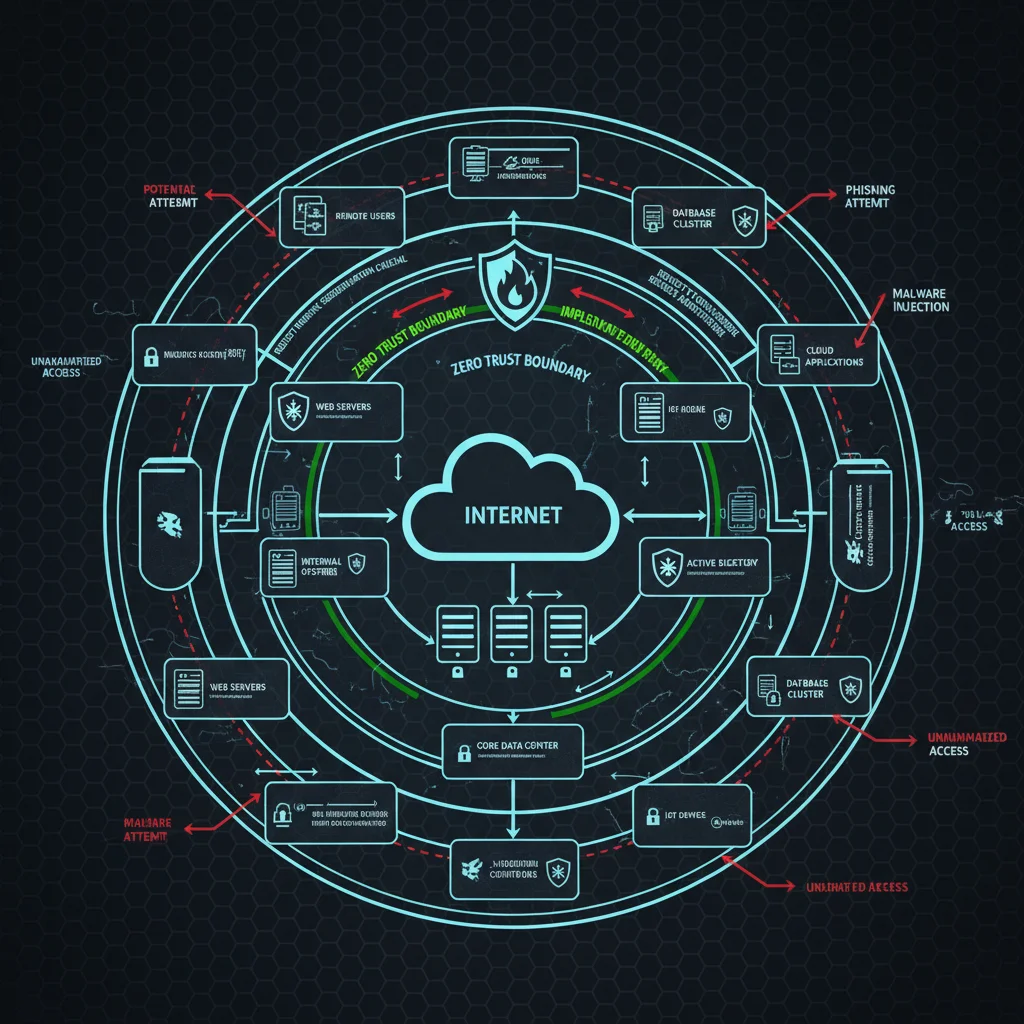
The traditional perimeter-based security model is obsolete. In today’s distributed and cloud-centric environments, the assumption that everything inside the network is trustworthy and everything outside is hostile is fundamentally flawed. The first and most critical step for U.S. corporations is to adopt a Zero Trust Architecture (ZTA). This paradigm operates on the principle of “never trust, always verify.” Every user, device, application, and data flow must be authenticated and authorized, regardless of its location relative to the corporate network.
Implementing ZTA is not a single product installation; it’s a strategic shift in how security is approached. It requires a comprehensive re-evaluation of network access controls, identity management, and data protection policies. By June 2026, U.S. corporations should aim to have a significant portion of their critical assets, applications, and user access governed by Zero Trust principles.
Components of a Robust Zero Trust Implementation:
- Strong Identity and Access Management (IAM): Multi-factor authentication (MFA) must be ubiquitous, not just for privileged accounts but for all users accessing corporate resources. Implement adaptive MFA based on context (location, device, time of day).
- Micro-segmentation: Break down the network into small, isolated segments. This limits lateral movement for attackers, preventing a breach in one segment from compromising the entire network.
- Least Privilege Access: Users and applications should only have access to the resources absolutely necessary for their function, and for the shortest possible time.
- Continuous Monitoring and Validation: All access requests should be continuously evaluated for legitimacy based on user behavior, device posture, and environmental factors.
- Data-Centric Security: Focus security controls directly on the data itself, regardless of where it resides. This includes encryption, data loss prevention (DLP), and data classification.
The benefits of ZTA are profound. It drastically reduces the attack surface, contains breaches more effectively, and provides a more granular level of control over sensitive data. While the journey to full ZTA can be complex, starting with critical assets and gradually expanding is a viable approach for any forward-thinking corporate cybersecurity strategy.
Actionable Step 2: Elevate Threat Intelligence and Proactive Hunting Capabilities
In the face of rapidly evolving global cybersecurity threats, a reactive defense is no longer sufficient. U.S. corporations must develop sophisticated threat intelligence capabilities and engage in proactive threat hunting. This means moving beyond simply blocking known threats to actively searching for unknown, undetected, and ongoing malicious activities within their networks.
By June 2026, organizations should integrate multiple sources of threat intelligence – including industry-specific feeds, government advisories, and dark web monitoring – into their Security Operations Center (SOC) operations. This intelligence should inform security controls, prioritize vulnerabilities, and guide threat hunting efforts. Proactive threat hunting, driven by hypotheses derived from threat intelligence, allows security teams to uncover sophisticated attacks that evade traditional detection mechanisms.

Key Elements for Enhanced Threat Intelligence and Hunting:
- Unified Threat Intelligence Platform: Consolidate and correlate data from various intelligence feeds to gain a holistic view of the threat landscape relevant to the corporation.
- Advanced Endpoint Detection and Response (EDR)/Extended Detection and Response (XDR): Deploy EDR/XDR solutions that provide deep visibility into endpoint activities, enabling rapid detection and response to suspicious behaviors.
- Security Information and Event Management (SIEM) Optimization: Ensure SIEM systems are properly configured to ingest, analyze, and correlate logs from all critical systems, leveraging threat intelligence for alert enrichment and prioritization.
- Dedicated Threat Hunting Team: Establish or outsource a team of skilled analysts whose primary role is to proactively search for indicators of compromise (IOCs) and indicators of attack (IOAs) that traditional security tools might miss.
- Behavioral Analytics: Implement tools that baseline normal user and system behavior to identify anomalies that could signify a compromise.
Investing in these areas transforms a defensive posture into an offensive one, allowing U.S. corporations to anticipate and neutralize threats before they inflict significant damage. This proactive stance is integral to a resilient corporate cybersecurity strategy.
Actionable Step 3: Fortify Supply Chain Security and Third-Party Risk Management
The weakest link in a corporation’s security often lies outside its direct control – within its supply chain. As global cybersecurity threats increasingly target third-party vendors and partners, U.S. corporations must significantly enhance their supply chain security and third-party risk management programs. A single compromised vendor can provide a backdoor into their entire ecosystem, as numerous high-profile breaches have demonstrated.
By June 2026, corporations should have a mature program for assessing, monitoring, and managing the cybersecurity risks posed by all third parties with access to their data or systems. This extends beyond direct vendors to include fourth and fifth parties where possible, understanding the cascading effect of risk throughout the supply chain.
Critical Steps for Supply Chain Security:
- Comprehensive Vendor Assessment: Implement rigorous cybersecurity assessments for all new and existing vendors, including security questionnaires, audits, and penetration testing.
- Contractual Security Requirements: Ensure all vendor contracts include explicit and enforceable cybersecurity clauses, mandating adherence to specific security controls, incident reporting, and audit rights.
- Continuous Monitoring of Third-Party Risk: Utilize third-party risk management (TPRM) platforms to continuously monitor vendors’ security postures, looking for vulnerabilities, data breaches, and compliance issues.
- Supply Chain Mapping: Understand the entire digital supply chain, identifying critical dependencies and potential points of failure.
- Due Diligence for Mergers & Acquisitions: Integrate cybersecurity risk assessment deeply into M&A due diligence to avoid inheriting significant vulnerabilities.
Securing the supply chain is a complex endeavor requiring collaboration and clear communication with partners. However, it is an indispensable component of a modern corporate cybersecurity strategy, protecting against one of the most insidious global cybersecurity threats.
Actionable Step 4: Invest in Human Capital and Security Awareness Training
Technology alone cannot solve the cybersecurity challenge. Humans remain the most significant vulnerability and, conversely, the most potent defense. Social engineering – including phishing, spear phishing, and pretexting – continues to be a primary attack vector for global cybersecurity threats. U.S. corporations must invest heavily in their human capital, transforming employees from potential weaknesses into a strong line of defense.
By June 2026, every U.S. corporation should have a sophisticated, ongoing security awareness and training program that goes beyond annual click-through modules. This program should be engaging, relevant to current threats, and tailored to different roles within the organization. Furthermore, attracting, retaining, and developing skilled cybersecurity professionals is paramount amidst a severe talent shortage.
Building a Cyber-Aware Workforce and Skilled Team:
- Dynamic Security Awareness Training: Implement continuous training that covers current threats, best practices, and organizational policies. This should include simulated phishing attacks, interactive modules, and regular communication from leadership.
- Role-Specific Training: Provide specialized training for high-risk employees (e.g., finance, IT, executives) and those handling sensitive data.
- Culture of Security: Foster a culture where security is everyone’s responsibility, encouraging employees to report suspicious activities without fear of reprisal.
- Cybersecurity Talent Development: Invest in upskilling existing IT staff and creating pathways for new talent. This includes certifications, mentorship programs, and competitive compensation packages.
- Incident Response Drills: Regularly conduct tabletop exercises and simulated cyberattacks to test the human element of the incident response plan and identify areas for improvement.
A well-trained and vigilant workforce is a formidable barrier against many global cybersecurity threats. Prioritizing human factors in your corporate cybersecurity strategy is an investment that yields significant returns.
Actionable Step 5: Develop and Regularly Test a Comprehensive Incident Response Plan
Despite best efforts, a breach is almost inevitable. The question is not “if” but “when.” Therefore, the ability to respond effectively and efficiently to a cyber incident is a cornerstone of any robust corporate cybersecurity strategy. A well-defined and regularly tested Incident Response Plan (IRP) can significantly mitigate the damage, reduce recovery time, and ensure business continuity in the face of global cybersecurity threats.
By June 2026, U.S. corporations must have a mature IRP that is integrated with their overall business continuity and disaster recovery plans. This plan should be clear, actionable, and understood by all relevant stakeholders, from technical teams to legal and public relations.
Components of an Effective Incident Response Plan:
- Preparation: Define roles and responsibilities, establish communication channels, acquire necessary tools, and develop playbooks for different incident types.
- Identification: Implement robust monitoring and detection systems to quickly identify security incidents. Define clear criteria for what constitutes an incident.
- Containment: Develop strategies to limit the scope and impact of an incident, such as isolating compromised systems, revoking access, and patching vulnerabilities.
- Eradication: Remove the threat from the environment, including malware removal, system hardening, and patching of exploited vulnerabilities.
- Recovery: Restore affected systems and data to normal operations, ensuring data integrity and system availability. This includes thorough testing before going live.
- Post-Incident Analysis (Lessons Learned): Conduct a thorough review after each incident (or drill) to identify root causes, evaluate the effectiveness of the response, and implement improvements to prevent recurrence.
- Communication Strategy: Outline clear protocols for internal and external communications, including legal obligations, regulatory reporting, and public relations.
Regular testing of the IRP through drills, tabletop exercises, and simulated attacks is crucial. This ensures that the plan is practical, that teams are proficient in their roles, and that any gaps are identified and addressed proactively. Without a well-exercised IRP, even the most advanced preventative measures can be undermined when a breach inevitably occurs, highlighting its importance in any corporate cybersecurity strategy.
Beyond 2026: The Continuous Journey of Cyber Resilience
While the focus on June 2026 provides a critical timeframe for implementing these actionable steps, it’s vital to recognize that cybersecurity is not a destination but an ongoing journey. The global cybersecurity threats landscape is dynamic, constantly evolving with new technologies, geopolitical shifts, and adversary tactics. Therefore, U.S. corporations must embed a culture of continuous improvement and adaptation within their corporate cybersecurity strategy.
Looking beyond the immediate horizon, organizations should also consider emerging technologies and methodologies that will further shape their defenses. This includes exploring the potential of quantum-resistant cryptography, advanced AI for anomaly detection and response, and deeper integration of security into the software development lifecycle (DevSecOps). Regulatory compliance, which is also constantly shifting, must remain a core consideration, as penalties for data breaches and non-compliance continue to escalate.
Ultimately, achieving cyber resilience means building an organization that can anticipate, withstand, recover from, and adapt to adverse cyber events. It requires executive leadership commitment, adequate resource allocation, cross-functional collaboration, and a fundamental understanding that cybersecurity is a business imperative, not merely an IT function.
Conclusion: A Call to Action for U.S. Corporations
The imperative for U.S. corporations to strengthen their defenses against global cybersecurity threats has never been more urgent. The five actionable steps outlined – implementing Zero Trust, elevating threat intelligence, fortifying supply chain security, investing in human capital, and developing robust incident response – form a foundational framework for a resilient corporate cybersecurity strategy.
The deadline of June 2026 is not merely an arbitrary date; it represents a critical window for organizations to make strategic investments and operational shifts that will determine their long-term viability in an increasingly hostile digital environment. Procrastination is a luxury no corporation can afford. By embracing these measures proactively and holistically, U.S. corporations can transform their cybersecurity posture from vulnerable to resilient, safeguarding their assets, reputation, and future in the face of ever-present global cybersecurity threats.