Supply Chain Resilience: 4 Critical Global Risks U.S. Businesses Must Address in 2026
Anúncios
Supply Chain Resilience: 4 Critical Global Risks U.S. Businesses Must Address in 2026
The global economic landscape is in perpetual flux, and for U.S. businesses, navigating the complexities of their supply chains has never been more challenging. As we look towards 2026, a confluence of interconnected global factors is poised to redefine the concept of supply chain resilience. The days of optimizing for cost and efficiency alone are long gone; today, the imperative is to build robust, agile, and transparent supply networks capable of withstanding unprecedented shocks.
Anúncios
This article delves into four critical global risks that U.S. businesses must proactively address to safeguard their operations and ensure sustained growth in 2026 and beyond. Understanding these challenges and implementing strategic mitigation measures will be paramount for any enterprise aiming to thrive in an increasingly volatile world. Our focus here is on identifying these key threats and outlining actionable strategies to enhance your business’s ability to cope with future disruptions, thereby building true supply chain resilience.
Anúncios
1. Escalating Geopolitical Tensions and Trade Wars
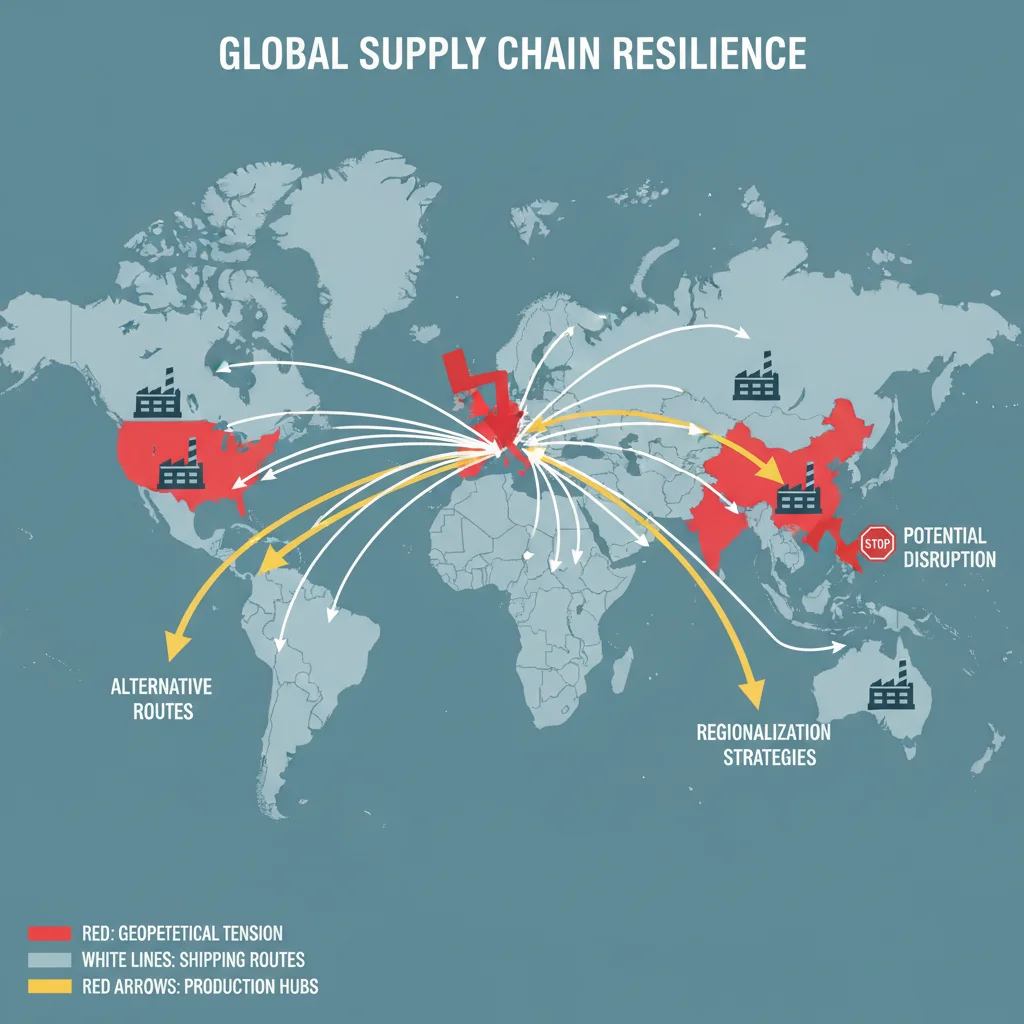
The geopolitical chessboard is more dynamic and unpredictable than ever before. For U.S. businesses, this translates into a heightened risk of disruptions stemming from international conflicts, trade disputes, and shifting alliances. Regions once considered stable sources of raw materials or manufacturing hubs can quickly become flashpoints, leading to sanctions, tariffs, export controls, and logistical nightmares. The ongoing tensions between major global powers, regional conflicts in key shipping lanes, and the rise of economic nationalism are all contributing to an environment where political decisions can have immediate and severe repercussions on global supply chain risks 2026.
The Impact on U.S. Supply Chains
Geopolitical instability can manifest in several ways:
- Tariffs and Trade Barriers: Sudden imposition of tariffs can significantly increase import costs, erode profit margins, and force businesses to re-evaluate their sourcing strategies.
- Export Controls and Sanctions: Restrictions on certain technologies or goods can cut off access to critical components or markets, leading to production delays or complete halts.
- Logistical Disruptions: Conflicts can close shipping routes, ground flights, or restrict land transport, causing delays, increased freight costs, and rerouting complexities.
- National Security Concerns: Governments may impose stricter regulations on foreign-owned entities or supply chain partners deemed a national security risk, adding layers of compliance and scrutiny.
- Resource Nationalism: Countries may prioritize domestic consumption of critical resources, limiting exports and driving up global prices for essential commodities.
Strategies for Mitigation and Resilience
To counter these geopolitical risks, U.S. businesses must adopt a multi-faceted approach:
- Diversification of Sourcing: Reduce reliance on single countries or regions for critical components and raw materials. Explore multiple suppliers across different geopolitical blocs to build redundancy.
- Regionalization/Nearshoring: Consider bringing production or sourcing closer to home (nearshoring) or to allied regions (friendshoring) to reduce exposure to distant geopolitical flashpoints and shorten lead times.
- Scenario Planning and War-Gaming: Develop detailed contingency plans for various geopolitical scenarios, including trade wars, regional conflicts, and sanctions. Regularly test these plans to ensure preparedness.
- Enhanced Visibility and Monitoring: Invest in tools and intelligence platforms that provide real-time insights into geopolitical developments and their potential impact on your supply chain.
- Building Strategic Stockpiles: For critical components with long lead times or high geopolitical risk, consider maintaining buffer stocks to absorb short-term disruptions.
- Government Relations and Lobbying: Engage with government bodies and industry associations to advocate for stable trade policies and gain early insights into potential policy shifts.
Proactive engagement with geopolitical intelligence and a willingness to adapt sourcing and manufacturing strategies are crucial for navigating these turbulent waters and ensuring supply chain resilience against escalating supply chain risks 2026.
2. Climate Change and Extreme Weather Events
The undeniable reality of climate change poses an increasingly severe threat to global supply chains. Extreme weather events – from devastating floods and prolonged droughts to intense hurricanes and unprecedented heatwaves – are becoming more frequent and severe, directly impacting infrastructure, agricultural output, and human capital. For U.S. businesses, these events can disrupt raw material supply, damage production facilities, impede transportation networks, and affect labor availability across the globe, significantly contributing to supply chain risks 2026.
Direct and Indirect Impacts
The effects of climate change on supply chains are far-reaching:
- Disruption to Raw Material Supply: Droughts can decimate agricultural yields, floods can destroy mining operations, and extreme temperatures can affect the extraction and processing of various raw materials.
- Damage to Infrastructure: Ports, roads, bridges, and energy grids are vulnerable to extreme weather, leading to transportation bottlenecks, power outages, and communication breakdowns.
- Manufacturing Interruptions: Factories located in affected regions may face closures due to direct damage, lack of utilities, or inability of workers to reach facilities.
- Labor Shortages: Extreme weather can displace populations, impact health, and make it unsafe for workers to perform their duties, leading to labor shortages.
- Increased Insurance Costs: As climate-related disasters become more common, insurance premiums for facilities and cargo are likely to rise.
- Regulatory Pressure: Governments worldwide are implementing stricter environmental regulations, impacting carbon footprints and sustainability requirements throughout the supply chain.
Building Climate-Resilient Supply Chains
Addressing climate change impacts requires a holistic approach focused on adaptation and mitigation:
- Climate Risk Assessments: Conduct thorough assessments to identify vulnerable points in your supply chain – from upstream suppliers to downstream distribution – based on projected climate scenarios.
- Sustainable Sourcing: Prioritize suppliers who demonstrate strong environmental stewardship, invest in renewable energy, and implement sustainable agricultural or manufacturing practices.
- Geographic Diversification: Similar to geopolitical risks, avoid concentrating critical suppliers or facilities in regions highly susceptible to specific climate hazards.
- Infrastructure Hardening: Encourage and potentially invest in making supplier facilities and transportation infrastructure more resistant to extreme weather events.
- Water Management Strategies: For water-intensive industries, develop strategies to mitigate water scarcity risks for both your operations and your suppliers.
- Logistics Optimization: Develop flexible logistics plans that can quickly adapt to disrupted routes. This might include multimodal transportation options and pre-identified alternative hubs.
- Early Warning Systems: Implement or subscribe to advanced weather forecasting and disaster warning systems to anticipate and respond to impending climate events.
- Circular Economy Principles: Embrace circular economy models to reduce reliance on virgin materials and minimize waste, thereby lessening environmental impact and resource vulnerability.
Integrating climate resilience into core business strategy is no longer optional; it is a fundamental requirement for navigating the supply chain risks 2026 landscape and ensuring long-term viability and supply chain resilience.
3. Cyberattacks and Data Breaches
As supply chains become increasingly digitized and interconnected, they also become more vulnerable to cyberattacks. A breach anywhere in the network – from a small third-party logistics provider to a major component manufacturer – can have cascading effects, disrupting operations, compromising sensitive data, and eroding trust. The sophistication and frequency of cyber threats are escalating, making cybersecurity a top concern for U.S. businesses aiming to mitigate supply chain risks 2026.
The Cyber Threat Landscape
Cyberattacks on supply chains can take various forms:
- Ransomware Attacks: These can cripple operational technology (OT) and information technology (IT) systems, halting production and logistics until a ransom is paid.
- Data Breaches: Theft of intellectual property, customer data, or operational secrets can lead to competitive disadvantages, regulatory fines, and reputational damage.
- Supply Chain Software Exploits: Malicious code injected into legitimate software updates or widely used platforms can compromise numerous downstream users.
- Phishing and Social Engineering: Human error remains a significant vulnerability, with employees being tricked into revealing credentials or installing malware.
- IoT Device Vulnerabilities: The proliferation of Internet of Things (IoT) devices in smart factories and logistics can create new entry points for attackers if not properly secured.
- Espionage: Nation-state actors or competitors may target supply chain partners to steal sensitive information or disrupt critical infrastructure.
Fortifying Digital Supply Chain Defenses
To build supply chain resilience against cyber threats, U.S. businesses must prioritize cybersecurity across their entire ecosystem:
- Comprehensive Risk Assessments: Identify critical digital assets and potential vulnerabilities within your own organization and across your extended supply chain partners.
- Vendor Security Management: Implement stringent cybersecurity requirements for all third-party suppliers and partners. Conduct regular audits and ensure compliance with industry best practices and certifications.
- Multi-Factor Authentication (MFA): Mandate MFA for all access points to critical systems and data, significantly reducing the risk of unauthorized access.
- Employee Training and Awareness: Regularly train employees on cybersecurity best practices, identifying phishing attempts, and understanding their role in protecting sensitive information.
- Incident Response Plan: Develop and regularly test a detailed incident response plan for cyberattacks, outlining communication protocols, recovery procedures, and forensic analysis.
- Network Segmentation: Isolate critical operational networks from general IT networks to limit the spread of malware in case of a breach.
- Data Encryption and Backup: Encrypt sensitive data both in transit and at rest, and maintain robust, offsite backup systems to ensure business continuity after an attack.
- Threat Intelligence Sharing: Participate in industry-specific threat intelligence sharing initiatives to stay informed about emerging cyber threats and vulnerabilities.
- Zero Trust Architecture: Implement a Zero Trust model, which assumes no user or device can be trusted by default, regardless of whether they are inside or outside the network perimeter.
A proactive and collaborative approach to cybersecurity is essential. Businesses must not only protect their own digital infrastructure but also ensure that their partners uphold equally high standards to mitigate the pervasive supply chain risks 2026 posed by cyber threats.

4. Economic Volatility and Inflationary Pressures
The global economy is currently characterized by significant volatility, marked by fluctuating demand, inflationary pressures, and interest rate hikes. For U.S. businesses, this economic instability can lead to unpredictable material costs, labor expenses, and transportation rates, making accurate forecasting and budgeting incredibly challenging. Managing these economic supply chain risks 2026 effectively is crucial for maintaining profitability and market competitiveness, and is a key component of supply chain resilience.
Manifestations of Economic Volatility
Economic headwinds impact supply chains in several ways:
- Inflation of Raw Material Costs: Global inflation can drive up the cost of commodities, components, and energy, directly impacting production costs.
- Labor Cost Increases: Wage inflation and labor shortages can lead to higher manufacturing and logistics expenses, particularly in regions with tight labor markets.
- Currency Fluctuations: Volatile exchange rates can make international sourcing and sales unpredictable, affecting profit margins and purchasing power.
- Interest Rate Hikes: Higher interest rates increase the cost of capital for inventory financing, infrastructure investments, and operational loans, impacting cash flow.
- Demand Swings: Rapid shifts in consumer demand, driven by economic uncertainty, can lead to overstocking or stockouts, resulting in wasted resources or lost sales.
- Increased Transportation Costs: Fuel price volatility and labor shortages in the logistics sector can significantly inflate shipping expenses.
- Recessionary Fears: The threat of global or regional recessions can lead to reduced consumer spending and business investment, impacting overall demand.
Strategies for Economic Resilience
Building economic resilience into the supply chain involves astute financial management and strategic planning:
- Flexible Sourcing Contracts: Negotiate contracts with suppliers that include clauses for price adjustments based on market indices, or explore long-term agreements for critical materials to lock in prices.
- Inventory Optimization: Implement advanced inventory management systems to balance the need for buffer stock against the costs of holding excess inventory, especially during periods of high interest rates.
- Cost-Benefit Analysis of Nearshoring/Reshoring: Re-evaluate the total cost of ownership for sourcing locations, factoring in transportation costs, labor rates, and geopolitical stability, which may favor closer-to-home options despite potentially higher unit costs.
- Hedging Strategies: Utilize financial instruments to hedge against currency fluctuations and commodity price volatility, protecting profit margins.
- Demand Forecasting Accuracy: Invest in advanced analytics and AI-driven forecasting tools to improve the accuracy of demand predictions, minimizing waste and optimizing production.
- Operational Efficiency: Continuously seek ways to improve internal operational efficiency, reduce waste, and streamline processes to offset rising external costs.
- Strong Supplier Relationships: Foster strong, transparent relationships with key suppliers, enabling open communication and collaborative solutions during economic downturns or inflationary periods.
- Diversified Customer Base: Reduce reliance on a single market or customer segment to mitigate the impact of localized economic downturns.
- Cash Flow Management: Implement robust cash flow forecasting and management practices to ensure liquidity and the ability to navigate economic shocks.
Navigating economic volatility requires agility, foresight, and a willingness to adapt financial and operational strategies. Businesses that master these aspects will be better positioned to manage the supply chain risks 2026 and emerge stronger.
Building Holistic Supply Chain Resilience for 2026 and Beyond
The four critical global risks – escalating geopolitical tensions, the impacts of climate change, pervasive cyberattacks, and significant economic volatility – are not isolated incidents. They are deeply interconnected, often exacerbating one another and creating a complex web of challenges for U.S. businesses. A geopolitical conflict can disrupt energy supplies, driving up costs and contributing to inflation, while also making certain regions more vulnerable to cyber espionage. Climate events can trigger mass migrations, impacting labor availability and adding to economic instability. The key to navigating this intricate landscape is to move beyond reactive problem-solving and embrace a holistic, proactive approach to supply chain resilience.
Achieving true resilience by 2026 demands a fundamental shift in mindset and investment. It requires:
- Integrated Risk Management: Instead of siloed risk assessments, businesses need a unified framework that considers how different risks interact and amplify each other. This involves cross-functional teams and comprehensive data analytics.
- Enhanced Visibility and Transparency: You cannot manage what you cannot see. Investing in technology that provides end-to-end visibility across your entire supply chain, including sub-tier suppliers, is paramount. This includes real-time tracking, data sharing platforms, and AI-powered predictive analytics.
- Strategic Partnerships: Collaboration is key. Building stronger, more transparent relationships with suppliers, logistics providers, and even competitors (in certain contexts like industry-wide threat intelligence sharing) can create a more robust ecosystem.
- Agile and Adaptable Operations: Supply chains must be designed for flexibility. This means having the ability to quickly re-route shipments, switch suppliers, ramp up or down production, and adapt to changing market conditions without significant downtime.
- Sustainability at the Core: Integrating environmental, social, and governance (ESG) principles throughout the supply chain not only meets regulatory and consumer demands but also builds inherent resilience against climate-related disruptions and reputational risks.
- Talent Development: Investing in a skilled workforce capable of understanding and managing complex supply chain dynamics, data analytics, and emerging technologies is crucial.
The imperative to address these supply chain risks 2026 is not merely about avoiding disruption; it’s about seizing opportunities. Businesses that proactively build robust and adaptable supply chains will not only mitigate losses but also gain a significant competitive advantage. They will be better positioned to serve customers reliably, innovate faster, and maintain profitability even in the face of global uncertainty. The future belongs to the resilient.
Conclusion: A Call to Action for U.S. Businesses
The next few years will test the mettle of U.S. businesses like never before. The convergence of geopolitical instability, climate change, cyber threats, and economic volatility presents a formidable challenge to global supply chains. However, by understanding these critical supply chain risks 2026 and committing to strategic investments in supply chain resilience, businesses can transform potential vulnerabilities into sources of strength.
The time for incremental changes is over. A fundamental re-imagining of supply chain strategies, prioritizing diversification, technological integration, sustainability, and collaborative partnerships, is essential. Those who embrace this challenge will not only safeguard their operations but also pave the way for a more secure, sustainable, and prosperous future.
Are you prepared to build a supply chain that can truly withstand the shocks of 2026 and beyond? The journey towards ultimate resilience starts now.