Mastering Cyber Threat Response: A 3-Month Strategic Plan for 2026
In an increasingly interconnected world, the landscape of cyber threats evolves at an alarming pace. Organizations, regardless of size or industry, face a relentless barrage of sophisticated attacks designed to compromise data, disrupt operations, and erode trust. The year 2026 promises even more advanced and elusive threats, making a robust cyber threat response strategy not just an advantage, but a fundamental necessity for survival and sustained growth. This comprehensive guide outlines a strategic 3-month action plan to fortify your defenses, enhance your detection capabilities, and streamline your response mechanisms, ensuring your organization is well-prepared to navigate the complexities of the future cyber landscape.
The stakes have never been higher. From ransomware gangs employing double extortion tactics to nation-state actors engaging in sophisticated espionage, the sheer volume and diversity of threats demand a proactive and adaptive approach. Relying on outdated security measures or a reactive mindset is no longer viable. Our 3-month plan is meticulously designed to transform your organization’s security posture, moving from a position of vulnerability to one of resilience and rapid recovery. We will delve into critical phases, each building upon the last, to ensure a holistic and effective enhancement of your cyber threat response capabilities.
Anúncios
Month 1: Foundation Building and Threat Intelligence Integration
The first month of our cyber threat response plan focuses on establishing a strong foundation. This involves a thorough assessment of your current security posture, identifying critical assets, and integrating cutting-edge threat intelligence to gain foresight into emerging risks. Without a clear understanding of what you need to protect and what you’re up against, any subsequent efforts will be less effective.
Anúncios
Week 1-2: Comprehensive Security Audit and Asset Identification
The journey begins with a deep dive into your existing infrastructure and security practices. This isn’t just about ticking boxes; it’s about understanding the nuances of your digital ecosystem.
- Current State Assessment: Conduct a thorough audit of your existing cybersecurity controls, policies, and procedures. This includes reviewing firewalls, intrusion detection/prevention systems (IDS/IPS), endpoint detection and response (EDR) solutions, security information and event management (SIEM) systems, and data loss prevention (DLP) tools. Identify gaps, redundancies, and areas requiring immediate attention. Engage third-party security auditors if internal resources are limited or to gain an objective perspective.
- Critical Asset Identification: Not all assets are created equal. Identify and categorize your organization’s most critical data, systems, and applications. This includes intellectual property, customer data, financial records, operational technology (OT) systems, and any infrastructure whose compromise would severely impact business operations. Prioritize protection efforts based on the criticality and sensitivity of these assets. Implement a robust asset management system if one isn’t already in place, ensuring all hardware and software components are tracked and their security configurations are continuously monitored.
- Vulnerability Scanning and Penetration Testing: Perform regular vulnerability scans across your entire network, including web applications, servers, and cloud environments. Follow up with targeted penetration testing to simulate real-world attacks and identify exploitable weaknesses that automated scans might miss. This proactive approach helps you discover vulnerabilities before malicious actors do. Document all findings and prioritize remediation based on severity and potential impact.
- Compliance Review: Assess your compliance with relevant industry regulations (e.g., GDPR, HIPAA, PCI DSS) and internal security policies. Non-compliance often indicates security weaknesses that could be exploited. Ensure that your cyber threat response plan aligns with and supports these regulatory requirements.
Week 3-4: Advanced Threat Intelligence Integration and Analysis
Once you understand your own vulnerabilities, the next step is to understand your adversaries. Threat intelligence is the cornerstone of proactive defense.
In the evolving landscape of 2026, threat intelligence goes beyond simple blacklists. It involves predictive analytics, behavioral analysis, and understanding attacker methodologies. Organizations must invest in sophisticated platforms and cultivate internal expertise to effectively leverage this data.
- Source Identification and Subscription: Identify and subscribe to reputable threat intelligence feeds. This includes commercial providers, industry-specific information sharing and analysis centers (ISACs/ISAOs), government advisories (e.g., CISA, ENISA), and open-source intelligence (OSINT) platforms. Focus on sources that provide actionable intelligence relevant to your industry and threat profile.
- Integration with Security Tools: Integrate threat intelligence feeds directly into your SIEM, EDR, firewalls, and other security solutions. This automation allows your systems to automatically detect and block known malicious IPs, domains, and file hashes, significantly reducing the manual effort required for initial threat detection. Configure alerts based on specific threat indicators that are pertinent to your organization’s risk profile.
- Building an Internal Threat Intelligence Capability: While external feeds are crucial, developing an internal capability to analyze and contextualize threat intelligence is paramount. Train security analysts to understand attacker tactics, techniques, and procedures (TTPs). Encourage participation in threat intelligence communities and forums. This internal expertise allows for a more nuanced understanding of threats and tailored defense strategies.
- Proactive Threat Hunting: Utilize threat intelligence to proactively hunt for threats within your network that may have bypassed initial defenses. This involves searching for indicators of compromise (IOCs) and indicators of attack (IOAs) that align with current threat trends. Proactive threat hunting is a critical component of a mature cyber threat response program, moving beyond reactive detection.
Month 2: Developing and Enhancing Incident Response Capabilities
With a solid foundation and integrated threat intelligence, Month 2 shifts focus to developing and refining your incident response plan. A well-defined plan ensures that when an incident occurs, your team can react swiftly, minimize damage, and restore operations efficiently. This phase is about preparation, documentation, and team readiness.
Week 5-6: Incident Response Plan (IRP) Development and Documentation
An IRP is your organization’s playbook for handling cyber incidents. It must be detailed, actionable, and regularly updated.
The IRP should not be a static document. It’s a living guide that needs continuous refinement based on new threat intelligence, post-incident reviews, and changes in organizational infrastructure. Its clarity and accessibility are paramount during a crisis.
- Establish an Incident Response Team (IRT): Define clear roles and responsibilities for your IRT. This team should include representatives from IT, legal, communications, human resources, and senior management. Assign a lead incident responder and ensure everyone understands their duties during an incident. Cross-training is essential to ensure continuity if key personnel are unavailable.
- Develop a Comprehensive IRP: Document a step-by-step plan for handling various types of cyber incidents (e.g., ransomware, data breaches, DDoS attacks, insider threats). The plan should cover all phases: preparation, identification, containment, eradication, recovery, and post-incident review. Include communication protocols for internal and external stakeholders, legal considerations, and reporting requirements.
- Define Communication Strategies: Outline clear communication channels and strategies for different incident scenarios. Who needs to be informed, by what means, and how quickly? Prepare pre-approved templates for internal notifications, customer communications, and public statements to ensure consistent messaging during a crisis.
- Legal and Regulatory Compliance: Integrate legal counsel and regulatory compliance experts into your IRP development. Ensure the plan addresses data breach notification laws, privacy regulations, and any industry-specific reporting obligations. Understanding these requirements beforehand can prevent costly penalties and reputational damage.
Week 7-8: Tooling, Automation, and Playbook Creation
Effective incident response relies not just on people and processes, but also on the right tools and automated workflows.
Automation in cyber threat response is no longer a luxury but a necessity. Security orchestration, automation, and response (SOAR) platforms can drastically reduce response times and human error, allowing security teams to focus on more complex, strategic tasks. Playbooks provide the necessary structure for these automated processes.
- Implement and Optimize SOAR Platforms: Deploy Security Orchestration, Automation, and Response (SOAR) platforms to automate routine incident response tasks. This includes automated alert triage, data enrichment, threat containment actions (e.g., blocking IPs, isolating endpoints), and integration with other security tools. SOAR can significantly reduce response times and free up security analysts for more complex investigations.
- Develop Incident Playbooks: Create detailed playbooks for common incident types. These playbooks are step-by-step guides that outline specific actions to be taken, tools to be used, and communication protocols for each scenario. Playbooks ensure consistency, reduce decision-making time during stress, and serve as training materials for new IRT members.
- Forensic Tools and Capabilities: Ensure your IRT has access to and proficiency with forensic tools for evidence collection and analysis. This includes disk imaging tools, memory analysis tools, network traffic analysis tools, and log management systems. Proper forensic capabilities are crucial for understanding the scope of an attack and for legal proceedings.
- Secure Communication Channels: Establish secure, out-of-band communication channels for the IRT to use during an incident. This ensures that even if primary communication systems are compromised, the team can still coordinate their response effectively.
Month 3: Training, Simulation, and Continuous Improvement
The final month focuses on validating your plan through rigorous testing, continuous training, and establishing a culture of ongoing improvement. A plan is only as good as its execution, and execution requires practice.
Week 9-10: Tabletop Exercises and Incident Response Drills
Simulations are invaluable for identifying weaknesses in your plan and preparing your team for real-world scenarios.
These exercises are not about finding fault, but about fostering a learning environment. They expose blind spots, clarify roles, and build muscle memory for critical response actions. Regular drills are a hallmark of a mature cyber threat response capability.

- Tabletop Exercises: Conduct tabletop exercises with your IRT and relevant stakeholders. Present realistic incident scenarios and walk through the IRP step-by-step. These exercises help identify gaps in communication, decision-making processes, and resource allocation without the pressure of a live event. Document all observations and areas for improvement.
- Full-Scale Incident Response Drills: Progress to full-scale drills that simulate an actual cyber attack. This involves engaging your security tools, practicing containment procedures, and testing communication protocols under simulated stress. These drills can be conducted internally or with the help of external cybersecurity firms specializing in red team/blue team exercises.
- Post-Exercise Analysis: After each exercise, conduct a thorough debriefing. Analyze what went well, what could be improved, and update your IRP and playbooks accordingly. This iterative process of testing and refining is crucial for continuous improvement in your cyber threat response.
- Employee Awareness Training: Extend training beyond the IRT. Conduct regular cybersecurity awareness training for all employees, focusing on recognizing phishing attempts, safe browsing habits, and reporting suspicious activities. A well-informed workforce is your first line of defense.
Week 11-12: Post-Incident Review Framework and Continuous Improvement
The final stage of our 3-month plan establishes mechanisms for ongoing learning and adaptation.
The cyber threat landscape is dynamic. What works today might be obsolete tomorrow. A robust cyber threat response strategy embraces continuous learning, adaptation, and improvement as core tenets. This ensures that your defenses evolve as rapidly as the threats themselves.
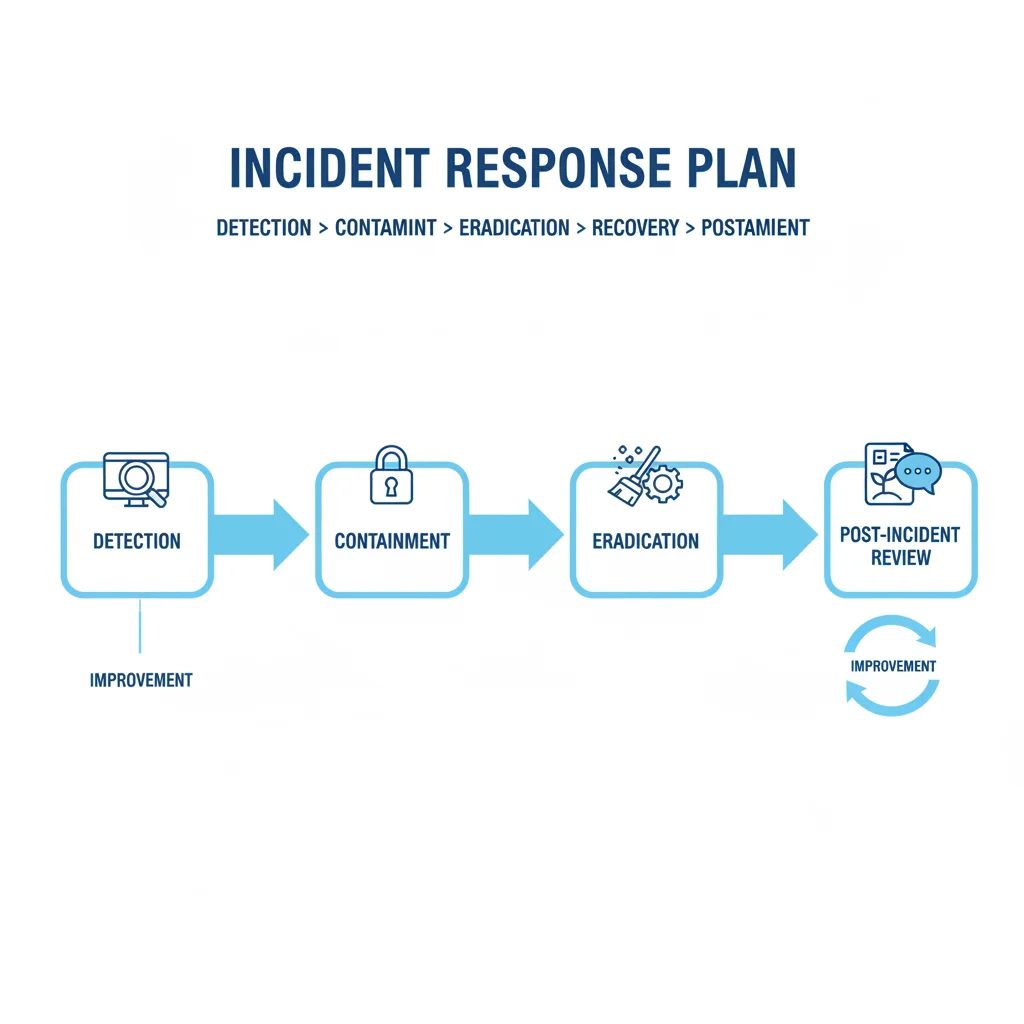
- Develop a Post-Incident Review (PIR) Framework: Create a formal process for conducting post-incident reviews after every real or simulated incident. The PIR should identify the root cause of the incident, assess the effectiveness of the response, quantify the impact, and recommend corrective actions. This framework is vital for turning incidents into learning opportunities.
- Metrics and Reporting: Establish key performance indicators (KPIs) and metrics to measure the effectiveness of your cyber threat response capabilities. This includes metrics like mean time to detect (MTTD), mean time to respond (MTTR), mean time to contain (MTTC), and the number of successfully mitigated incidents. Regularly report these metrics to senior management to demonstrate ROI and inform future security investments.
- Regular Updates to IRP and Playbooks: Schedule regular reviews and updates for your IRP, playbooks, and security policies. This should be done annually, or more frequently if there are significant changes in your IT environment, business operations, or the threat landscape. Incorporate lessons learned from PIRs and new threat intelligence.
- Investment in Emerging Technologies: Continuously evaluate and invest in emerging cybersecurity technologies that can enhance your cyber threat response. This might include AI-powered threat detection, deception technologies, or advanced cloud security solutions. Stay abreast of industry trends and innovations to maintain a competitive edge against adversaries.
- Fostering a Culture of Security: Ultimately, effective cybersecurity is a cultural issue. Encourage a security-first mindset throughout the organization, from the executive suite to the front lines. Promote open communication about security concerns and celebrate successes in mitigating threats.
Key Challenges and Considerations for 2026
As we look towards 2026, several factors will profoundly impact your cyber threat response strategy:
- AI-Powered Attacks: Adversaries will increasingly leverage Artificial Intelligence and Machine Learning to create more sophisticated malware, generate highly convincing phishing emails, and automate attack reconnaissance. Your defenses must also incorporate AI to detect these advanced threats.
- Supply Chain Vulnerabilities: Attacks targeting third-party vendors and supply chains will remain a significant concern. Strengthening vendor risk management and ensuring your partners have robust security measures is crucial.
- Hybrid Work Environments: The prevalence of hybrid work models expands the attack surface, making endpoint security and secure access solutions more critical than ever.
- Quantum Computing Threats: While not fully mainstream, the potential of quantum computing to break current encryption standards necessitates starting to explore quantum-resistant cryptography strategies.
- Regulatory Scrutiny: Data privacy and cybersecurity regulations will likely become even more stringent, with increased penalties for non-compliance.
Conclusion: A Proactive Stance for Unwavering Cyber Resilience
The 3-month action plan detailed above provides a structured and actionable roadmap to significantly enhance your organization’s cyber threat response capabilities for 2026 and beyond. By focusing on foundational assessments, integrating advanced threat intelligence, developing robust incident response plans, and committing to continuous training and improvement, you can build a security posture that is not only resilient but also adaptive.
Remember, cybersecurity is not a destination but a continuous journey. The investment in a strong cyber threat response framework is an investment in your organization’s future, safeguarding its data, reputation, and operational continuity in an increasingly hostile digital world. Start today, and empower your organization to face the challenges of tomorrow with confidence and unwavering resilience.