Edge AI Solutions: Accelerating Data Processing in US Networks

Anúncios
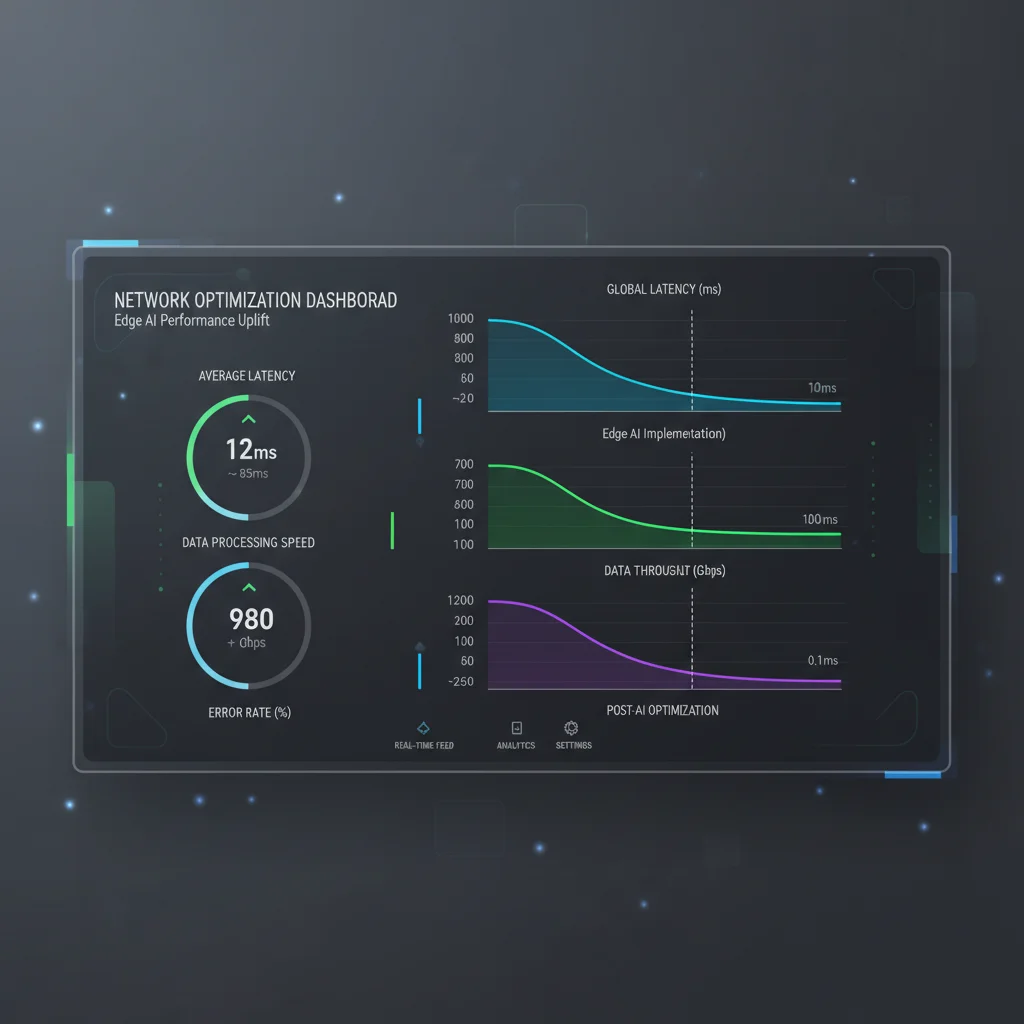
The digital landscape is evolving at an unprecedented pace, driven by an explosion of data generated at the furthest reaches of our networks. From smart cities and autonomous vehicles to industrial IoT and remote healthcare, the volume, velocity, and variety of data are pushing traditional centralized cloud computing models to their limits. In the United States, with its vast geographical spread and diverse industrial infrastructure, the challenge of processing this data efficiently and in real-time is particularly acute. This is where edge AI solutions emerge as a game-changer, promising to transform how organizations in the US manage and derive insights from their data, often achieving processing speeds up to 30% faster.
Anúncios
At its core, edge AI involves deploying artificial intelligence algorithms and machine learning models directly onto edge devices – physical computing devices located at or near the source of data generation, rather than relying solely on distant cloud servers. This paradigm shift minimizes latency, reduces bandwidth consumption, enhances data security, and enables immediate decision-making, all critical factors for modern applications across distributed US networks.
Anúncios
The Imperative for Edge AI in Distributed US Networks
The traditional model of sending all raw data to a central cloud for processing is becoming increasingly unsustainable. Consider the sheer scale: millions of IoT devices, surveillance cameras, and industrial sensors constantly generating terabytes of information. Transporting this data across vast distances within the US, through various network hops, introduces significant delays and incurs substantial bandwidth costs. For applications requiring instantaneous responses, such as autonomous driving, real-time fraud detection, or predictive maintenance in manufacturing, even milliseconds of delay can have severe consequences.
Edge AI solutions address these challenges head-on. By performing computation and analysis closer to the data source, they eliminate the need for constant data transmission to the cloud. This not only speeds up processing but also reduces the burden on network infrastructure, making it more robust and efficient. In a country as geographically diverse and technologically advanced as the US, where industries range from agriculture in the Midwest to high-tech manufacturing on the coasts, the ability to process data locally offers unparalleled advantages.
Furthermore, data privacy and security are paramount concerns. Sending sensitive information across public networks to a centralized cloud introduces potential vulnerabilities. Edge AI allows for data to be processed and filtered locally, often sending only aggregated insights or anonymized data to the cloud, thereby significantly enhancing security and compliance with regulations like HIPAA or state-specific data protection laws.
Key Benefits of Deploying Edge AI Solutions
The advantages of adopting edge AI solutions are multifaceted and profound, impacting operational efficiency, cost-effectiveness, and the very nature of real-time decision-making:
- Reduced Latency and Faster Insights: This is perhaps the most compelling benefit. By processing data at the edge, the time taken for data to travel to a central server and back is virtually eliminated. This enables real-time analytics and immediate action, crucial for critical applications. Imagine a smart factory in Michigan where machinery can detect anomalies and self-correct within milliseconds, preventing costly downtime. Or traffic management systems in bustling Californian cities that can adjust signal timings instantly based on real-time vehicle flow.
- Lower Bandwidth Costs: Transmitting massive amounts of raw data to the cloud is expensive. Edge AI allows for pre-processing, filtering, and aggregation of data locally, meaning only relevant or summarized data needs to be sent to the cloud. This significantly reduces bandwidth consumption and associated costs, particularly beneficial for operations in remote or underserved areas of the US where internet connectivity might be limited or costly.
- Enhanced Data Security and Privacy: Processing sensitive data locally reduces its exposure to potential cyber threats during transit to the cloud. Organizations can implement robust security measures at the edge, ensuring that confidential information remains within their control. This is especially vital for sectors like healthcare, finance, and defense operating within US borders.
- Improved Reliability and Offline Operation: Edge devices can continue to function and process data even if connectivity to the central cloud is interrupted. This resilience is critical for mission-critical applications in areas prone to network outages or in environments where consistent connectivity cannot be guaranteed. Think of oil rigs in the Gulf of Mexico or agricultural operations in rural Texas.
- Scalability and Flexibility: Edge AI allows for modular deployment. New devices and AI capabilities can be added incrementally to the network without overhauling the entire infrastructure. This provides greater flexibility and scalability, enabling businesses to adapt quickly to changing demands and expand their operations across the US as needed.
Practical Applications of Edge AI Across US Industries
The versatility of edge AI solutions means they are finding applications across a wide spectrum of industries in the United States, each benefiting from faster, more efficient data processing:
Manufacturing and Industrial IoT (IIoT)
In factories across the US, from automotive plants in Detroit to semiconductor fabrication facilities in Arizona, edge AI is revolutionizing operations. It enables predictive maintenance by analyzing sensor data from machinery in real-time, identifying potential failures before they occur. This prevents costly downtime and extends equipment lifespan. Quality control is also significantly improved, with AI-powered cameras at the edge detecting defects on production lines instantly, leading to higher product quality and reduced waste.

Smart Cities and Public Safety
US cities are increasingly leveraging edge AI for smart city initiatives. Traffic management systems use edge devices to analyze real-time traffic flow from cameras and sensors, optimizing signal timings to reduce congestion. For public safety, edge AI can power intelligent surveillance, detecting unusual activities or identifying missing persons faster, all while processing video footage locally to ensure privacy and reduce network strain. Facial recognition and anomaly detection can happen at the camera level, sending alerts only when necessary.
Healthcare and Remote Monitoring
The healthcare sector in the US is ripe for edge AI adoption. Remote patient monitoring devices can use edge AI to analyze vital signs and health data, identifying critical changes and alerting medical professionals instantly. This is particularly valuable for elderly care or patients in rural areas, enabling proactive interventions and reducing the need for frequent hospital visits. Edge AI can also assist in medical imaging analysis, providing preliminary diagnoses faster and aiding overworked clinicians.
Retail and Customer Experience
Retailers across the US are utilizing edge AI to enhance in-store experiences and optimize operations. Inventory management systems can use edge cameras to track stock levels in real-time, preventing out-of-stock situations. Customer behavior analysis, performed at the edge, can inform store layouts, personalize promotions, and improve customer service without sending sensitive video data to the cloud. This leads to more efficient operations and a better shopping experience.
Agriculture and Precision Farming
In the vast agricultural landscapes of the US, edge AI is enabling precision farming. Drones and ground-based sensors equipped with AI can analyze crop health, soil conditions, and pest infestations in real-time. This allows farmers to apply water, fertilizers, and pesticides precisely where needed, optimizing resource use, increasing yields, and reducing environmental impact. Data processing happens on-site, allowing for immediate action without reliance on distant data centers.
Challenges and Considerations for Edge AI Deployment
While the benefits of edge AI solutions are clear, their successful implementation is not without challenges. Organizations in the US considering this technology must address several key areas:
- Hardware Requirements: Edge devices need to be powerful enough to run AI models, yet often operate in constrained environments (e.g., limited power, rugged conditions). Selecting the right hardware that balances performance, cost, and durability is crucial.
- Software and Model Deployment: Deploying, managing, and updating AI models on a multitude of distributed edge devices can be complex. Robust MLOps (Machine Learning Operations) practices are essential for seamless integration and ongoing maintenance.
- Security at the Edge: While edge AI enhances overall data security by keeping data local, the edge devices themselves become potential attack vectors. Implementing strong authentication, encryption, and regular security updates for every edge device is critical.
- Connectivity Management: Although edge AI reduces reliance on constant cloud connectivity, intermittent connections are often still necessary for model updates, aggregated data offloading, and remote management. Robust connectivity solutions are still needed.
- Data Synchronization and Governance: Ensuring consistency between data processed at the edge and data stored in the cloud, as well as maintaining proper data governance across a distributed architecture, requires careful planning.
- Skill Gap: Implementing and managing edge AI solutions requires specialized skills in AI, IoT, networking, and cybersecurity. A shortage of such expertise can be a significant hurdle for many US businesses.
The Future of Edge AI: Trends and Innovations
The trajectory for edge AI solutions in the US is one of rapid growth and innovation. Several key trends are shaping its future:
- 5G and Edge Synergy: The rollout of 5G networks across the US is a perfect complement to edge AI. 5G’s high bandwidth and ultra-low latency capabilities will further enhance the real-time processing and communication abilities of edge devices, unlocking new possibilities for applications like augmented reality, virtual reality, and advanced robotics.
- TinyML and Ultra-Low Power AI: The development of TinyML – machine learning on extremely small, low-power microcontrollers – is expanding the reach of AI to even the most resource-constrained edge devices. This will enable AI capabilities in even smaller, more pervasive sensors and IoT devices.
- Federated Learning: This privacy-preserving machine learning technique allows models to be trained on decentralized edge devices without the need to centralize raw data. Only model updates are shared, enhancing data privacy and security, which is particularly relevant in highly regulated industries.
- AI Accelerators at the Edge: Dedicated hardware accelerators (e.g., GPUs, NPUs, FPGAs) designed specifically for AI inference are becoming more common in edge devices, boosting processing power and efficiency for complex AI models.
- Edge-to-Cloud Continuum: The future will likely see a seamless continuum of computing power, from the extreme edge to the cloud, with intelligent orchestration determining where data is best processed based on latency, bandwidth, security, and cost considerations.
Implementing Edge AI: A Strategic Approach for US Businesses
For US businesses looking to harness the power of edge AI solutions, a strategic, phased approach is recommended:
- Identify Key Use Cases: Begin by pinpointing specific problems or opportunities where real-time processing, low latency, or enhanced security are critical. Start with a pilot project that can demonstrate clear ROI.
- Assess Infrastructure and Connectivity: Evaluate existing network infrastructure, edge devices, and connectivity options. Determine what upgrades or new deployments are necessary to support edge AI workloads.
- Choose the Right Technology Stack: Select appropriate edge hardware, AI frameworks, and management platforms. Consider open-source options versus proprietary solutions based on specific needs and budget.
- Develop a Data Strategy: Plan how data will be collected, processed at the edge, and potentially synchronized with the cloud. Establish clear data governance and security protocols.
- Build or Acquire Expertise: Invest in training existing staff or recruit new talent with expertise in AI, IoT, and edge computing. Consider partnerships with specialized vendors.
- Start Small and Scale: Begin with a manageable pilot project, measure its success, and iterate. Once proven, gradually scale the deployment across more devices and locations within the US.
- Monitor and Optimize: Continuously monitor the performance of edge AI systems, collect feedback, and optimize models and infrastructure for ongoing improvement.
Conclusion: The Edge AI Revolution is Here
The rise of edge AI solutions represents a fundamental shift in how computing and intelligence are delivered, especially critical for the diverse and expansive networks across the United States. By bringing processing power closer to the data source, edge AI addresses the inherent limitations of centralized cloud computing, delivering unprecedented speed, efficiency, and resilience. From optimizing industrial operations and enhancing public safety to revolutionizing healthcare and retail, its impact is already being felt across numerous sectors.
As technology continues to advance and 5G networks become ubiquitous, the capabilities of edge AI will only grow, unlocking new possibilities for innovation and competitive advantage. For US organizations seeking to remain at the forefront of digital transformation, embracing and strategically deploying edge AI is no longer an option but a strategic imperative. The promise of processing data 30% faster, making real-time decisions, and building more secure and resilient systems is a compelling vision that edge AI is rapidly turning into a reality.