From Lab to Market: Navigating U.S. Regulatory Hurdles for Emerging Tech in 2026 – A 6-Step Guide

Anúncios
From Lab to Market: Navigating U.S. Regulatory Hurdles for Emerging Tech in 2026 – A 6-Step Guide
The pace of technological innovation is breathtaking, with groundbreaking advancements emerging from labs at an unprecedented rate. From artificial intelligence and quantum computing to advanced biotechnologies and autonomous systems, the potential to transform industries and improve lives is immense. However, bringing these emerging technologies from the conceptual stage to a thriving market in the United States presents a unique set of challenges, primarily centered around a complex and evolving regulatory landscape. As we look towards 2026, understanding and strategically navigating U.S. regulatory hurdles for emerging tech is not just an advantage – it’s a necessity for survival and success.
Anúncios
Many innovators, often driven by scientific discovery, find themselves ill-prepared for the intricate web of federal agencies, state laws, and international standards that govern the deployment of their creations. A misstep in compliance can lead to costly delays, significant fines, reputational damage, or even the outright failure of an otherwise promising venture. This comprehensive guide aims to demystify the process, offering a clear, 6-step roadmap for companies to successfully transition their innovations from the lab to the U.S. market in 2026, focusing on the critical aspect of emerging tech regulation.
Anúncios
The Evolving Landscape of Emerging Tech Regulation in 2026
The U.S. regulatory environment is not static; it’s a dynamic ecosystem constantly adapting (or attempting to adapt) to the rapid advancements in technology. What was permissible last year might face new scrutiny next year, especially with the increasing focus on data privacy, ethical AI, cybersecurity, and environmental impact. For emerging tech companies, this means that a proactive and forward-thinking approach to regulation is paramount.
In 2026, we anticipate several key trends shaping the landscape of emerging tech regulation:
- Increased Scrutiny on AI Ethics and Bias: As AI permeates more aspects of daily life, governmental bodies like the National Institute of Standards and Technology (NIST) and the Federal Trade Commission (FTC) are expected to deepen their focus on AI trustworthiness, bias detection, and explainability. New guidelines, or even legislative proposals, addressing these concerns are highly likely.
- Enhanced Cybersecurity Requirements: With the growing sophistication of cyber threats, technologies across all sectors will face heightened cybersecurity standards. This includes not only software but also hardware and embedded systems. Agencies like the Cybersecurity and Infrastructure Security Agency (CISA) will play a more prominent role.
- Data Privacy Expansion: Beyond existing frameworks like HIPAA and state-level regulations such as the California Consumer Privacy Act (CCPA) and its successors, there’s a strong likelihood of further federal or harmonized state-level data privacy legislation impacting how emerging tech handles personal data.
- Sector-Specific Regulatory Refinements: Industries like biotechnology, autonomous vehicles, and medical devices will see tailored regulatory updates. For instance, the FDA may introduce clearer pathways for AI-driven diagnostics, while the National Highway Traffic Safety Administration (NHTSA) continues to refine guidelines for autonomous driving.
- Sustainability and ESG Focus: Emerging technologies with significant environmental footprints or social implications will increasingly be subject to environmental, social, and governance (ESG) reporting and compliance, enforced by agencies like the Environmental Protection Agency (EPA) or through investor pressure.
Understanding these trends is the first step toward building a resilient regulatory strategy. Now, let’s dive into the practical steps.
Step 1: Early Regulatory Landscape Mapping and Risk Assessment
The journey to market begins not with product launch, but with a thorough understanding of the regulatory terrain. This foundational step is critical for any emerging technology, as it allows companies to proactively identify potential roadblocks and integrate compliance requirements into their product development cycle, rather than attempting to retrofit them later.
Identify Key Regulatory Bodies and Frameworks
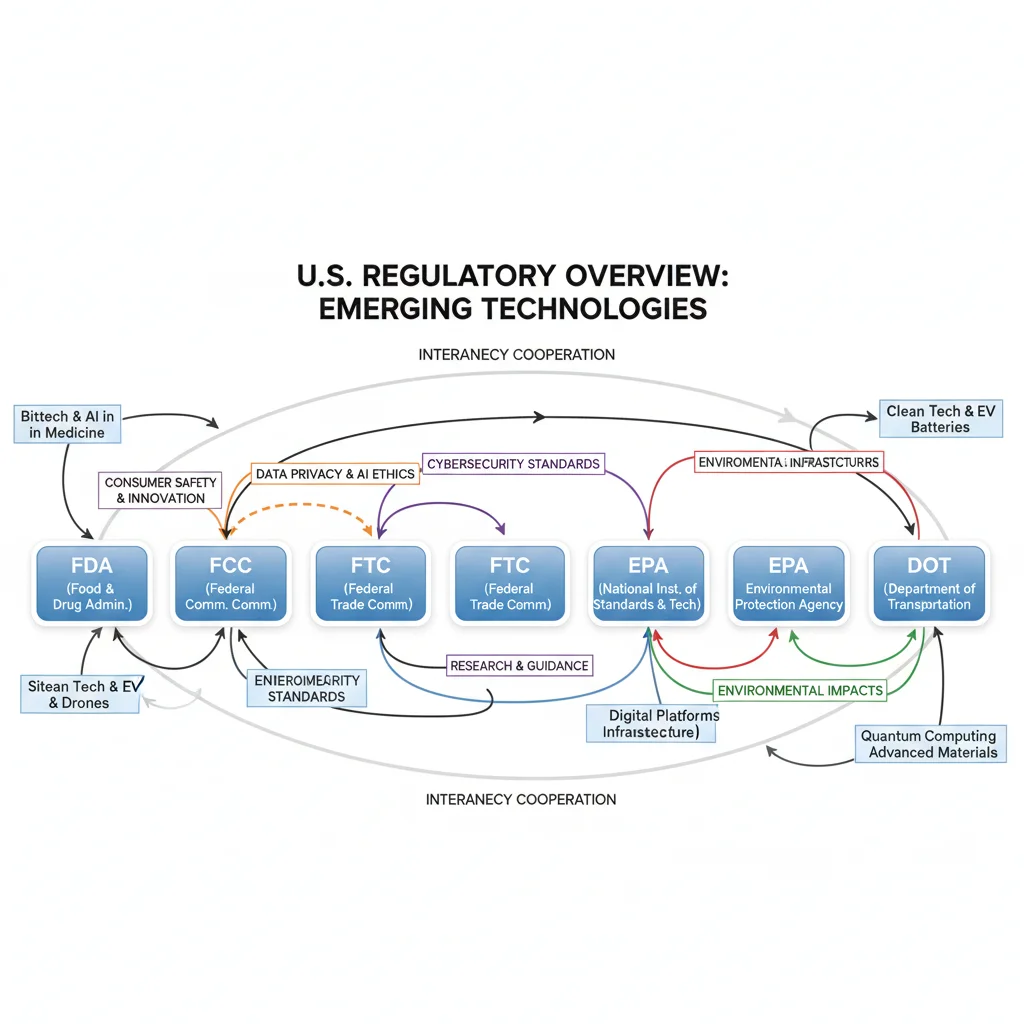
The U.S. regulatory environment is fragmented, with jurisdiction often overlapping or being specific to the technology’s application. For instance:
- Food and Drug Administration (FDA): Crucial for medical devices, pharmaceuticals, biological products, and certain food-related biotechnologies. Their oversight extends to clinical trials, manufacturing quality (GMP), and pre-market clearance/approval.
- Federal Communications Commission (FCC): Relevant for technologies involving radiofrequency emissions, wireless communication, and telecommunications equipment. This includes IoT devices, drones, and advanced communication systems.
- Federal Trade Commission (FTC): Focuses on consumer protection, unfair competition, and deceptive practices. Their purview includes data privacy, cybersecurity practices, and advertising claims, impacting nearly all consumer-facing emerging technologies.
- National Institute of Standards and Technology (NIST): While not a direct regulator, NIST develops crucial standards and guidelines (e.g., for cybersecurity, AI trustworthiness) that often become de facto requirements or are adopted by other regulatory bodies.
- Environmental Protection Agency (EPA): For technologies with environmental impact, such as novel chemicals, waste management solutions, or energy systems.
- Department of Transportation (DOT) / National Highway Traffic Safety Administration (NHTSA): Essential for autonomous vehicles, drones, and other transportation-related innovations.
- State-Specific Regulations: Never underestimate the power of state laws. Data privacy (e.g., CCPA, Virginia CDPA), professional licensing, and specific product safety standards can vary significantly by state.
Your first task is to meticulously research which of these, and potentially others, have jurisdiction over your specific technology and its intended use cases. This involves a deep dive into existing statutes, regulations, guidance documents, and even recent enforcement actions.
Conduct a Comprehensive Risk Assessment
Once you’ve identified the relevant regulatory bodies, perform a detailed risk assessment. This should include:
- Compliance Gaps: Where does your current product or service fall short of anticipated or existing regulatory requirements?
- Legal Risks: What are the potential penalties for non-compliance (fines, injunctions, recalls)?
- Reputational Risks: How might regulatory issues impact public trust and brand image?
- Market Access Risks: Could regulatory hurdles prevent or significantly delay market entry?
- Ethical Considerations: Beyond legal compliance, what are the ethical implications of your technology, particularly for AI, data use, and societal impact? Agencies are increasingly considering these aspects.
This early assessment should be an iterative process, evolving as your technology develops and as the regulatory landscape shifts. It’s an investment that pays dividends by preventing costly rework and ensuring a smoother path to market.
Step 2: Build an Interdisciplinary Regulatory Compliance Strategy
Navigating emerging tech regulation requires more than just legal counsel; it demands a holistic, interdisciplinary approach. Your compliance strategy should be woven into the very fabric of your organization, involving various departments from the outset.
Assemble a Cross-Functional Team
Effective compliance is a team sport. Your core regulatory team should include:
- Legal Counsel: In-house or external experts specializing in relevant regulatory areas (e.g., FDA law, data privacy, intellectual property).
- Product Development/Engineering: Those who understand the technology’s capabilities, limitations, and design choices. They are crucial for implementing regulatory requirements directly into the product.
- Quality Assurance/Control: Essential for ensuring products meet specified standards and for managing documentation.
- Business/Strategy Leads: To align regulatory efforts with market goals and business models.
- Ethics/Privacy Officer: Increasingly important for AI and data-intensive technologies to ensure responsible development and deployment.
This team will collaborate to develop a comprehensive compliance framework, identifying specific actions, timelines, and responsible parties for each regulatory requirement.
Develop a Proactive Compliance Framework
Your framework should detail how your company will meet regulatory obligations throughout the product lifecycle. Key elements include:
- Design for Compliance: Integrating regulatory requirements into the early design and development phases. This is often referred to as "Privacy by Design" or "Safety by Design."
- Documentation Management: Establishing robust systems for documenting all aspects of your technology, from design specifications and testing protocols to risk assessments and communication with regulatory bodies. Good documentation is often as important as the technology itself.
- Testing and Validation Protocols: Ensuring your technology is rigorously tested against both functional requirements and regulatory standards (e.g., safety, performance, accuracy, bias).
- Post-Market Surveillance Plan: How will you monitor your product once it’s on the market? This includes adverse event reporting, software updates, and continuous risk assessment.
- Training and Awareness: Regular training for all relevant employees on regulatory requirements, ethical guidelines, and internal compliance procedures.
A well-defined compliance framework acts as your operational blueprint, ensuring consistency and adherence to standards across the organization.
Step 3: Engage with Regulatory Agencies Early and Often
One of the most common pitfalls for emerging tech regulation is avoiding engagement with regulators until a problem arises. A proactive and collaborative approach can significantly de-risk your market entry.
Seek Pre-Submission Guidance
Many U.S. regulatory agencies offer mechanisms for companies to engage with them before a formal submission. For example:
- FDA: Pre-Submission (Pre-Sub) meetings allow companies to get feedback on their proposed regulatory strategy for medical devices or drugs.
- FCC: Offers informal guidance and interpretations of rules.
- NHTSA: Provides opportunities for discussions on innovative vehicle technologies.
These interactions provide invaluable insights into agency expectations, help clarify complex requirements, and can even identify alternative regulatory pathways. They also build a relationship with the agency, demonstrating your commitment to compliance.
Participate in Pilot Programs and Public Comment Periods
Agencies often launch pilot programs for novel technologies to gather data and develop appropriate regulatory frameworks. Participating in these can give you early access to regulators and help shape future policies. Similarly, actively responding to requests for information (RFIs) or submitting comments during public comment periods for proposed rules allows your company to contribute to the regulatory dialogue and advocate for reasonable approaches that accommodate innovation.
Step 4: Master Data Privacy, Cybersecurity, and Ethical AI
In 2026, these three areas will be paramount for nearly all emerging tech regulation. Failure to address them comprehensively can lead to severe consequences, both legally and reputationally.
Robust Data Privacy Measures
Beyond general data protection principles, emerging tech often deals with sensitive or high-volume data, demanding advanced privacy measures. This includes:
- Data Minimization: Collecting only the data absolutely necessary for your product’s function.
- Anonymization/Pseudonymization: Implementing techniques to protect individual identities when data is used for research or analysis.
- Consent Management: Clear, transparent, and easily revocable consent mechanisms for data collection and use.
- Data Security: Implementing strong encryption, access controls, and other security measures to protect data from breaches.
- Privacy Impact Assessments (PIAs): Regularly assessing and mitigating privacy risks associated with new data processing activities.
Stay updated on new state privacy laws, potential federal legislation, and international data transfer regulations (if applicable), as these will directly impact your data handling practices.
Ironclad Cybersecurity Posture
Cybersecurity is no longer an IT problem; it’s a critical regulatory and business imperative. Emerging technologies, especially those connected to the internet or critical infrastructure, are prime targets. Your strategy must include:
- Threat Modeling: Proactively identifying potential vulnerabilities and attack vectors.
- Secure Development Lifecycle (SDL): Integrating security considerations into every phase of product development.
- Regular Penetration Testing and Vulnerability Assessments: Independent verification of your security controls.
- Incident Response Plan: A well-defined plan for detecting, responding to, and recovering from cyber incidents, including breach notification protocols.
- Supply Chain Security: Ensuring that third-party components and services also adhere to high cybersecurity standards.
Adherence to frameworks like NIST Cybersecurity Framework or ISO 27001 can provide a structured approach to building and maintaining a strong security posture.
Ethical AI Principles and Governance
The ethical implications of AI are drawing significant attention from regulators, policymakers, and the public. Companies deploying AI-driven emerging tech regulation must consider:
- Transparency and Explainability: Can you explain how your AI makes decisions? This is crucial for accountability and building trust.
- Fairness and Bias Mitigation: Actively testing and mitigating algorithmic bias to ensure equitable outcomes, especially in critical applications like healthcare or finance.
- Human Oversight: Ensuring there are mechanisms for human intervention and oversight, particularly for autonomous systems.
- Accountability: Clearly defining who is responsible when an AI system makes an error or causes harm.
- Impact Assessments: Conducting AI ethics impact assessments to identify and address potential societal harms.
Establishing an internal AI ethics board or review committee can help institutionalize these principles within your organization.
Step 5: Implement Robust Quality Management and Post-Market Surveillance
Regulatory compliance doesn’t end when your product launches. In fact, for many emerging technologies, the most significant regulatory scrutiny begins post-market. A robust quality management system (QMS) and effective post-market surveillance are indispensable.
Establish a Comprehensive Quality Management System (QMS)
A QMS is a formalized system that documents processes, procedures, and responsibilities for achieving quality policies and objectives. For emerging tech regulation, it ensures that your product consistently meets customer and regulatory requirements. Key elements include:
- Design Controls: Procedures to ensure that the design of your product meets user needs and intended uses.
- Risk Management: Systematic processes for identifying, evaluating, and controlling risks throughout the product lifecycle.
- Supplier Controls: Ensuring that components and services from third-party suppliers meet your quality standards.
- Manufacturing Controls: Procedures to ensure that products are consistently manufactured according to specifications.
- Corrective and Preventive Actions (CAPA): A system for identifying, investigating, and correcting non-conformances and preventing their recurrence.
Depending on your industry, adherence to standards like ISO 9001 (general quality management) or ISO 13485 (medical devices) may be required or highly recommended.
Develop an Effective Post-Market Surveillance (PMS) Plan
PMS involves actively monitoring the safety and performance of your product once it is on the market. This is critical for identifying unforeseen issues, addressing potential risks, and ensuring ongoing compliance. Your PMS plan should include:
- Complaint Handling: A system for receiving, evaluating, and investigating customer complaints.
- Adverse Event Reporting: Protocols for reporting serious incidents or malfunctions to the relevant regulatory authorities (e.g., FDA MedWatch, NHTSA defect reporting).
- Continuous Risk Assessment: Regularly re-evaluating the risks associated with your product based on real-world data.
- Software/Firmware Updates: A controlled process for deploying updates, patches, and improvements, ensuring they don’t introduce new compliance issues.
- Market Feedback Analysis: Utilizing data from user reviews, social media, and sales channels to identify emerging trends or issues.
Effective PMS demonstrates to regulators your commitment to product safety and continuous improvement, which can be invaluable in maintaining trust and avoiding enforcement actions.

Step 6: Cultivate a Culture of Compliance and Adaptability
The final, and perhaps most crucial, step is to embed a culture of compliance within your organization and foster an environment of continuous adaptability. The regulatory landscape for emerging tech regulation will continue to evolve rapidly, and companies that can pivot efficiently will thrive.
Foster a Compliance-First Mindset
Compliance should not be seen as a burden but as an integral part of product quality, safety, and business success. This requires:
- Leadership Buy-in: Senior management must champion compliance, allocating necessary resources and setting the tone from the top.
- Employee Empowerment: Encourage all employees to report potential compliance issues without fear of reprisal.
- Regular Training and Education: Keep your team updated on the latest regulatory changes and best practices.
- Integration into KPIs: Incorporate compliance metrics into performance indicators for relevant teams and individuals.
When compliance is part of the organizational DNA, it becomes a natural extension of innovation, rather than an impediment.
Monitor Regulatory Developments and Adapt
The U.S. regulatory environment for emerging tech is a moving target. To stay ahead, you must:
- Dedicated Regulatory Intelligence: Assign resources to continuously monitor legislative proposals, agency guidance, enforcement actions, and international regulatory trends.
- Scenario Planning: Develop contingency plans for potential new regulations or shifts in agency interpretations.
- Agile Compliance: Adopt an agile methodology for compliance, allowing for rapid adjustments to strategies and processes as new information emerges.
- Industry Association Engagement: Join and actively participate in industry associations. These groups often have early insights into regulatory changes and can collectively advocate for their members’ interests.
Proactive monitoring and the ability to adapt quickly are your best defenses against unforeseen regulatory challenges.
Conclusion: Your Path to U.S. Market Success in 2026
Bringing emerging tech regulation from the lab to the U.S. market in 2026 is an endeavor fraught with complexity, but also immense opportunity. By following this 6-step guide – from early landscape mapping and strategic planning to proactive engagement and fostering a culture of compliance – your organization can navigate the intricate web of U.S. regulatory hurdles with confidence.
Remember, regulatory compliance is not a one-time event; it’s an ongoing journey that demands vigilance, collaboration, and adaptability. By embedding compliance into your innovation process, you not only mitigate risks but also build trust, enhance product quality, and ultimately pave a smoother, more sustainable path for your groundbreaking technologies to thrive in the American marketplace. The future is bright for innovators who embrace the regulatory challenge as an integral part of their strategic vision.