The Rise of Multipolarity: 5 Ways the U.S. is Adapting its Foreign Policy in 2026
Anúncios
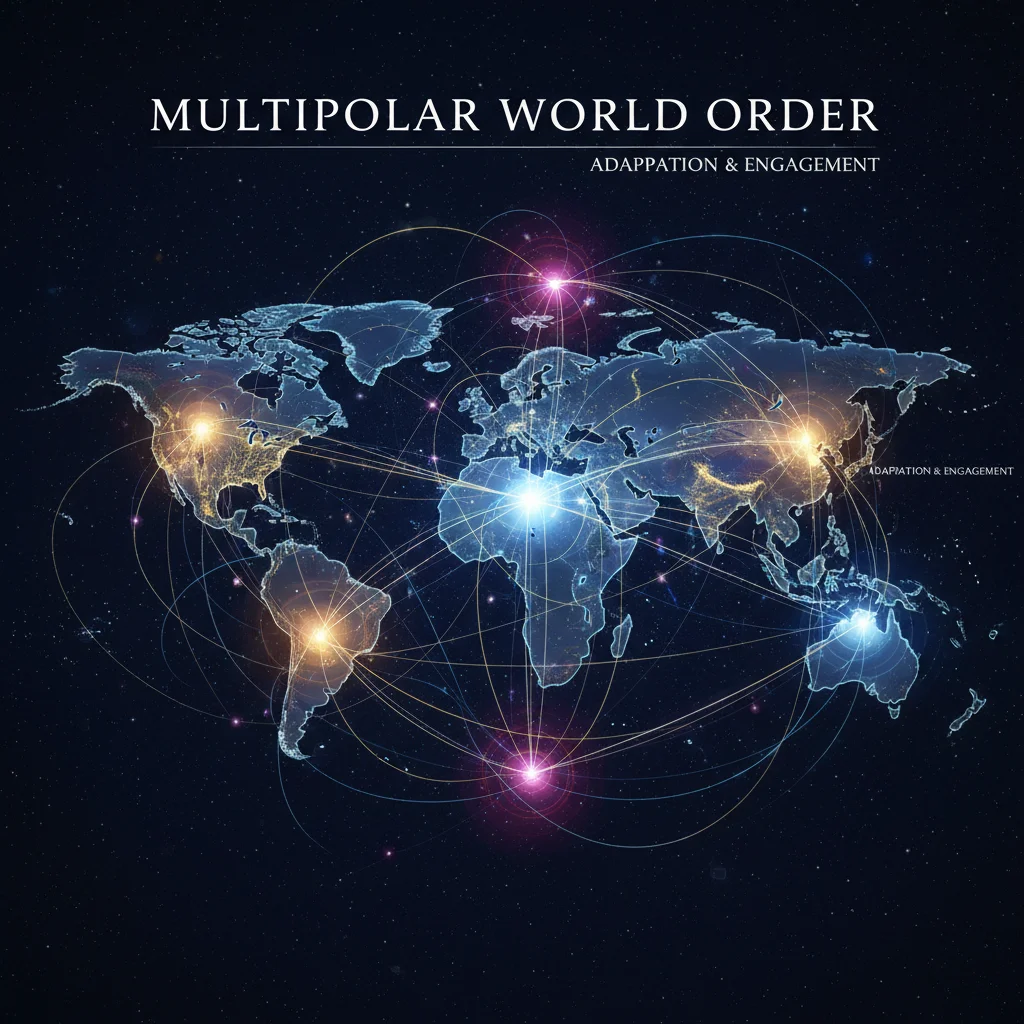
The dawn of 2026 finds the international system in a state of profound transformation. The unipolar moment, which characterized the post-Cold War era, has undeniably receded, giving way to a more complex and fluid multipolar landscape. In this new global order, power is distributed among several influential states and blocs, each vying for influence, asserting their interests, and shaping regional and global norms. This shift presents both immense challenges and unprecedented opportunities for the United States, compelling a fundamental re-evaluation and adaptation of its long-standing US foreign policy doctrines.
Anúncios
For decades, the United States has been the undisputed global hegemon, its economic might, military prowess, and diplomatic reach unparalleled. However, the rise of China as an economic and military powerhouse, the resurgence of Russia on the international stage, the growing assertiveness of regional powers like India, Brazil, and Turkey, and the increasing collective voice of the European Union, have collectively reshaped the global power dynamics. This multipolar environment demands a more nuanced, flexible, and collaborative approach from Washington, moving beyond traditional frameworks and embracing a strategy of agile adaptation.
Understanding these shifts is not merely an academic exercise; it is crucial for comprehending the trajectory of global affairs and the future role of the United States. This article delves into five pivotal ways the U.S. is actively adapting its US foreign policy in 2026 to navigate this intricate multipolar world, ensuring its continued relevance, protecting its national interests, and promoting global stability. From reinvigorating alliances to leveraging economic diplomacy, these strategies reflect a pragmatic recognition of the new geopolitical realities.
Anúncios
1. Reinvigorating and Diversifying Alliances: The Cornerstone of US Foreign Policy in a Multipolar World
In a unipolar world, alliances might have been seen as extensions of American power, but in a multipolar environment, they are the very bedrock of effective US foreign policy. The United States recognizes that no single nation, regardless of its strength, can tackle the multifaceted challenges of the 21st century alone. From climate change and pandemics to cybersecurity threats and economic instability, these issues demand collective action and shared responsibility. Consequently, 2026 sees a concerted effort by the U.S. to not only reinvigorate its traditional alliances but also to diversify and expand its network of partners.
Traditional alliances, such as NATO and those with Japan, South Korea, and Australia, remain vital. The U.S. is investing heavily in modernizing these relationships, ensuring their continued relevance in addressing contemporary threats. This involves enhanced military interoperability, intelligence sharing, and coordinated diplomatic efforts. However, the adaptation goes beyond mere reinforcement. There’s a clear strategic pivot towards broadening the scope of these alliances to include non-traditional security concerns, such as economic resilience, technological cooperation, and supply chain security. This holistic approach ensures that alliances are not just about military defense but about comprehensive national security in a broader sense.
Beyond the traditional, the U.S. is actively pursuing new and flexible partnerships. This includes bolstering engagement with regional organizations in Africa, Latin America, and Southeast Asia, recognizing their growing collective influence. Initiatives like the Quad (Quadrilateral Security Dialogue) involving the U.S., Australia, India, and Japan, serve as a prime example of this diversification. These informal groupings allow for targeted cooperation on specific issues, such as maritime security in the Indo-Pacific, without the rigidities of formal treaty alliances. This strategy allows the U.S. to build coalitions of the willing, tailored to specific regional challenges and opportunities, thereby enhancing its diplomatic footprint and collective problem-solving capacity.
Furthermore, the concept of ‘minilateralism’ is gaining traction. This involves smaller groups of countries coming together to address specific issues, often with a shared interest that transcends traditional geopolitical blocs. This agile approach enables quicker decision-making and more focused action, complementing broader multilateral frameworks. The U.S. is actively participating in and fostering such initiatives, understanding that flexibility and adaptability are paramount in a multipolar world. This emphasis on diverse, flexible, and purpose-driven alliances is a defining characteristic of contemporary US foreign policy, reflecting a sophisticated understanding of distributed power.
2. Prioritizing Economic Statecraft and Tech Diplomacy
In a multipolar world, economic power is as potent as military might, if not more so. The U.S. is acutely aware that its economic leadership is a crucial component of its global influence. Consequently, 2026 sees a significant elevation of economic statecraft as a central pillar of US foreign policy. This involves leveraging trade, investment, and financial tools to advance national interests, promote shared prosperity, and counter the economic coercion tactics employed by rival powers.
A key aspect of this strategy is the renewed focus on strengthening supply chain resilience, particularly for critical goods and technologies. The vulnerabilities exposed during recent global crises have underscored the need for diversification and strategic reshoring or ‘friend-shoring’ – moving production to allied nations. The U.S. is actively working with partners to build secure and resilient supply chains, reducing dependence on potential adversaries and fostering economic security within its network of allies. This isn’t just about economic stability; it’s a geopolitical play to create a more integrated and robust economic bloc among like-minded nations.
Moreover, tech diplomacy has emerged as a distinct and increasingly vital domain of US foreign policy. The race for technological supremacy, particularly in areas like artificial intelligence, quantum computing, biotechnology, and advanced manufacturing, is a defining feature of the multipolar era. The U.S. is engaging in robust tech diplomacy to set international standards, promote responsible innovation, and prevent the weaponization of technology. This involves collaborating with allies on research and development, sharing best practices for cybersecurity, and establishing norms for the ethical use of emerging technologies.
The U.S. is also using economic incentives to encourage adherence to international norms and standards, particularly in areas like intellectual property protection and fair labor practices. Development finance and strategic investments are being deployed to foster sustainable growth in developing nations, offering alternatives to predatory lending practices and promoting long-term partnerships. This nuanced approach to economic engagement aims to create a more equitable and resilient global economic system, one that aligns with American values and strengthens its strategic position. The integration of economic and technological considerations into every facet of US foreign policy is a clear indication of its adaptation to the realities of distributed global power.
3. Embracing Strategic Competition with a Focus on De-escalation
The rise of multiple power centers inherently leads to strategic competition. The U.S. recognizes that it must compete effectively in this environment, particularly with revisionist powers that seek to challenge the existing international order. However, the adaptation of US foreign policy in 2026 emphasizes that this competition must be managed carefully to avoid escalation and maintain global stability. The strategy is one of ‘responsible competition’ – robustly defending interests while simultaneously seeking avenues for cooperation where possible.
This approach involves a clear articulation of red lines and a willingness to impose costs on actors who violate international law or undermine global security. This could manifest through targeted sanctions, diplomatic isolation, or strengthened defense postures in critical regions. The goal is to deter aggression and defend core interests without inadvertently triggering broader conflicts. The U.S. is investing in its military capabilities, not for offensive purposes, but to ensure a credible deterrent against potential adversaries and to reassure allies of its commitment to their security.
Crucially, alongside competition, there is a strong emphasis on de-escalation mechanisms and crisis management. The U.S. is actively engaging in dialogues with rival powers to establish clear communication channels, reduce miscalculation, and prevent unintended confrontations. This includes arms control negotiations, military-to-military communications, and discussions on regional security architectures. The understanding is that even in an era of competition, shared global challenges necessitate a degree of cooperation, and the ability to manage disagreements peacefully is paramount.
Furthermore, the U.S. is focusing on strengthening its intelligence capabilities to better understand the intentions and capabilities of other major powers, enabling more informed decision-making and preventing surprises. This strategic competition is not about ideological crusades but about pragmatic engagement to protect and advance American interests in a world where power is more diffuse. The balance between competition and de-escalation is a delicate one, but it is a central tenet of adaptive US foreign policy in 2026.
4. Investing in Multilateral Institutions and Norms
While the effectiveness of multilateral institutions has been questioned in recent years, the U.S. understands that they remain indispensable for addressing global challenges and upholding the rules-based international order. In a multipolar world, these institutions provide vital platforms for dialogue, negotiation, and collective action, preventing a descent into unchecked power politics. Consequently, 2026 sees a renewed commitment from the U.S. to investing in and reforming multilateral institutions.
This involves active participation in bodies like the United Nations, the World Trade Organization, the International Monetary Fund, and various regional organizations. The U.S. is advocating for reforms that reflect the current distribution of global power, ensuring that these institutions remain relevant and legitimate in the eyes of all major stakeholders. This means pushing for greater representation for emerging economies and fostering more inclusive decision-making processes. The goal is not just to use these institutions but to strengthen them as forums for consensus-building and norm-setting.
The U.S. is also emphasizing the importance of international law and norms. In a multipolar environment, where different powers may hold divergent views on governance and sovereignty, a shared commitment to a rules-based order is crucial for preventing chaos. This involves consistently upholding international legal principles, advocating for human rights, and promoting democratic values, even as it engages with states that may not fully share these principles. The strategy is to lead by example and to build broad coalitions in defense of these fundamental norms.
Furthermore, the U.S. is leveraging multilateral forums to address specific global issues that transcend national borders. Whether it’s coordinating responses to future pandemics, negotiating climate agreements, or regulating emerging technologies, multilateral institutions offer the only viable path to truly global solutions. This renewed focus on multilateralism is a recognition that even a powerful nation like the U.S. needs the legitimacy and collective action that these institutions provide to effectively navigate the complexities of a multipolar world. It underscores a strategic shift in US foreign policy towards shared responsibility and collective governance.
5. Enhancing Public Diplomacy and Narrative Shaping
In an age of instant information and pervasive social media, the battle of narratives is as important as any military or economic contest. The U.S. recognizes that its influence in a multipolar world is not solely dependent on its hard power but also on its ability to articulate its values, explain its policies, and build connections with people around the globe. Therefore, 2026 witnesses a significant enhancement of public diplomacy and strategic communication as a crucial element of US foreign policy.
This involves moving beyond traditional government-to-government communication and engaging directly with foreign publics, civil society organizations, and thought leaders. The U.S. is investing in digital diplomacy, utilizing social media platforms and online content to reach diverse audiences, counter disinformation, and promote a positive image of America. This isn’t about propaganda, but about transparently communicating U.S. policies, values, and cultural achievements, fostering mutual understanding and building goodwill.
Educational and cultural exchange programs are also being revitalized and expanded. Initiatives like the Fulbright program, although long-standing, are being adapted to meet the demands of the multipolar era, focusing on areas of strategic importance like STEM fields and critical languages. These exchanges build lasting relationships, foster cross-cultural understanding, and create a network of future leaders who have a deeper appreciation for American society and values. This ‘soft power’ approach is vital for long-term influence and for counteracting negative stereotypes or adversarial narratives.
Moreover, the U.S. is actively working to partner with independent media outlets and civil society groups in other countries to support press freedom and promote democratic discourse. By empowering local voices and fostering open societies, the U.S. aims to strengthen democratic resilience globally, which in turn aligns with its own strategic interests. This sophisticated approach to public diplomacy acknowledges that in a world where information flows freely, shaping perceptions and winning hearts and minds is an indispensable aspect of effective US foreign policy.
Conclusion: Navigating the New Global Reality
The transition to a multipolar world is not a temporary phenomenon but a fundamental shift in global power dynamics. The United States, far from retreating, is actively adapting its US foreign policy to meet the demands of this new reality. The five strategies outlined – reinvigorating alliances, prioritizing economic and tech diplomacy, embracing strategic competition with de-escalation, investing in multilateral institutions, and enhancing public diplomacy – collectively paint a picture of a nation that is pragmatic, resilient, and forward-looking.
In 2026, the U.S. is not seeking to restore a unipolar past but rather to thrive in a multipolar future. This requires a willingness to share leadership, to engage in complex negotiations, and to recognize that influence is often best exercised through collaboration rather than unilateral action. The challenges are immense, from managing great power competition to addressing existential threats like climate change, but the adaptive strategies being implemented demonstrate a clear commitment to maintaining global leadership and promoting a stable, prosperous, and rules-based international order.
The success of these adaptations will depend on sustained political will, bipartisan consensus, and a deep understanding of the diverse perspectives and interests of other global powers. As the world continues to evolve, so too must US foreign policy, ensuring that it remains agile, effective, and responsive to the ever-changing geopolitical landscape. The journey into multipolarity is complex, but the U.S. is charting a course designed for enduring influence and global stability.