Space Race 2.0: Geopolitical Implications of US Lunar Missions 2026
Anúncios
The Dawn of a New Era: US Lunar Geopolitics and the Resurgence of the Space Race
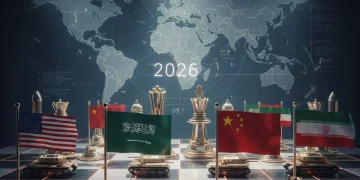
The year 2026 looms large on the horizon, not just as another calendar mark, but as a pivotal moment in human history. The United States, through its ambitious Artemis program, is poised to return astronauts to the Moon, marking a significant leap forward in lunar exploration. This endeavor, however, is far more than a scientific pursuit; it is a complex tapestry woven with threads of technological prowess, national prestige, economic opportunity, and, most crucially, profound geopolitical implications. The upcoming US Lunar Geopolitics of 2026 is set to redefine international relations, ignite a new space race, and challenge existing frameworks of global cooperation and competition.
The original Space Race of the Cold War era was a binary contest between the United States and the Soviet Union, driven by ideological rivalry and a desperate need to demonstrate technological superiority. While the flags planted on the lunar surface by Apollo missions symbolized American triumph, the landscape of space exploration today is vastly different. We are witnessing a multi-polar, multi-faceted competition involving not only traditional state actors but also a burgeoning private sector, each vying for a share of the lunar frontier. This US Lunar Geopolitics is characterized by a blend of collaboration and contestation, making the 2026 lunar missions a critical juncture for understanding the future of international power dynamics.
Anúncios
This comprehensive article will delve into three primary geopolitical implications of the U.S. lunar missions in 2026: the intensification of the new space race, the evolving landscape of international cooperation and alliances, and the critical issue of lunar resource competition. By examining these facets, we aim to provide a nuanced understanding of how humanity’s renewed journey to the Moon will shape our world, both on Earth and beyond.
Anúncios
The Intensification of the New Space Race: Beyond Flag Planting
The announcement of the Artemis program and its ambitious timeline for returning humans to the Moon by 2026 has unequivocally signaled the start of a new, more complex space race. Unlike its Cold War predecessor, which was primarily a race for symbolic firsts, this new competition is driven by a broader set of objectives, including sustained presence, scientific discovery, economic exploitation, and strategic advantage. The US Lunar Geopolitics of this era is defined by a race not just to the Moon, but to establish a long-term foothold.
China’s Ambitious Lunar Program
At the forefront of this new competition is China, whose rapid advancements in space technology have positioned it as a formidable contender. Beijing’s ambitious lunar exploration program, including its Chang’e missions and plans for a permanent International Lunar Research Station (ILRS) in collaboration with Russia, represents a direct challenge to U.S. dominance. China’s stated goal of sending astronauts to the Moon by 2030, a timeline closely mirroring that of the U.S., underscores the competitive nature of this endeavor. The Chinese strategy emphasizes a phased approach, building capabilities incrementally, from robotic exploration to human presence, and eventually to resource utilization.
The geopolitical implications of China’s lunar ambitions are significant. A successful Chinese human landing on the Moon, especially if it precedes or closely follows the U.S. return, would be a major propaganda victory, bolstering China’s image as a technological superpower and challenging the narrative of Western leadership in space. Furthermore, the establishment of the ILRS, with Russia as a key partner, could solidify an alternative, non-Western bloc in space, potentially leading to a bifurcation of lunar activities and standards, impacting future governance and resource allocation.
Other Nations and Private Entities
Beyond the U.S. and China, a growing number of nations are also entering the lunar arena, further intensifying the competition. India, with its successful Chandrayaan missions, and Japan, with its advanced robotics and landers, are demonstrating increasing capabilities. The European Space Agency (ESA) is also a significant player, contributing modules and expertise to various international missions, including Artemis. These nations are not merely spectators; they are actively developing their own lunar programs, often with an eye towards specific scientific or commercial objectives.
Adding another layer of complexity is the rise of private space companies. Companies like SpaceX, Blue Origin, and Astrobotic are not just contractors for government agencies; they are innovators and entrepreneurs, developing their own lunar landers, habitats, and resource extraction technologies. This commercialization of space introduces new economic drivers and actors into the geopolitical equation. The ability of private companies to operate independently of government mandates, while often still reliant on government contracts, creates a dynamic environment where national interests can sometimes align with, and at other times diverge from, commercial imperatives.
The intensification of this new space race means that the 2026 U.S. lunar missions are not just about achieving a milestone; they are about setting the pace and direction for future lunar activities. The success or challenges faced by the Artemis program will undoubtedly influence the strategies and investments of other spacefaring nations and private entities, further shaping the competitive landscape of US Lunar Geopolitics.
Evolving International Cooperation and Alliances: The Artemis Accords
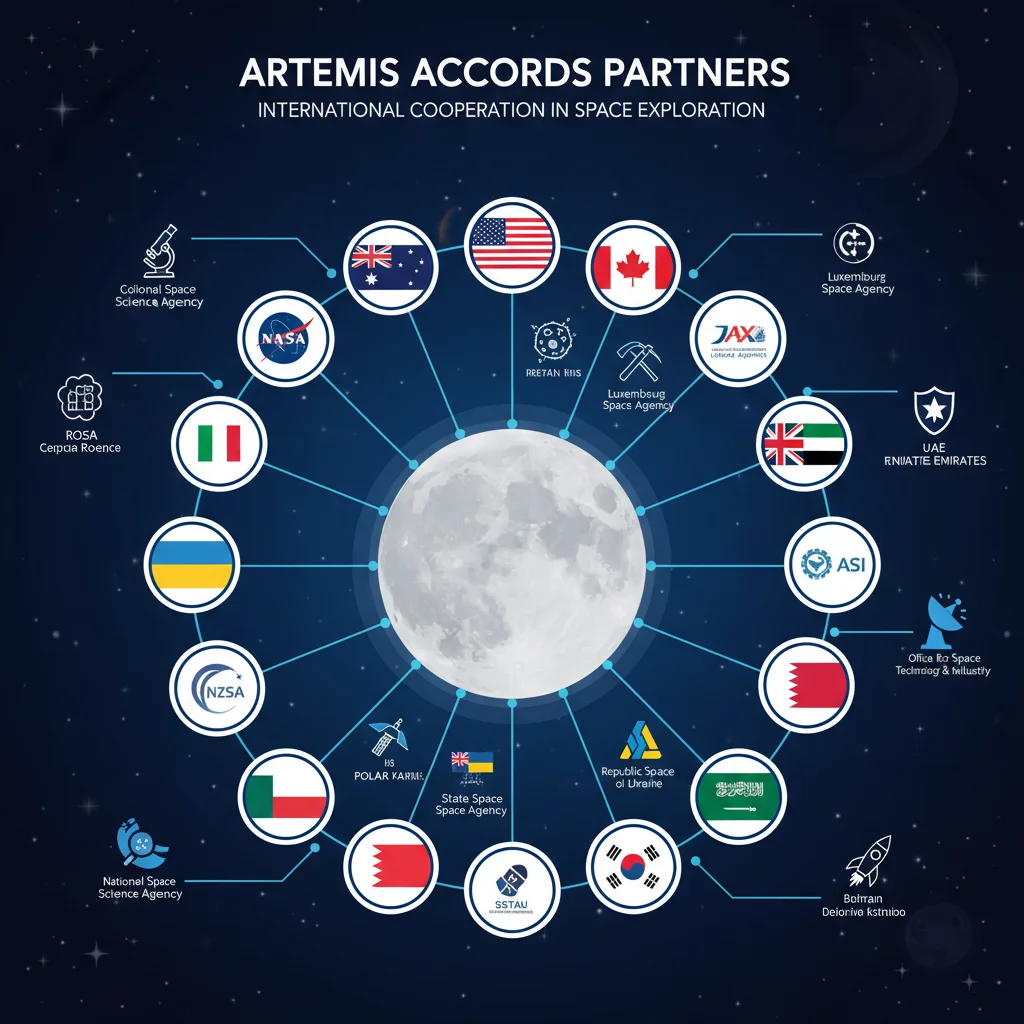
While competition is a defining feature of the new space race, cooperation also plays a crucial role, albeit often within specific geopolitical frameworks. The U.S. has actively sought to build a coalition of like-minded nations through the Artemis Accords, a set of non-binding principles designed to govern civil exploration and use of the Moon, Mars, comets, and asteroids. The Accords represent a significant effort to shape the international legal and operational norms for space activities, directly impacting US Lunar Geopolitics.
The Role and Reach of the Artemis Accords
Launched in 2020, the Artemis Accords are based on the 1967 Outer Space Treaty but aim to provide a more detailed framework for modern space activities. Key principles include peaceful exploration, transparency, interoperability, emergency assistance, registration of space objects, release of scientific data, protection of heritage sites, and the controversial concept of “space resources utilization” and “safety zones.” By signing the Accords, nations commit to these principles, effectively aligning themselves with the U.S. vision for lunar governance.
The Accords have garnered significant international support, with numerous countries, including traditional U.S. allies in Europe, Asia, and the Middle East, signing on. This broad participation underscores the desire among many nations for a clear, predictable framework for lunar activities. For the U.S., the Accords serve multiple purposes: they solidify international partnerships for the Artemis program, establish a common set of behavioral norms, and, importantly, counter the narrative of a purely U.S.-centric space agenda by presenting a collaborative front.
However, the Artemis Accords are not without their critics and challenges. Russia and China, notably, have not signed the Accords, viewing them as an attempt by the U.S. to unilaterally establish norms that may not be universally accepted or that could disadvantage other spacefaring nations. Their alternative, the International Lunar Research Station (ILRS) initiative, aims to create a separate framework for lunar cooperation, primarily among countries not aligned with the U.S.-led Accords. This divergence highlights a potential future where two distinct blocs operate on the Moon, each adhering to different sets of rules and priorities, a significant aspect of US Lunar Geopolitics.
Balancing Cooperation with Competition
The existence of both cooperative frameworks (like the Artemis Accords) and competitive initiatives (like the ILRS) creates a complex geopolitical landscape. Nations must carefully balance their desire for international collaboration with their own national interests and strategic objectives. For smaller spacefaring nations, aligning with one bloc or the other could offer access to resources, technology, and expertise, but also carry geopolitical implications, potentially alienating them from the opposing bloc.
The U.S. lunar missions in 2026 will test the efficacy and resilience of the Artemis Accords. A successful mission, achieved through international collaboration, could strengthen the Accords’ legitimacy and attract more signatories. Conversely, any significant setbacks or disputes among signatories could expose weaknesses in the framework and embolden rival initiatives. The ability of the U.S. to maintain its leadership role while fostering genuine international partnership will be crucial for the long-term success of its lunar strategy and its broader geopolitical standing.
Furthermore, the concept of “safety zones” around lunar landing sites, as outlined in the Accords, could become a point of contention. While intended to prevent harmful interference, critics argue that these zones could be interpreted as de facto territorial claims, contravening the Outer Space Treaty’s principle of non-appropriation. How these provisions are implemented and respected by all lunar actors will be a critical determinant of future cooperation and potential conflict in space, directly influencing the trajectory of US Lunar Geopolitics.
The Scramble for Lunar Resources: Water Ice and Beyond
Perhaps the most significant long-term geopolitical implication of the U.S. lunar missions in 2026, and indeed of all future lunar endeavors, is the potential for the exploitation of lunar resources. The Moon is believed to harbor vast quantities of water ice in its permanently shadowed polar craters, along with rare earth elements, helium-3, and other valuable minerals. These resources are not merely scientific curiosities; they are the keys to sustainable lunar presence, deep space exploration, and potentially, new terrestrial industries. The scramble for these resources will profoundly shape US Lunar Geopolitics and international relations.
Water Ice: The Holy Grail of Lunar Resources
Water ice is considered the most critical lunar resource because it can be used for a multitude of purposes: drinking water for astronauts, oxygen for breathing, and, most importantly, as propellant (hydrogen and oxygen) for rockets. This capability, known as In-Situ Resource Utilization (ISRU), would drastically reduce the cost and complexity of space missions, allowing for the establishment of permanent lunar bases and facilitating missions to Mars and beyond. Control over significant water ice reserves on the Moon would confer immense strategic and economic advantage.
The U.S. Artemis program explicitly aims to establish a sustainable human presence on the Moon, with ISRU as a foundational element. This means that American missions will likely focus on identifying, characterizing, and eventually extracting water ice. Other nations, particularly China, also have similar objectives for their lunar programs. This convergence of interests on a finite, albeit potentially abundant, resource sets the stage for intense competition and potential disputes.
The challenge lies in the absence of a universally accepted legal framework for resource extraction in space. The Outer Space Treaty prohibits national appropriation of celestial bodies but is ambiguous on the ownership of extracted resources. The Artemis Accords attempt to address this by stating that “the extraction and utilization of space resources” is permissible, but this interpretation is not universally accepted, particularly by non-signatories. This legal vacuum creates fertile ground for geopolitical maneuvering and potential conflict over access and ownership of lunar resources.

Economic and Strategic Implications
The economic implications of lunar resource extraction are staggering. A thriving lunar economy, fueled by water ice and other materials, could revolutionize space exploration, making it more accessible and sustainable. Companies and nations that secure early access to these resources could gain a significant economic advantage, becoming key players in a new multi-trillion-dollar space industry. This prospect drives much of the competitive spirit in the new space race and significantly impacts US Lunar Geopolitics.
Strategically, control over lunar resources could also translate into significant geopolitical power. A nation or consortium that can reliably produce rocket fuel on the Moon could dictate the terms of access to deep space, influencing the trajectory of future exploration and potentially even military applications. This raises concerns about potential monopolization and the weaponization of space, issues that international diplomacy will need to address proactively.
The U.S. lunar missions in 2026, by potentially paving the way for sustained presence and resource utilization, will bring these issues to the forefront. The success of these missions will not only demonstrate technological capability but also lay the groundwork for future claims and operations on the Moon. How the international community, particularly the major spacefaring powers, navigates these complex issues will determine whether the scramble for lunar resources leads to peaceful cooperation or increased geopolitical friction.
The Future of Space Governance and Diplomacy
The escalating US Lunar Geopolitics and the return to the Moon by 2026 necessitate a robust and adaptable framework for space governance. The existing international space law, primarily the 1967 Outer Space Treaty, while foundational, was drafted in an era vastly different from today’s multi-polar, commercially driven space environment. Its ambiguities regarding resource ownership and territorial claims are increasingly problematic.
Challenges to Existing Frameworks
The Artemis Accords represent one attempt to update these norms, but their unilateral origin and non-binding nature limit their universal acceptance. The ongoing development of the International Lunar Research Station (ILRS) by China and Russia, with its own set of operating principles, further complicates the picture. This fragmentation of governance initiatives could lead to a situation where different parts of the Moon operate under different rules, potentially causing confusion, disputes, and even conflict.
Effective space diplomacy will be paramount in mitigating these risks. International forums like the United Nations Committee on the Peaceful Uses of Outer Space (COPUOS) could play a crucial role in fostering dialogue and developing universally accepted norms. However, the current geopolitical climate, marked by increasing great power competition, makes such consensus-building efforts challenging.
The Role of Norms and Soft Power
In the absence of universally binding laws, norms and soft power will become increasingly important. Nations committed to transparent, peaceful, and cooperative space exploration can set positive precedents through their actions. The U.S. lunar missions in 2026 offer an opportunity to demonstrate responsible space behavior, adhering to principles of non-interference and data sharing, which could encourage similar practices from other actors.
Conversely, any actions perceived as aggressive, exclusionary, or exploitative could undermine trust and exacerbate geopolitical tensions. The establishment of “safety zones” or the unilateral assertion of resource claims without broad international consensus could be particularly contentious. Therefore, the manner in which the U.S. conducts its lunar activities in 2026 will have significant implications for shaping future norms of behavior in space.
Conclusion: A New Chapter in Human History
The U.S. lunar missions slated for 2026 are more than just a return to the Moon; they represent the opening of a new chapter in human history, one fraught with both immense opportunity and significant geopolitical challenges. The US Lunar Geopolitics of this era is characterized by an intensified space race, a complex web of cooperation and competition, and a looming struggle for critical lunar resources. How these dynamics play out will profoundly shape international relations, global power structures, and the very future of humanity’s expansion into the cosmos.
The success of the Artemis program, and indeed of all lunar endeavors, hinges not only on technological prowess but also on diplomatic skill and a commitment to responsible international conduct. The ability of nations to navigate the legal ambiguities of space, manage competing interests, and foster genuine cooperation will determine whether the Moon becomes a stage for peaceful scientific advancement and economic prosperity, or a new arena for terrestrial conflicts.
As we look towards 2026, it is clear that the Moon is no longer just a distant celestial body. It is a frontier that will test our collective ability to collaborate, innovate, and govern ourselves in an increasingly complex and interconnected universe. The geopolitical implications of the U.S. lunar missions are a microcosm of the larger challenges and opportunities facing humanity, reminding us that even as we reach for the stars, our actions in space will always echo back on Earth.