Arctic Geopolitics 2026: Tensions, Resources, and US Strategy
Anúncios
The Arctic, once a remote and frozen frontier, is rapidly emerging as a pivotal arena for global competition and strategic maneuvering. As we look towards 2026, the region’s geopolitical landscape is undergoing profound transformations, driven by climate change, technological advancements, and the insatiable demand for resources. The melting ice caps are not merely environmental phenomena; they are opening new shipping lanes, exposing vast mineral and hydrocarbon reserves, and fundamentally altering the strategic calculus of major powers. Understanding the complexities of Arctic Geopolitics 2026 is paramount for policymakers, businesses, and indeed, anyone concerned with the future of international relations. This article delves into the escalating tensions, the scramble for resources, and the critical U.S. strategic interests that will define the High North in the coming years.
Anúncios
The Shifting Arctic Landscape: A New Geopolitical Chessboard
The year 2026 will see the Arctic as a region of heightened strategic importance, a stark contrast to its historical perception as a buffer zone. The dramatic reduction in sea ice, particularly during summer months, is paving the way for increased accessibility. This accessibility, while offering new economic opportunities, simultaneously creates new security challenges. Nations bordering the Arctic, including Russia, Canada, Denmark (via Greenland), Norway, and the United States, are all asserting their claims and expanding their presence. Non-Arctic states, such as China, are also keenly observing and investing in the region, further complicating the geopolitical matrix. The concept of Arctic Geopolitics 2026 encapsulates this dynamic and evolving environment.
Anúncios
Climate Change as a Catalyst for Geopolitical Change
The most significant driver of this geopolitical shift is climate change. The Arctic is warming at a rate significantly faster than the global average, leading to unprecedented ice melt. This phenomenon is not just an environmental crisis; it is an accelerant for geopolitical activity. The opening of new shipping routes, most notably the Northern Sea Route (NSR) along Russia’s northern coast and the Northwest Passage through the Canadian Arctic Archipelago, promises to drastically reduce transit times between Asia and Europe. While these routes are not yet reliably navigable year-round, their increasing viability by 2026 will have profound implications for global trade and logistics. The economic incentives are clear, but so are the potential for increased maritime traffic, environmental risks, and the need for enhanced search and rescue capabilities, all contributing to the complex tapestry of Arctic Geopolitics 2026.
Territorial Claims and International Law
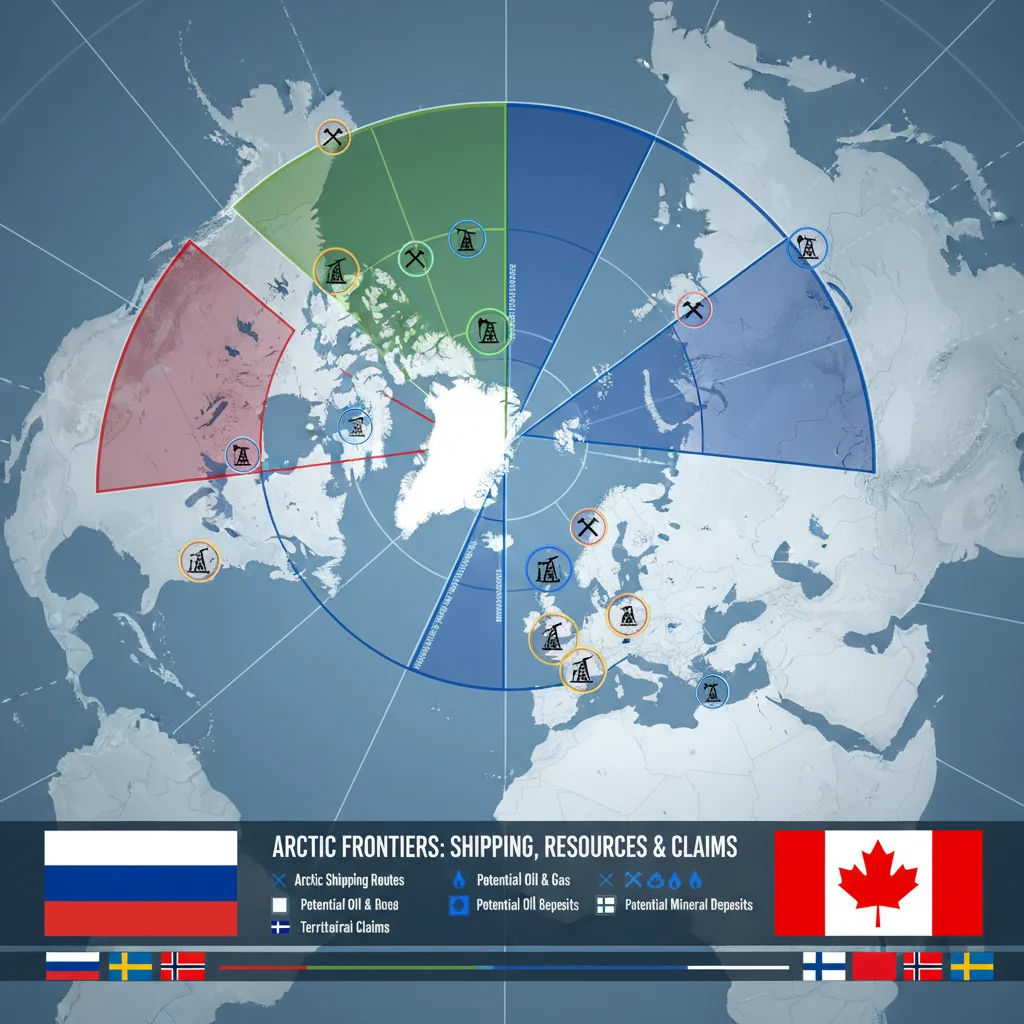
The legal framework governing the Arctic is primarily based on the United Nations Convention on the Law of the Sea (UNCLOS). Under UNCLOS, coastal states can claim an exclusive economic zone (EEZ) extending 200 nautical miles from their baselines, and potentially further if they can prove that their continental shelf extends beyond this limit. Several Arctic nations, including Russia, Canada, and Denmark, have submitted or are preparing submissions to the UN Commission on the Limits of the Continental Shelf (CLCS) to extend their claims. These overlapping claims, particularly over the Lomonosov Ridge, an underwater mountain range, are a significant source of potential friction. The peaceful resolution of these claims is crucial for stability in the region, and the effectiveness of international law in managing these disputes will be a defining feature of Arctic Geopolitics 2026.
Resource Competition: The New Gold Rush in the High North
Beneath the melting ice lies an estimated 13% of the world’s undiscovered oil and 30% of its undiscovered natural gas, along with vast quantities of rare earth minerals, gold, and diamonds. The prospect of accessing these immense reserves is a primary driver of the intensified interest in the Arctic. By 2026, technological advancements will make extraction in this harsh environment more feasible, further fueling the competition.
Oil and Gas Exploration
Russia has been particularly aggressive in asserting its rights to Arctic energy resources, with state-owned companies like Gazprom and Rosneft investing heavily in exploration and extraction projects. Their strategy involves developing offshore platforms and liquefied natural gas (LNG) facilities along the NSR. Norway, a significant oil and gas producer, also continues its activities in the Barents Sea. The United States, while possessing significant offshore reserves in Alaska, has faced greater environmental and regulatory hurdles. The balance between energy security and environmental stewardship will be a constant tension point in Arctic Geopolitics 2026.
Mineral Resources and Strategic Metals
Beyond hydrocarbons, the Arctic holds substantial deposits of critical minerals essential for modern technologies, including rare earth elements, nickel, copper, and platinum group metals. Greenland, in particular, is believed to possess significant untapped mineral wealth, attracting investment and interest from global mining companies, including those from China. The global supply chain vulnerabilities exposed by recent events have underscored the strategic importance of securing access to these materials. The race to identify and exploit these mineral resources will intensify by 2026, adding another layer of complexity to the region’s geopolitical dynamics.
Geopolitical Tensions and Military Buildup
The increased accessibility and resource potential of the Arctic have inevitably led to a significant military buildup by several Arctic states, particularly Russia. This militarization is a key component of Arctic Geopolitics 2026, raising concerns about regional stability and potential flashpoints.
Russia’s Arctic Strategy
Russia views the Arctic as vital to its economic prosperity and national security. It has systematically reopened Soviet-era military bases, constructed new ones, and deployed advanced military hardware, including ice-hardened warships, submarines, and air defense systems, along its Arctic coastline. Russia’s Northern Fleet, headquartered in Severomorsk, is the most powerful naval force in the region. The expansion of its icebreaker fleet, including nuclear-powered vessels, further underscores its determination to control and secure the Northern Sea Route, which it considers its “national transport artery.” This robust military presence is designed to protect its economic interests, project power, and deter potential adversaries.
NATO’s Response and Enhanced Presence
In response to Russia’s growing military footprint, NATO and its member states, including the U.S., Canada, Norway, and Denmark, are increasing their own presence and capabilities in the Arctic. Joint military exercises, such as “Cold Response” and “Defender Arctic,” are becoming more frequent and larger in scale, focusing on cold-weather operations, maritime surveillance, and interoperability. New investments in Arctic-capable equipment, including icebreakers and long-range patrol aircraft, are also underway. The aim is to enhance deterrence, protect sovereign interests, and maintain freedom of navigation in international waters. The delicate balance between deterrence and escalation will be a critical challenge for Arctic Geopolitics 2026.
China’s Growing Influence
Despite not being an Arctic state, China has declared itself a “near-Arctic state” and is actively pursuing its “Polar Silk Road” initiative. This involves significant investments in Arctic infrastructure, scientific research, and resource extraction projects in collaboration with Arctic nations, particularly Russia. China’s strategic interest stems from the potential for shorter shipping routes, access to critical resources, and new avenues for global trade. While its presence is primarily economic and scientific, the dual-use nature of many of its investments raises concerns among some Western nations about potential long-term strategic implications. The integration of China into the Arctic equation adds another layer of complexity to Arctic Geopolitics 2026.
U.S. Strategic Interests in the Arctic by 2026
The United States, with its Alaskan coastline, is an Arctic nation with significant and multifaceted strategic interests in the region. By 2026, these interests will demand a comprehensive and proactive approach to ensure national security, economic prosperity, and environmental protection.
National Security and Homeland Defense
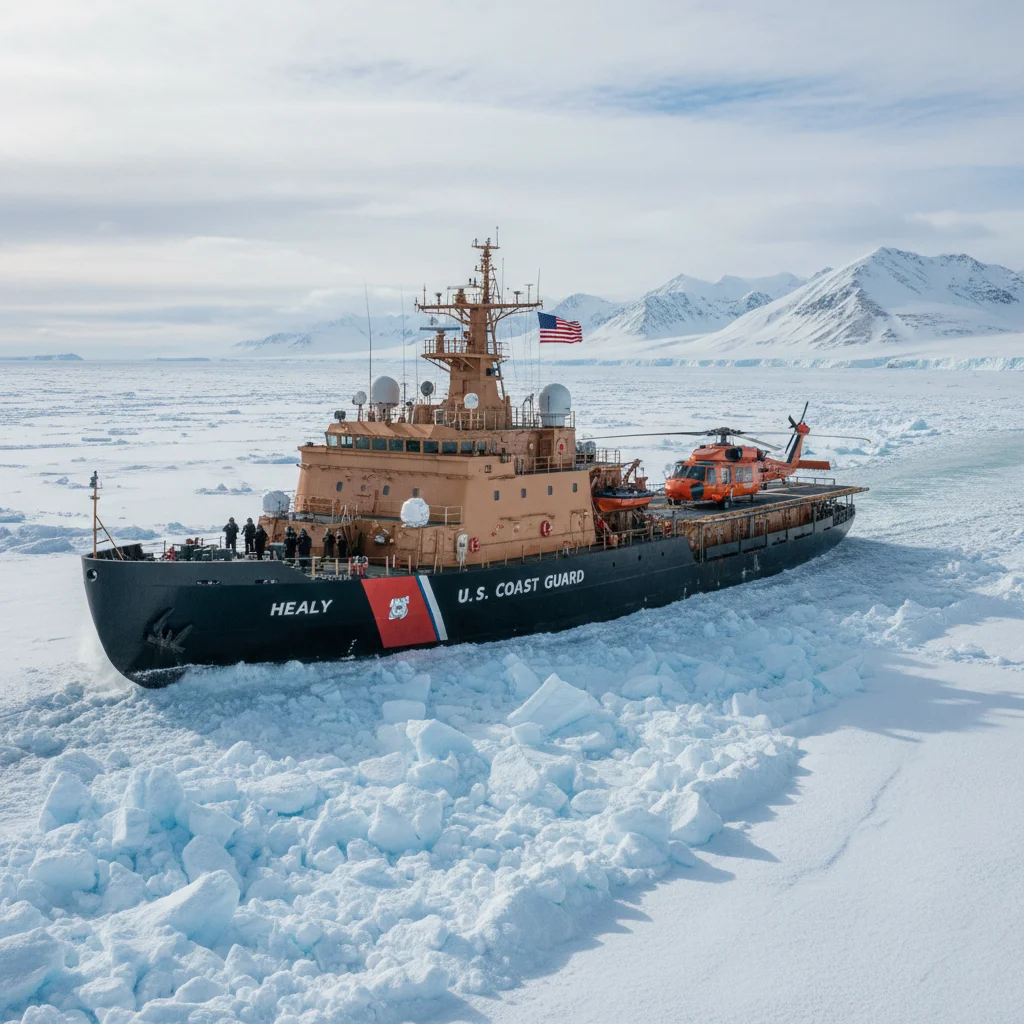
The Arctic serves as a critical strategic buffer and a potential avenue for threats to the U.S. homeland. As Russia enhances its military capabilities in the High North, the U.S. must maintain robust domain awareness and defense capabilities. This includes investing in advanced radar systems, satellite surveillance, and an enhanced presence of Coast Guard and military assets capable of operating effectively in extreme cold environments. Protecting Alaskan sovereignty, ensuring the safety of its citizens, and deterring aggression are paramount. The ability to project power and respond to contingencies across the vast Arctic expanse will be a cornerstone of U.S. national security in Arctic Geopolitics 2026.
Freedom of Navigation
A core U.S. interest is upholding the principle of freedom of navigation in international waters, including the Arctic’s emerging shipping lanes. While Russia claims extensive jurisdiction over the Northern Sea Route, requiring permits and pilotage for foreign vessels, the U.S. maintains that these are international straits where innocent passage should be permitted. Ensuring that these vital arteries remain open and governed by international law is crucial for global trade and military mobility. The U.S. Navy and Coast Guard conduct freedom of navigation operations to assert these rights, and such operations are likely to continue and potentially increase in frequency by 2026.
Economic Opportunities and Resource Management
The Arctic presents significant economic opportunities for the U.S., particularly in terms of resource extraction and new trade routes. While environmental concerns often temper enthusiasm for offshore drilling in Alaskan waters, the long-term potential for oil, gas, and critical mineral extraction remains. Furthermore, the development of Arctic shipping routes could benefit Alaskan ports and logistics industries. The U.S. must balance these economic opportunities with its commitment to sustainable development and environmental protection, ensuring that any resource development adheres to the highest standards. This delicate balance will be a central theme for U.S. policy in Arctic Geopolitics 2026.
Environmental Protection and Scientific Research
The U.S. shares a profound interest in protecting the fragile Arctic environment, which is disproportionately affected by climate change. Melting ice, ocean acidification, and disruptions to indigenous communities and ecosystems require urgent attention. U.S. strategic interests extend to leading scientific research efforts to understand these changes, mitigate their impacts, and develop adaptive strategies. International cooperation on environmental monitoring, pollution prevention, and search and rescue operations is essential. This commitment to environmental stewardship is not merely altruistic; it directly impacts the long-term viability of the region and its indigenous populations, which are integral to the U.S. Arctic presence.
Strengthening Alliances and Partnerships
Given the complexities of Arctic Geopolitics 2026, the U.S. relies heavily on strengthening its alliances and partnerships with other Arctic nations. Collaborating with Canada, Norway, Denmark (Greenland), and other NATO allies is crucial for maintaining regional stability, sharing intelligence, and coordinating defense strategies. The Arctic Council, though currently impacted by geopolitical tensions, remains a vital forum for cooperation on environmental protection, sustainable development, and indigenous issues. Reinvigorating and utilizing such multilateral platforms will be key to managing competition and fostering cooperation in the High North. Partnerships with indigenous communities, whose knowledge and presence are indispensable, are also a critical element of U.S. Arctic strategy.
Challenges and Opportunities for U.S. Policy
Navigating the intricate web of Arctic Geopolitics 2026 presents both significant challenges and unique opportunities for U.S. policy. The need for a coherent, long-term strategy is more urgent than ever.
Investment in Arctic Capabilities
A primary challenge for the U.S. is the need for sustained investment in Arctic-specific capabilities. This includes acquiring more heavy icebreakers to match the fleets of Russia and China, enhancing infrastructure in Alaska (ports, airfields, communication networks), and developing specialized training for military and Coast Guard personnel. Without adequate resources and infrastructure, the U.S. risks being outmaneuvered by competitors and unable to effectively respond to crises in the region.
Balancing Competition and Cooperation
The U.S. must skillfully balance the imperative to compete with adversaries like Russia and China with the need to cooperate on shared challenges, such as climate change, scientific research, and search and rescue operations. Complete disengagement from multilateral forums is not a viable option, as it cedes influence to other actors. Diplomacy and strategic engagement, even amidst tensions, will be crucial to managing the region’s future. Finding common ground on non-security issues can help build trust and prevent miscalculation.
Addressing Indigenous Concerns
The Arctic is home to diverse indigenous communities whose cultures, livelihoods, and traditions are inextricably linked to the environment. U.S. policy must prioritize their voices and concerns, ensuring that development projects and strategic decisions do not adversely impact their way of life. Integrating traditional knowledge with scientific research can lead to more effective and sustainable solutions for the region. Respecting sovereign rights and fostering self-determination are not just ethical imperatives but also contribute to regional stability.
The Role of Technology and Innovation
Technological advancements will play a critical role in shaping Arctic Geopolitics 2026. Remote sensing, autonomous underwater vehicles (AUVs), advanced communication systems, and resilient navigation technologies will enhance situational awareness, improve operational capabilities, and facilitate scientific research. The U.S. has an opportunity to leverage its technological prowess to gain an advantage in areas such as maritime domain awareness, climate modeling, and sustainable resource management, thereby enhancing its strategic position without necessarily resorting to overt militarization.
Conclusion: A Future Defined by Strategic Foresight
By 2026, the Arctic will be a region of increasing strategic importance, characterized by a complex interplay of geopolitical tensions, intense resource competition, and pressing environmental concerns. The U.S. has vital interests at stake, ranging from national security and freedom of navigation to economic prosperity and environmental stewardship. A comprehensive and forward-looking U.S. Arctic strategy must prioritize sustained investment in capabilities, skillful diplomacy, robust partnerships, and a deep respect for the region’s indigenous peoples and fragile ecosystems. The decisions made in the coming years will profoundly shape the future of the High North, determining whether it becomes a zone of peaceful cooperation or a new arena for great power confrontation. Understanding and actively engaging with the evolving dynamics of Arctic Geopolitics 2026 is not just a regional imperative but a global necessity.