Navigating AI Regulation: U.S. Tech Firms’ 2026 Geopolitical Strategy

Anúncios
The Geopolitical Landscape of AI Regulation: What U.S. Tech Firms Must Know for 2026
Anúncios
As we hurtle towards 2026, the rapid evolution of Artificial Intelligence (AI) continues to reshape industries, economies, and societies worldwide. Concurrently, governments across the globe are intensifying their efforts to establish comprehensive regulatory frameworks for AI. For U.S. tech firms, understanding and strategically navigating this complex and often fractured geopolitical landscape of AI regulation 2026 is not merely a compliance issue; it’s a critical determinant of market access, innovation potential, and global competitiveness. The stakes are higher than ever, demanding a proactive and informed approach to policy engagement and technological development.
The absence of a unified global approach to AI governance has led to a patchwork of national and regional regulations, each with its own philosophical underpinnings, priorities, and enforcement mechanisms. This divergence creates significant challenges for multinational corporations, particularly those at the forefront of AI innovation. From data privacy and algorithmic transparency to ethical deployment and national security implications, the regulatory net is cast wide, requiring U.S. tech firms to develop sophisticated strategies that can adapt to varying legal and ethical standards across different jurisdictions.
Anúncios
This comprehensive guide delves into the intricate geopolitical dynamics shaping AI regulation 2026. We will explore the key regulatory trends emerging from major global players like the European Union, China, and the United States itself, highlighting their potential impact on U.S. tech firms. Furthermore, we will discuss the critical challenges of compliance, the imperative of ethical AI development, and offer actionable strategies for how U.S. tech companies can not only survive but thrive in this increasingly regulated environment. The goal is to equip industry leaders with the foresight and tools necessary to transform regulatory hurdles into strategic advantages.
The Global Tapestry of AI Regulation: Key Players and Their Approaches
The global regulatory environment for AI is characterized by a diverse range of approaches, often reflecting distinct national values, economic priorities, and strategic objectives. Understanding these different philosophies is fundamental to comprehending the challenges and opportunities presented by AI regulation 2026.
The European Union: A Pioneer in Comprehensive AI Governance
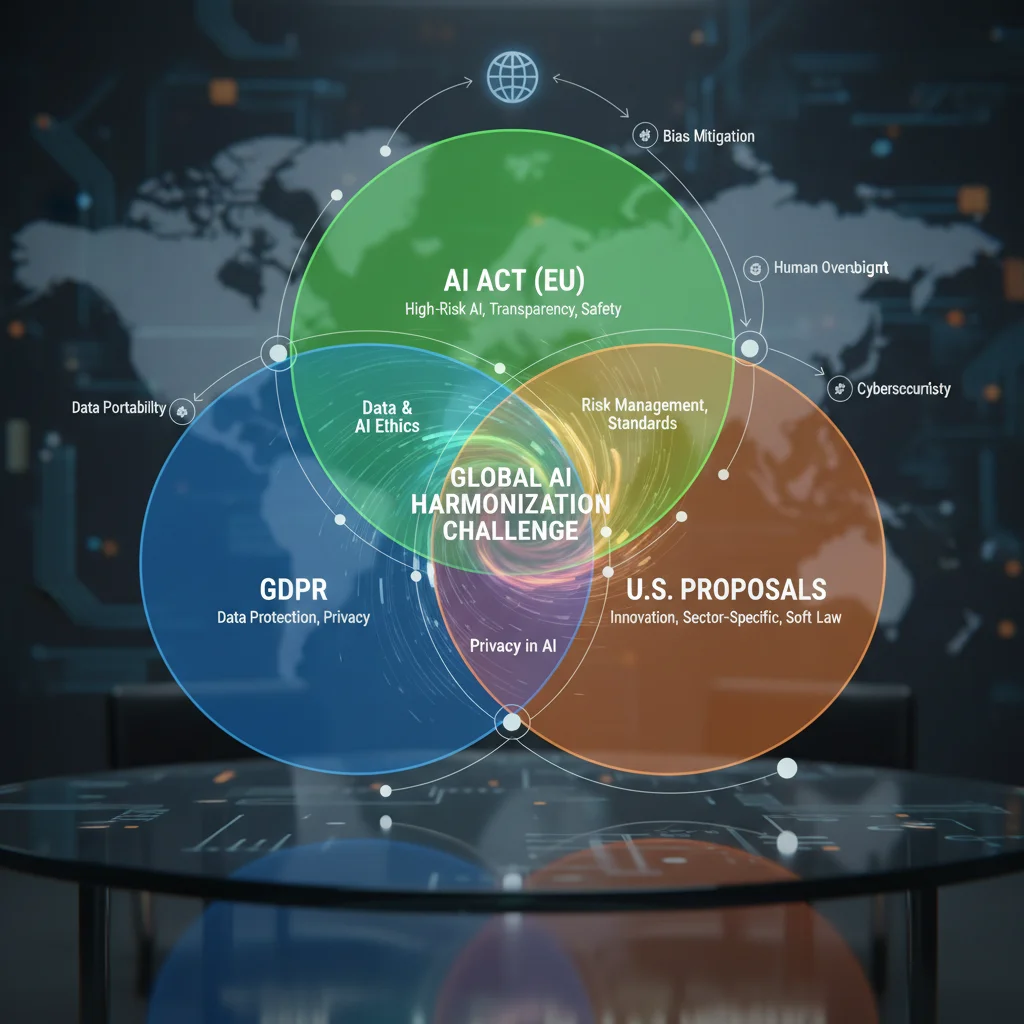
The European Union (EU) has positioned itself as a global leader in AI regulation, much like it did with data privacy through the General Data Protection Regulation (GDPR). The proposed EU AI Act, expected to be fully implemented by 2026, adopts a risk-based approach, categorizing AI systems into different levels of risk: unacceptable, high, limited, and minimal. Systems deemed ‘unacceptable risk,’ such as social scoring by governments, are banned. ‘High-risk’ AI systems, including those used in critical infrastructure, employment, law enforcement, and judicial administration, face stringent requirements for data quality, transparency, human oversight, cybersecurity, and conformity assessments.
For U.S. tech firms operating or wishing to operate in the EU, the implications are profound. Compliance with the AI Act will necessitate significant investments in internal governance structures, technical documentation, risk management systems, and post-market monitoring. The extraterritorial reach of the Act, similar to GDPR, means that even AI systems developed outside the EU but impacting EU citizens will likely fall under its purview. This makes understanding and preparing for the EU AI Act a top priority for any U.S. tech company with global aspirations.
China: State Control and Strategic AI Advancement
In stark contrast to the EU’s human-centric, rights-based approach, China’s AI regulatory framework is deeply intertwined with its national strategy for technological supremacy and social governance. China has been rapidly introducing various AI-related regulations, focusing on algorithms, data security, and generative AI. Regulations like the ‘Provisions on the Administration of Algorithmic Recommendations in Internet Information Services’ (Algorithmic Recommendations Law) and the ‘Interim Measures for the Management of Generative Artificial Intelligence Services’ aim to ensure that AI development aligns with socialist core values, maintains social stability, and serves national interests.
For U.S. tech firms, operating in China’s AI ecosystem requires navigating a complex web of regulations that prioritize state control, censorship, and data localization. Compliance often involves partnering with local entities, adhering to strict data transfer rules, and ensuring that AI applications do not contravene national security or public order provisions. The geopolitical rivalry between the U.S. and China further complicates matters, with technology decoupling and export controls adding layers of strategic consideration for companies involved in advanced AI development.
The United States: Sector-Specific and Evolving Approaches
The U.S. approach to AI regulation 2026 is currently more fragmented compared to the EU or China. Rather than a single overarching AI law, the U.S. has adopted a sector-specific and agency-led approach, building upon existing regulatory frameworks for privacy, consumer protection, and civil rights. The Biden administration has issued an Executive Order on the Safe, Secure, and Trustworthy Development and Use of Artificial Intelligence, which outlines broad principles and directs federal agencies to develop specific guidelines and standards. This includes mandates for AI safety testing, algorithmic bias mitigation, and privacy-preserving AI.
Key agencies like the National Institute of Standards and Technology (NIST) are developing AI Risk Management Frameworks, while the Federal Trade Commission (FTC) is actively scrutinizing AI applications for unfair or deceptive practices. State-level initiatives, such as California’s Consumer Privacy Act (CCPA) and its amendments, also contribute to the regulatory patchwork. U.S. tech firms face the challenge of anticipating how these disparate efforts will coalesce and how federal and state regulations will interact. The emphasis is often on fostering innovation while mitigating risks, striking a balance that remains a subject of ongoing debate and legislative action.
Cross-Border Challenges and the Quest for Interoperability
The divergent regulatory paths create significant cross-border challenges for U.S. tech firms. A global AI product or service must ideally comply with multiple, sometimes conflicting, sets of rules. This ‘compliance burden’ can stifle innovation, increase operational costs, and create barriers to market entry. The absence of internationally harmonized standards for AI regulation 2026 means companies must develop sophisticated internal compliance mechanisms capable of adapting to diverse legal requirements.
Efforts are underway to promote international cooperation and interoperability. Organizations like the OECD, G7, and G20 are actively discussing common principles for responsible AI. While a global treaty on AI regulation remains a distant prospect, the push for mutual recognition agreements, shared technical standards, and best practices could alleviate some of the compliance burden. U.S. tech firms should actively engage in these international dialogues and contribute to the development of standards that are both effective and technologically feasible.
Key Areas of Regulatory Focus for 2026
Several thematic areas are consistently at the forefront of global AI regulation 2026 discussions. U.S. tech firms must pay particular attention to these domains:
Data Privacy and Security
Data is the lifeblood of AI. Regulations concerning data collection, storage, processing, and transfer are central to AI governance. GDPR, CCPA, and China’s Personal Information Protection Law (PIPL) set high standards for data privacy. AI systems often require vast datasets, making compliance with these data protection regimes a complex undertaking. Firms must implement robust data governance frameworks, ensure transparency in data usage, and adopt privacy-enhancing technologies (PETs) to protect personal information.
Algorithmic Transparency and Explainability
As AI systems become more complex, their decision-making processes can become opaque – the ‘black box’ problem. Regulators are increasingly demanding greater transparency and explainability, especially for high-risk AI applications. This means companies may need to provide clear explanations of how AI models arrive at their conclusions, identify potential biases, and allow for human oversight and intervention. Developing explainable AI (XAI) tools and methodologies will be crucial for meeting these requirements.
Bias and Fairness
AI systems can inherit and amplify societal biases present in their training data, leading to discriminatory outcomes. Regulators globally are focusing on mitigating algorithmic bias and ensuring fairness in AI applications, particularly in critical areas like employment, credit scoring, and criminal justice. U.S. tech firms must implement rigorous testing for bias, develop diverse and representative datasets, and establish mechanisms for auditing and correcting unfair algorithmic decisions.
Safety and Risk Management
The potential for AI systems to cause harm, whether intentionally or unintentionally, is a growing concern. Regulations are emerging to mandate comprehensive risk assessments, safety testing, and incident reporting for AI. This includes evaluating the potential for AI systems to malfunction, be misused, or generate harmful content. Establishing robust safety protocols and continuous monitoring will be essential for compliance.
Intellectual Property and Generative AI
The rise of generative AI has sparked intense debate over intellectual property rights. Questions around who owns the output of generative AI, whether training data infringes on copyrighted material, and how to attribute creative works are pressing. While specific regulations are still evolving, U.S. tech firms developing or using generative AI must closely monitor legal developments and consider proactive measures to address IP concerns, such as licensing agreements and content attribution mechanisms.
Strategic Imperatives for U.S. Tech Firms in 2026
Navigating the complex landscape of AI regulation 2026 requires more than just reactive compliance. U.S. tech firms must adopt proactive and strategic approaches to secure their position in the global AI market.
1. Establish Robust Internal Governance and Compliance Frameworks
Central to any successful strategy is the development of a comprehensive internal governance framework for AI. This includes:
- Dedicated AI Ethics and Compliance Teams: Appointing cross-functional teams comprising legal, technical, and ethics experts to oversee AI development and deployment.
- Risk Assessment and Management Systems: Implementing systematic processes to identify, assess, and mitigate AI-related risks across all stages of the product lifecycle.
- Regular Audits and Assessments: Conducting independent audits of AI systems for compliance with regulatory requirements, ethical principles, and performance standards.
- Employee Training and Awareness: Educating all relevant employees on AI ethics, regulatory obligations, and responsible AI development practices.
2. Proactive Engagement with Policymakers and Stakeholders
U.S. tech firms should not merely react to regulations but actively participate in their shaping. This involves:
- Lobbying and Advocacy: Engaging with policymakers at federal, state, and international levels to advocate for proportionate, innovation-friendly, and globally harmonized AI regulations.
- Industry Alliances and Consortia: Joining industry groups and consortia focused on developing best practices, ethical guidelines, and technical standards for AI, thereby influencing the broader regulatory discourse.
- Public-Private Partnerships: Collaborating with government agencies and academic institutions on AI research, development, and the establishment of regulatory sandboxes to test innovative AI solutions in a controlled environment.
3. Prioritize Ethical AI Development and Trust-Building
Beyond mere compliance, embedding ethical principles into the core of AI development is a strategic imperative. Consumers, governments, and partners are increasingly prioritizing trust and accountability. This means:
- ‘Ethics by Design’ and ‘Privacy by Design’: Integrating ethical considerations and privacy safeguards from the initial stages of AI system design and development.
- Transparency and Explainability: Investing in research and development to make AI systems more transparent and their decisions more explainable, especially for high-stakes applications.
- Fairness and Bias Mitigation: Implementing rigorous processes for identifying and mitigating biases in AI models and ensuring equitable outcomes.
- Human Oversight and Accountability: Designing AI systems that allow for meaningful human oversight and clearly define accountability for AI-driven decisions.
4. Embrace Global Standards and Interoperability
Given the global nature of the AI market, U.S. tech firms should strive for solutions that are compatible with international standards where possible. This includes:
- Adopting International Best Practices: Learning from and adopting best practices from leading regulatory frameworks like the EU AI Act, even if not directly mandated in all operating regions.
- Contributing to Standards Development: Actively participating in international standards organizations (e.g., ISO, IEEE) to shape the technical specifications that underpin future AI regulations.
- Developing Modular and Adaptable AI Systems: Designing AI architectures that can be easily modified or configured to comply with different regional regulatory requirements, rather than building bespoke solutions for each market.

5. Geopolitical Intelligence and Scenario Planning
The geopolitical landscape is dynamic, and AI regulation will continue to evolve. U.S. tech firms must invest in robust geopolitical intelligence capabilities to anticipate future regulatory shifts and engage in scenario planning. This includes:
- Monitoring Global Policy Developments: Continuously tracking legislative proposals, policy debates, and enforcement actions related to AI in key markets.
- Assessing Geopolitical Risks: Evaluating how geopolitical tensions, trade disputes, and national security concerns might impact AI development, supply chains, and market access.
- Developing Contingency Plans: Preparing for various regulatory scenarios, including stricter controls, data localization requirements, or even technology bans, to ensure business continuity and strategic flexibility.
The Economic and Competitive Stakes
The geopolitical landscape of AI regulation 2026 is not just about avoiding penalties; it’s about shaping the future of the AI industry. Firms that successfully navigate this environment will gain a significant competitive advantage. Those that fail to adapt risk being locked out of key markets, facing reputational damage, and stifling their innovation potential.
For instance, companies that can demonstrate robust compliance with the EU AI Act may find it easier to gain market access and build trust with European consumers and businesses. Similarly, firms that align with China’s strategic AI objectives might find opportunities within that vast market, albeit with significant compromises. In the U.S., a strong commitment to ethical AI and responsible innovation can enhance brand reputation and attract top talent.
Furthermore, the development of globally interoperable AI systems and standards could unlock new markets and foster greater international collaboration. Conversely, a fragmented regulatory environment could lead to a ‘splinternet’ for AI, where different regions operate with incompatible AI ecosystems, limiting the scalability and reach of global tech firms.
Conclusion: A Call for Proactive Leadership in AI Regulation 2026
The year 2026 marks a pivotal moment in the global governance of Artificial Intelligence. For U.S. tech firms, the geopolitical landscape of AI regulation 2026 presents a complex web of opportunities and challenges. The divergent approaches of major global powers – from the EU’s comprehensive, rights-based framework to China’s state-controlled, strategic model, and the U.S.’s evolving, sector-specific directives – demand a nuanced and sophisticated response.
Success in this environment will hinge on several key factors: establishing robust internal governance and compliance frameworks, proactively engaging with policymakers and stakeholders, prioritizing ethical AI development, embracing global standards, and maintaining keen geopolitical intelligence. Firms that view AI regulation not as an impediment but as an integral part of responsible innovation and strategic market positioning will be best placed to thrive.
Ultimately, the ability of U.S. tech firms to adapt to and influence this evolving regulatory landscape will not only determine their own future but also play a significant role in shaping the global trajectory of AI development. By demonstrating leadership in responsible AI, U.S. companies can help foster a future where AI’s transformative potential is harnessed for the benefit of all, within a framework of trust, safety, and ethical principles. The time for proactive engagement and strategic foresight is now.