Navigating the EU AI Act: A U.S. Tech Company’s Q3 2026 Compliance Guide

Anúncios
The European Union’s Artificial Intelligence Act (EU AI Act) represents a landmark piece of legislation, poised to significantly influence how artificial intelligence systems are developed, deployed, and used globally. For U.S. tech companies with operations, customers, or data within the EU, this regulation is not merely a European concern; it’s a critical compliance imperative that demands immediate attention. With key provisions expected to become enforceable by Q3 2026, the window for preparation is rapidly closing. Understanding and addressing the core challenges now will be paramount to ensuring seamless operations and avoiding substantial penalties.
This comprehensive guide delves into the five most significant compliance challenges that U.S. tech companies are likely to face under the EU AI Act, offering practical strategies and actionable insights to navigate this complex regulatory landscape effectively. Our focus is on proactive measures your organization can implement to achieve robust EU AI Act Compliance well before the deadlines.
Anúncios
Understanding the EU AI Act’s Core Principles and Extraterritorial Reach
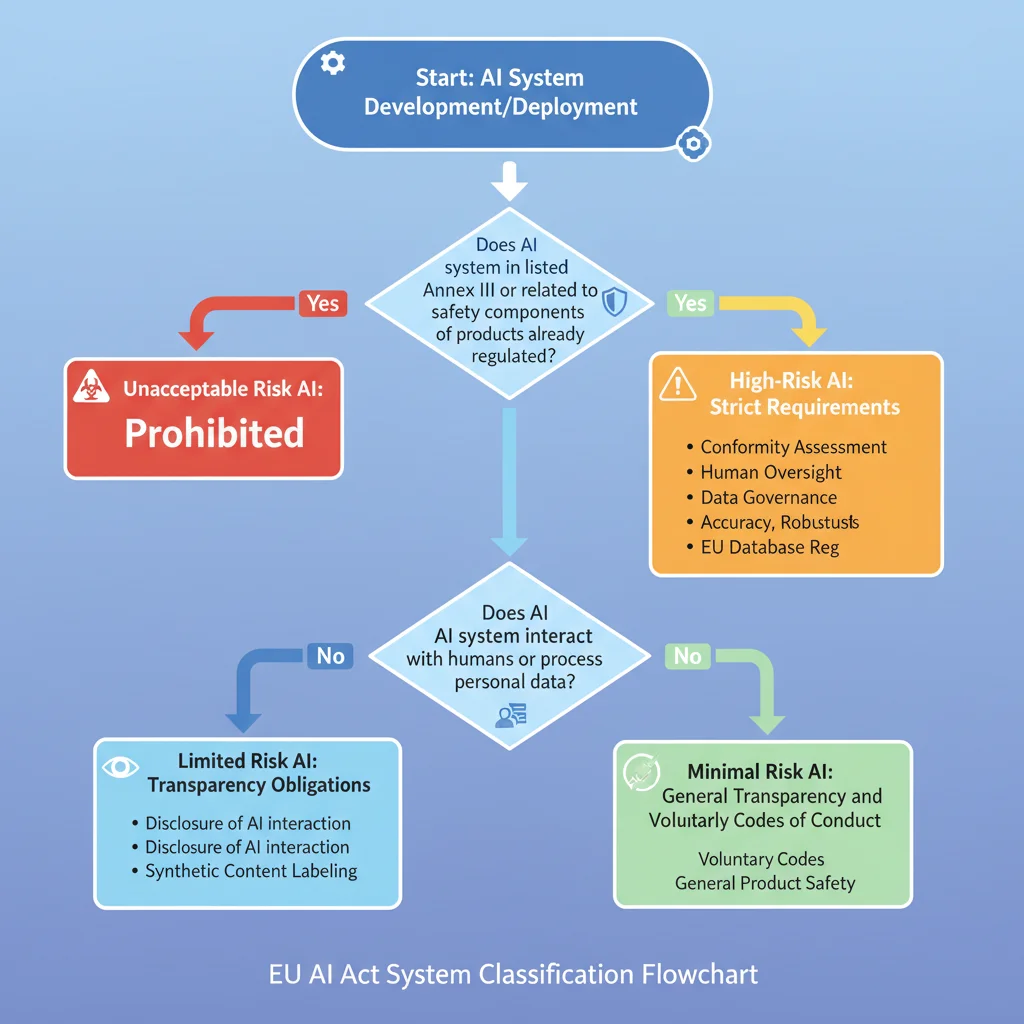
Before diving into the challenges, it’s crucial to grasp the fundamental principles of the EU AI Act. The Act adopts a risk-based approach, categorizing AI systems into four levels: unacceptable risk, high-risk, limited risk, and minimal risk. The stricter the classification, the more stringent the compliance requirements. Systems deemed ‘unacceptable risk’ are outright banned (e.g., social scoring by governments). ‘High-risk’ systems, which include AI used in critical infrastructure, law enforcement, employment, and healthcare, face extensive obligations.
Anúncios
A key aspect for U.S. tech companies is the Act’s extraterritorial scope. Much like the GDPR, the EU AI Act applies not only to providers and deployers of AI systems located within the EU but also to those outside the EU if the AI system’s output is used in the EU. This means if your U.S.-based company develops an AI product or service that impacts individuals or businesses in the EU, you are subject to the Act’s provisions. This broad reach necessitates a global perspective on EU AI Act Compliance strategies.
The Act aims to ensure that AI systems placed on the EU market are safe, transparent, non-discriminatory, and environmentally sound. It emphasizes human oversight, technical robustness, data governance, and comprehensive documentation throughout the AI system’s lifecycle. For U.S. tech companies, this translates into a significant re-evaluation of current AI development and deployment practices.
Challenge 1: Accurately Classifying AI Systems and Understanding Obligations
The cornerstone of EU AI Act Compliance is the correct classification of your AI systems. Misclassifying an AI system can lead to either over-compliance (wasting resources) or, more critically, under-compliance (resulting in penalties). The Act provides detailed, though sometimes complex, criteria for determining whether an AI system falls into the ‘high-risk’ category.
The Nuances of High-Risk Classification
A system is generally considered high-risk if it’s intended to be used as a safety component of a product or is itself a product covered by EU harmonization legislation (e.g., medical devices, aviation), or if it falls into specific areas like employment, education, critical infrastructure, law enforcement, migration, or democratic processes. However, even within these categories, there are caveats. For instance, an AI system used in recruitment might be high-risk, but a simple AI tool for internal team scheduling might not be.
Strategies to Overcome This Challenge:
- Conduct a Thorough AI System Inventory and Audit: Begin by cataloging all AI systems your company develops, deploys, or uses that could potentially impact EU citizens or businesses. For each system, document its purpose, intended use, technical specifications, and the data it processes.
- Establish an Internal Classification Framework: Develop a clear, documented internal framework for classifying AI systems based on the EU AI Act’s criteria. This framework should involve legal, technical, and business stakeholders to ensure a holistic assessment. Utilize decision trees and checklists to guide the classification process.
- Seek Expert Legal Counsel: Given the complexity and potential for severe penalties, engaging with legal experts specializing in EU AI law is highly recommended. They can provide guidance on borderline cases and help interpret the Act’s provisions in the context of your specific AI applications.
- Regularly Review Classifications: AI systems evolve, and their uses can expand. Implement a process for regularly reviewing AI system classifications, especially when there are significant updates, changes in intended use, or new deployments.
Accurate classification is not a one-time event but an ongoing process that requires diligent attention and cross-functional collaboration. It forms the bedrock upon which all other EU AI Act Compliance efforts will be built.
Challenge 2: Implementing Robust Risk Management and Quality Management Systems
For high-risk AI systems, the EU AI Act mandates the establishment of a comprehensive risk management system and a quality management system. These are not merely administrative burdens; they are fundamental operational frameworks designed to ensure the safety, reliability, and ethical deployment of AI.
Risk Management System (RMS)
The RMS requires identifying, analyzing, and evaluating the risks that a high-risk AI system poses to fundamental rights, health, safety, and other public interests throughout its lifecycle. This includes risks related to bias, discrimination, privacy, security vulnerabilities, and potential for harm. It also necessitates implementing appropriate risk mitigation measures and monitoring their effectiveness.
Quality Management System (QMS)
A QMS ensures that AI systems are developed, deployed, and operated consistently and reliably. It covers aspects like data governance, documentation, design and development processes, post-market monitoring, and corrective actions. The QMS needs to be proportionate to the size and structure of the organization and the criticality of the AI system.
Strategies to Overcome This Challenge:
- Integrate Existing Frameworks: U.S. tech companies likely already have risk management and quality assurance processes (e.g., ISO 9001, SOC 2, HIPAA, NIST AI RMF). Leverage and adapt these existing frameworks to meet the specific requirements of the EU AI Act, rather than starting from scratch.
- Develop AI-Specific Risk Assessments: Create methodologies for conducting AI-specific risk assessments that go beyond traditional IT risk assessments. This involves identifying unique AI risks such as algorithmic bias, lack of transparency, and potential for unintended consequences.
- Establish Clear Roles and Responsibilities: Define who is responsible for risk identification, assessment, mitigation, and monitoring within your AI development and deployment teams. This includes appointing an ‘AI Risk Officer’ or a dedicated team.
- Implement Continuous Monitoring and Review: Risk and quality management are ongoing processes. Establish mechanisms for continuous monitoring of AI system performance, identification of new risks, and periodic review and update of both the RMS and QMS.
- Document Everything: Meticulous documentation is key. Maintain records of all risk assessments, mitigation strategies, testing results, data governance practices, and changes to the AI system. This documentation will be crucial during compliance audits.
The implementation of robust RMS and QMS for high-risk AI systems is a significant undertaking, requiring investment in resources, expertise, and process re-engineering. However, it also presents an opportunity to enhance the trustworthiness and reliability of your AI products, building greater confidence among users and regulators.
Challenge 3: Ensuring Data Governance and Training Data Quality
The quality and governance of the data used to train and test AI systems are central to the EU AI Act, particularly for high-risk systems. The Act places strong emphasis on ensuring that training, validation, and testing datasets are relevant, representative, sufficiently large, and free from errors and biases. Poor data quality can lead to biased or unreliable AI outputs, which the Act aims to prevent.
Key Data Governance Requirements:
- Data Quality: Datasets must be relevant, representative, free from errors, and complete.
- Bias Mitigation: Measures must be in place to detect and mitigate biases in data that could lead to discrimination.
- Data Sourcing and Collection: Clear documentation of data sources and collection processes is required, including adherence to ethical guidelines and data protection regulations (like GDPR).
- Data Management Practices: Robust processes for data labeling, cleaning, storage, and access control are essential.
Strategies to Overcome This Challenge:
- Implement Comprehensive Data Governance Policies: Develop and enforce strict data governance policies specifically for AI, covering data acquisition, storage, processing, and usage. These policies should align with both the EU AI Act and GDPR.
- Conduct Data Audits and Bias Detection: Regularly audit your training datasets for quality, completeness, and potential biases. Utilize advanced analytical tools and techniques to identify and quantify biases, and implement strategies for their mitigation (e.g., re-sampling, data augmentation, fairness-aware algorithms).
- Enhance Data Lineage and Documentation: Maintain detailed records of the entire data lifecycle for each AI system. This includes information on data sources, collection methods, pre-processing steps, transformations, and any data augmentation techniques used.
- Invest in Data Labeling and Annotation Best Practices: For supervised learning models, ensure that data labeling is performed by trained professionals following clear guidelines, with quality control mechanisms in place to minimize human error and bias.
- Privacy-Enhancing Technologies (PETs): Explore and implement PETs such as differential privacy, homomorphic encryption, or federated learning where appropriate, especially when dealing with sensitive personal data, to enhance data privacy and compliance.
Addressing data governance and quality issues is a foundational aspect of EU AI Act Compliance. It requires a significant investment in data infrastructure, processes, and skilled personnel, but it ultimately leads to more reliable, fair, and legally compliant AI systems.
Challenge 4: Ensuring Transparency and Human Oversight
The EU AI Act places a high premium on transparency and human oversight, particularly for high-risk AI systems. Users and affected individuals must be able to understand how an AI system works, its capabilities and limitations, and how its decisions are made. Furthermore, humans must retain the ability to oversee, intervene, and ultimately override AI decisions to prevent or mitigate harmful outcomes.
Transparency Requirements:
- Information to Users: Deployers of high-risk AI systems must provide clear and comprehensive information to users regarding the system’s capabilities, limitations, and the human oversight mechanisms in place.
- Explainability: While not mandating full algorithmic transparency, the Act requires a sufficient level of explainability for high-risk AI systems to allow for proper understanding and scrutiny.
- Traceability: Technical documentation and logging capabilities are required to ensure that the operation of high-risk AI systems can be traced and analyzed.
Human Oversight Requirements:
- Human Control: High-risk AI systems must be designed to allow for effective human oversight, including the ability to intervene and override decisions.
- Human Competence: Individuals exercising human oversight must have the necessary competence, training, and authority to understand the system’s output and intervene effectively.
Strategies to Overcome This Challenge:
- Develop Explainable AI (XAI) Capabilities: Invest in research and development of XAI techniques that can provide insights into how your AI models arrive at their decisions. This could include feature importance analysis, LIME, SHAP values, or other model-agnostic methods.
- Create User-Friendly Documentation: Go beyond technical specifications. Develop clear, concise, and accessible documentation for end-users and deployers of your AI systems, explaining their purpose, how they function, potential risks, and how to exercise human oversight.
- Implement Robust Logging and Monitoring: Design your AI systems to generate detailed logs of their operations, including data inputs, outputs, decisions made, and any human interventions. These logs are crucial for auditing, post-market monitoring, and incident investigation.
- Design for Human-in-the-Loop: For high-risk applications, design your AI systems with explicit human-in-the-loop mechanisms. This could involve human review of critical decisions, human validation of outputs before deployment, or human override capabilities.
- Provide Comprehensive Training: Ensure that all personnel involved in the deployment, operation, and oversight of high-risk AI systems receive adequate training on the system’s functionalities, limitations, and the specific procedures for human oversight and intervention.
Achieving transparency and effective human oversight requires a shift in design philosophy, prioritizing interpretability and control alongside performance. This is where ethical AI principles translate directly into compliance requirements for EU AI Act Compliance.

Challenge 5: Establishing Post-Market Monitoring and Reporting Mechanisms
The EU AI Act’s obligations don’t end once an AI system is deployed. For high-risk AI systems, providers are required to implement a robust post-market monitoring (PMM) system. This involves continuously monitoring the system’s performance, identifying potential risks, and taking corrective actions throughout its lifecycle. This is particularly challenging for U.S. tech companies that may be geographically distant from their EU user base.
Key PMM Requirements:
- Continuous Monitoring: Regularly monitor the AI system’s performance, accuracy, and compliance with the Act’s requirements.
- Incident Reporting: Establish procedures for promptly reporting serious incidents or malfunctions that pose a risk to fundamental rights, health, or safety to relevant market surveillance authorities.
- Corrective Actions: Implement processes for taking timely corrective actions when issues are identified, including system updates, recalls, or withdrawal from the market.
- Trend Analysis: Analyze trends in incidents and performance data to identify systemic issues and improve future AI development.
Strategies to Overcome This Challenge:
- Develop a Dedicated PMM System: Implement a structured PMM system that includes automated monitoring tools, performance dashboards, and alert mechanisms for detecting anomalies or deviations in AI system behavior.
- Establish Clear Incident Management Protocols: Define precise protocols for identifying, classifying, investigating, and reporting serious incidents involving high-risk AI systems. This includes clear lines of communication with EU market surveillance authorities.
- Leverage Feedback Loops: Create effective feedback mechanisms from users, deployers, and other stakeholders within the EU to gather insights on the AI system’s real-world performance and identify potential issues early.
- Ensure Adequate Resources for Maintenance and Updates: Allocate sufficient resources (human and financial) for the ongoing maintenance, updates, and retraining of high-risk AI systems. This includes addressing newly identified biases, security vulnerabilities, or performance degradations.
- Appoint an Authorized Representative in the EU: For U.S. companies without a physical presence in the EU, appointing an authorized representative is a mandatory requirement for EU AI Act Compliance. This representative acts as a liaison with EU authorities and ensures compliance with the Act.
Post-market monitoring is a continuous commitment that ensures the ongoing safety and trustworthiness of AI systems. It requires a proactive and responsive approach to managing AI risks in real-world environments.
Looking Ahead: Preparing Your U.S. Tech Company for Q3 2026
The EU AI Act is not just another regulation; it’s a paradigm shift in how AI is governed. For U.S. tech companies, the looming Q3 2026 deadline for key provisions means that strategic planning and implementation must begin now. Procrastination is not an option, as the scope of work required for comprehensive EU AI Act Compliance is substantial.
Key Takeaways for Proactive Compliance:
- Start Early: Don’t wait for the last minute. Begin your AI system inventory, classification, and gap analysis immediately.
- Cross-Functional Collaboration: AI Act compliance is not solely a legal or technical issue. It requires collaboration across legal, engineering, product development, data science, and ethics teams.
- Invest in Expertise: Whether through internal training, hiring new talent, or engaging external consultants, ensure your team has the necessary expertise in AI ethics, law, and technical compliance.
- Adopt a Compliance-by-Design Approach: Integrate AI Act requirements into your AI development lifecycle from the outset, rather than attempting to bolt them on as an afterthought. This is far more efficient and effective.
- Stay Informed: The regulatory landscape for AI is still evolving. Keep abreast of guidance from EU authorities, best practices, and any amendments to the Act.
Successfully navigating the EU AI Act will not only ensure compliance but also enhance your company’s reputation as a responsible and ethical AI innovator. By addressing these five core challenges proactively, U.S. tech companies can transform a potential regulatory hurdle into a competitive advantage, fostering trust and enabling sustainable growth in the global AI market.
The journey to full EU AI Act Compliance is complex, but with a strategic and well-executed plan, U.S. tech companies can meet the Q3 2026 deadline with confidence, continuing to innovate and serve their European customers effectively.