
Globalization 2.0: Understanding the Latest International Business Trends and Their 2026 Impact on U.S. Export Opportunities by 7%
The global economic landscape is in a constant state of flux, continuously evolving and presenting new challenges and opportunities. We are currently witnessing the emergence of what many are calling ‘Globalization 2.0,’ a new era characterized by profound shifts in international business trends. This transformed environment is not merely an extension of previous globalization phases; it’s a redefinition, driven by technological advancements, geopolitical realignments, and an increased emphasis on sustainability and resilience. For businesses in the United States, understanding these dynamics is not just beneficial, it’s critical for unlocking future growth, particularly in the realm of U.S. Export Opportunities. This article delves deep into these latest trends, projecting their impact and forecasting a significant 7% increase in U.S. export opportunities by 2026.
Anúncios
The Dawn of Globalization 2.0: A New Paradigm for International Trade
Globalization, as we knew it, was largely defined by the free flow of goods, capital, and people, often facilitated by a reduction in trade barriers and the rise of multinational corporations. Globalization 2.0, however, introduces a more nuanced and complex picture. While interconnectedness remains a core tenet, the nature of that connection is changing. We are moving towards a world where regionalization, digital integration, and strategic supply chain diversification play increasingly dominant roles. This shift is not about retreating from global trade but rather about reimagining how it functions to be more resilient, equitable, and sustainable. For businesses aiming to capitalize on U.S. Export Opportunities, adapting to this new paradigm is paramount.
One of the most defining characteristics of Globalization 2.0 is the acceleration of digital transformation across all sectors. E-commerce, digital services, and data flows are becoming as, if not more, important than physical goods in shaping global trade. This digitalization lowers entry barriers for many U.S. businesses, enabling them to reach international customers with greater ease and efficiency. Furthermore, the emphasis on environmental, social, and governance (ESG) factors is no longer a niche concern but a mainstream imperative, influencing consumer preferences, investor decisions, and regulatory frameworks worldwide. Companies that integrate sustainable practices into their operations and offerings will find themselves at a distinct advantage when pursuing U.S. Export Opportunities.
Anúncios
Geopolitical shifts also play a crucial role. The rise of new economic powers, evolving trade agreements, and occasional trade tensions necessitate a more agile and informed approach to international market entry. Businesses can no longer rely solely on established trade routes and partners; they must be prepared to diversify their markets and understand the intricate political and economic dynamics of each region. This complexity, while challenging, also creates unique U.S. Export Opportunities for those who can navigate it effectively.
Key International Business Trends Shaping the Future of U.S. Exports
1. Digitalization and E-commerce Acceleration
The COVID-19 pandemic significantly accelerated the digital transformation already underway, making digital channels indispensable for international trade. From B2B platforms connecting suppliers and buyers across continents to direct-to-consumer e-commerce, the digital marketplace is expanding rapidly. U.S. companies, particularly SMEs, are leveraging these platforms to access global markets without the extensive infrastructure traditionally required. This trend is a major driver for U.S. Export Opportunities, as digital services, software, and digitally-enabled goods can cross borders with minimal friction.
- Cross-border E-commerce: Consumers worldwide are increasingly comfortable purchasing goods from international online retailers. This opens up vast markets for U.S. consumer goods, fashion, electronics, and specialized products.
- Digital Services Exports: The U.S. leads in many digital service sectors, including cloud computing, software development, cybersecurity, and creative industries. The demand for these services globally continues to surge, creating substantial U.S. Export Opportunities.
- Blockchain and AI: Emerging technologies like blockchain for supply chain transparency and AI for predictive analytics are streamlining international logistics and reducing costs, further enhancing the competitiveness of U.S. exports.
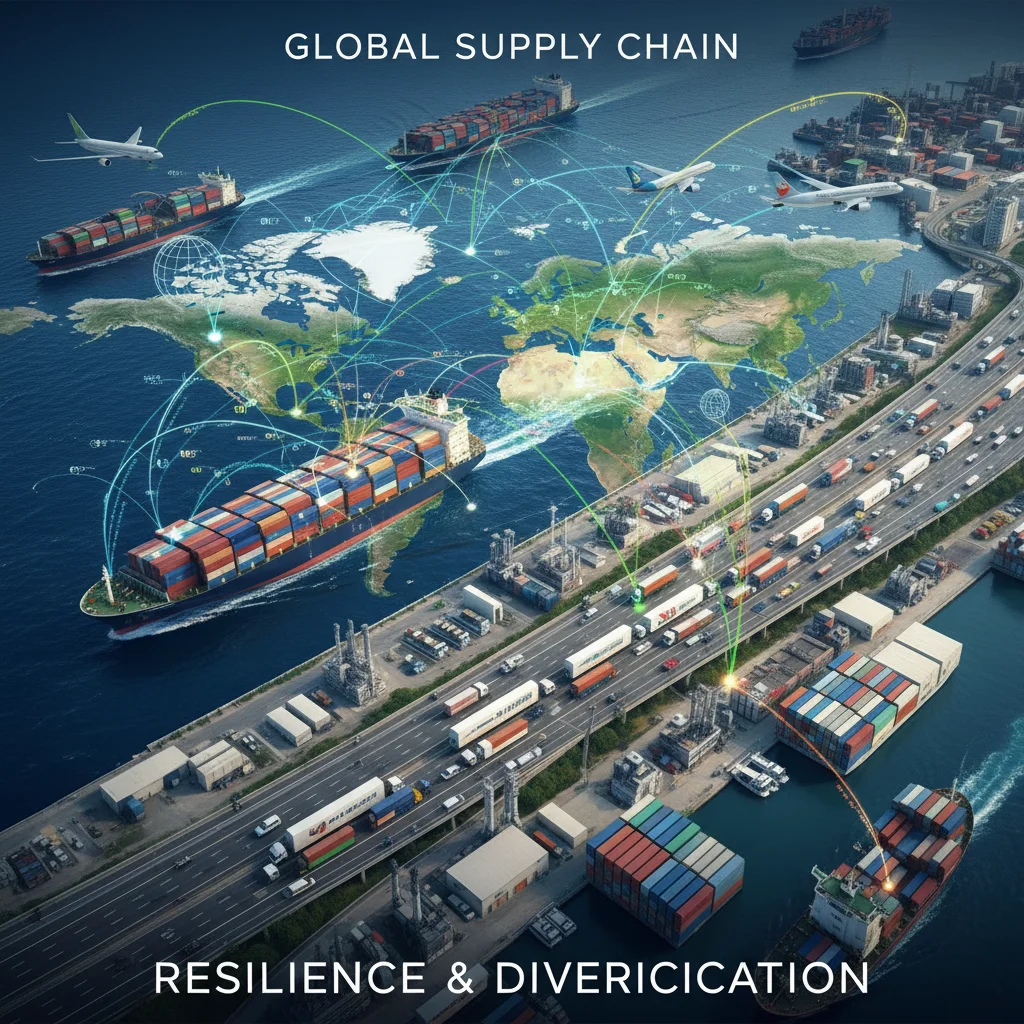
2. Resilient and Diversified Supply Chains
Recent global disruptions have highlighted the vulnerabilities of highly concentrated and lean supply chains. Businesses are now prioritizing resilience and diversification over pure cost efficiency. This means exploring new sourcing locations, nearshoring, friend-shoring, and building redundancy into their logistics networks. For U.S. manufacturers and service providers, this shift can create new U.S. Export Opportunities as international companies seek more reliable partners and suppliers, potentially closer to home or within allied nations.
Companies are investing in advanced supply chain technologies, such as IoT for real-time tracking, AI for demand forecasting, and automation for warehousing and logistics. These investments not only improve efficiency but also enhance the ability to adapt to unforeseen circumstances, making U.S. businesses more attractive partners in global supply chains. This focus on robustness directly translates into more stable and predictable U.S. Export Opportunities.
3. Sustainability and ESG Integration
Environmental, Social, and Governance (ESG) criteria are no longer just buzzwords; they are fundamental drivers of business strategy and consumer choice. Global consumers, investors, and governments are demanding greater transparency and accountability regarding environmental impact, labor practices, and ethical governance. U.S. companies that proactively integrate sustainability into their operations, products, and services will gain a competitive edge in international markets. This includes developing eco-friendly products, adopting renewable energy, ensuring ethical sourcing, and promoting diversity and inclusion.
The demand for green technologies, sustainable agricultural products, and renewable energy solutions is growing exponentially worldwide. This presents significant U.S. Export Opportunities for American innovators and manufacturers in these sectors. Furthermore, compliance with evolving international sustainability regulations can open doors to markets that prioritize environmentally conscious trade.
4. Regionalization and Nearshoring
While global trade continues, there’s a noticeable trend towards regional economic blocs and nearshoring strategies. Companies are looking to shorten supply chains, reduce lead times, and mitigate geopolitical risks by moving production closer to their primary markets. For U.S. businesses, this could mean increased trade with Canada and Mexico under the USMCA agreement, or expanding operations within North America. It also creates opportunities for U.S. companies to supply intermediate goods and services to firms nearshoring operations in the Americas, boosting U.S. Export Opportunities within the continent.
This trend doesn’t necessarily mean a decline in global trade but rather a restructuring. Instead of a single global factory, we might see more interconnected regional hubs. U.S. companies can strategically position themselves within these evolving regional networks, offering specialized components, advanced manufacturing capabilities, and high-value services that support these localized production efforts.
5. Geopolitical Realignment and Trade Agreements
The geopolitical landscape is continually shifting, with new alliances forming and existing ones being tested. Trade policies and agreements are often at the forefront of these changes. U.S. businesses must stay informed about evolving trade relationships, tariffs, and non-tariff barriers that could impact their international operations. While some agreements may create challenges, others can open up preferential access to new markets, enhancing U.S. Export Opportunities.
Understanding the implications of bilateral and multilateral trade agreements, as well as potential trade disputes, is crucial for strategic planning. Government initiatives aimed at promoting U.S. exports and securing favorable trade terms will also play a significant role in shaping the future of international business for American companies.
Projected Impact on U.S. Export Opportunities by 2026: A 7% Growth Forecast
Considering these pervasive trends, a conservative yet optimistic forecast suggests a 7% increase in U.S. Export Opportunities by 2026. This growth will be driven by several factors, each underpinned by the shifts discussed above:
A. Sector-Specific Growth Drivers
- Technology and Digital Services: The U.S. remains a global leader in technology. As digitalization accelerates worldwide, demand for U.S. software, cybersecurity solutions, cloud services, AI, and fintech will continue its upward trajectory. These sectors are inherently less constrained by physical borders and benefit immensely from Globalization 2.0’s digital emphasis, fueling U.S. Export Opportunities.
- Advanced Manufacturing: With a renewed focus on resilient supply chains and high-value production, U.S. advanced manufacturing, including aerospace, medical devices, and specialized machinery, will see increased demand. Countries seeking reliable, high-quality inputs and sophisticated equipment will turn to U.S. suppliers.
- Green Technologies and Renewable Energy: The global push for sustainability creates a massive market for U.S. innovations in renewable energy, energy efficiency, environmental consulting, and sustainable agricultural practices. This sector is poised for substantial growth in U.S. Export Opportunities.
- Healthcare and Pharmaceuticals: The U.S. is a powerhouse in medical research and pharmaceutical development. Global demand for innovative healthcare solutions, especially in an aging world and one prone to pandemics, ensures strong export potential for U.S. companies in this field.
- Agricultural Products: While traditional, U.S. agricultural exports will benefit from improved logistics, trade agreements, and growing global demand for food, particularly as populations grow and dietary preferences evolve.
B. Enhanced Market Access and Competitiveness
The strategic diversification of supply chains means that international buyers are actively seeking new, reliable partners. U.S. businesses, known for their innovation, quality, and adherence to high standards, are well-positioned to fill this demand. Furthermore, ongoing efforts by the U.S. government to secure favorable trade agreements and remove barriers will continue to open up new markets and streamline existing trade relationships. This creates a more fertile ground for U.S. Export Opportunities across various industries.
The emphasis on intellectual property protection and rule of law in many U.S. trade relationships also provides an attractive environment for international partners, fostering trust and long-term collaborations. This institutional strength complements the product and service quality, making U.S. exports highly competitive.
C. The Role of Small and Medium-sized Enterprises (SMEs)
SMEs are often the engines of innovation and job creation, and Globalization 2.0 offers unprecedented access to international markets for these businesses. Digital platforms reduce the need for extensive overseas infrastructure, making it easier for smaller firms to engage in cross-border trade. Government programs and private sector initiatives aimed at supporting SME exports will be crucial in realizing the projected 7% growth in U.S. Export Opportunities. These businesses can be agile, quickly adapting to niche market demands and leveraging specialized skills.
For instance, an artisan food producer from a rural U.S. state can now reach consumers in Europe or Asia through online marketplaces, something that would have been cost-prohibitive just a decade ago. Similarly, a small software firm can license its solutions to companies worldwide without a physical presence in each country.
Strategies for U.S. Businesses to Capitalize on Export Growth
To effectively harness these emerging U.S. Export Opportunities, businesses must adopt proactive and adaptive strategies:
- Embrace Digital Exporting: Invest in robust e-commerce platforms, digital marketing, and localized online content. Utilize B2B marketplaces and explore opportunities for digital service exports.
- Diversify Markets and Supply Chains: Reduce over-reliance on single markets or suppliers. Explore new emerging markets and consider nearshoring or friend-shoring strategies for greater resilience.
- Prioritize Sustainability: Integrate ESG principles into business operations and product development. Highlight sustainable practices to appeal to environmentally conscious global consumers and comply with international regulations.
- Invest in Talent and Technology: Develop a workforce with global competencies, including cross-cultural communication and digital literacy. Adopt advanced technologies like AI, IoT, and blockchain to enhance efficiency and competitiveness.
- Leverage Government Resources: Utilize services offered by the U.S. Department of Commerce, Export-Import Bank (EXIM), and Small Business Administration (SBA) for market intelligence, financing, and export assistance.
- Build Strategic Partnerships: Collaborate with international distributors, agents, or local businesses to navigate foreign markets, share risks, and leverage local expertise.

Challenges and Mitigation in Globalization 2.0
While the outlook for U.S. Export Opportunities is positive, challenges persist. Geopolitical tensions, fluctuating exchange rates, and persistent inflation can create headwinds. Furthermore, increased competition from emerging economies and evolving regulatory landscapes in foreign markets require constant vigilance.
Mitigation strategies include hedging against currency risks, closely monitoring geopolitical developments, and building strong relationships with local partners who can offer insights into market-specific regulations and consumer preferences. Flexibility in business models and a commitment to continuous innovation will be key differentiators for U.S. companies navigating this dynamic environment.
Conclusion: Seizing the Moment for U.S. Export Growth
Globalization 2.0 is reshaping the contours of international business, presenting both formidable challenges and unparalleled U.S. Export Opportunities. The shift towards digitalization, resilient supply chains, and sustainability is not merely a passing trend but a fundamental reorientation of global trade. For U.S. businesses, particularly those prepared to adapt and innovate, the forecast of a 7% increase in export opportunities by 2026 is a strong indicator of the potential rewards.
By understanding these evolving international business trends, strategically investing in technology and sustainable practices, and proactively engaging with global markets, U.S. companies can not only navigate the complexities of Globalization 2.0 but thrive within it. The future of U.S. exports is bright for those who are ready to embrace this new era of global interconnectedness and seize the moment for growth.