Supply Chain Resilience 2026: Mitigate Disruptions by 15% for US Businesses
Anúncios
Building Unbreakable Supply Chains: Achieving 15% Disruption Mitigation by 2026 for US Businesses
Anúncios
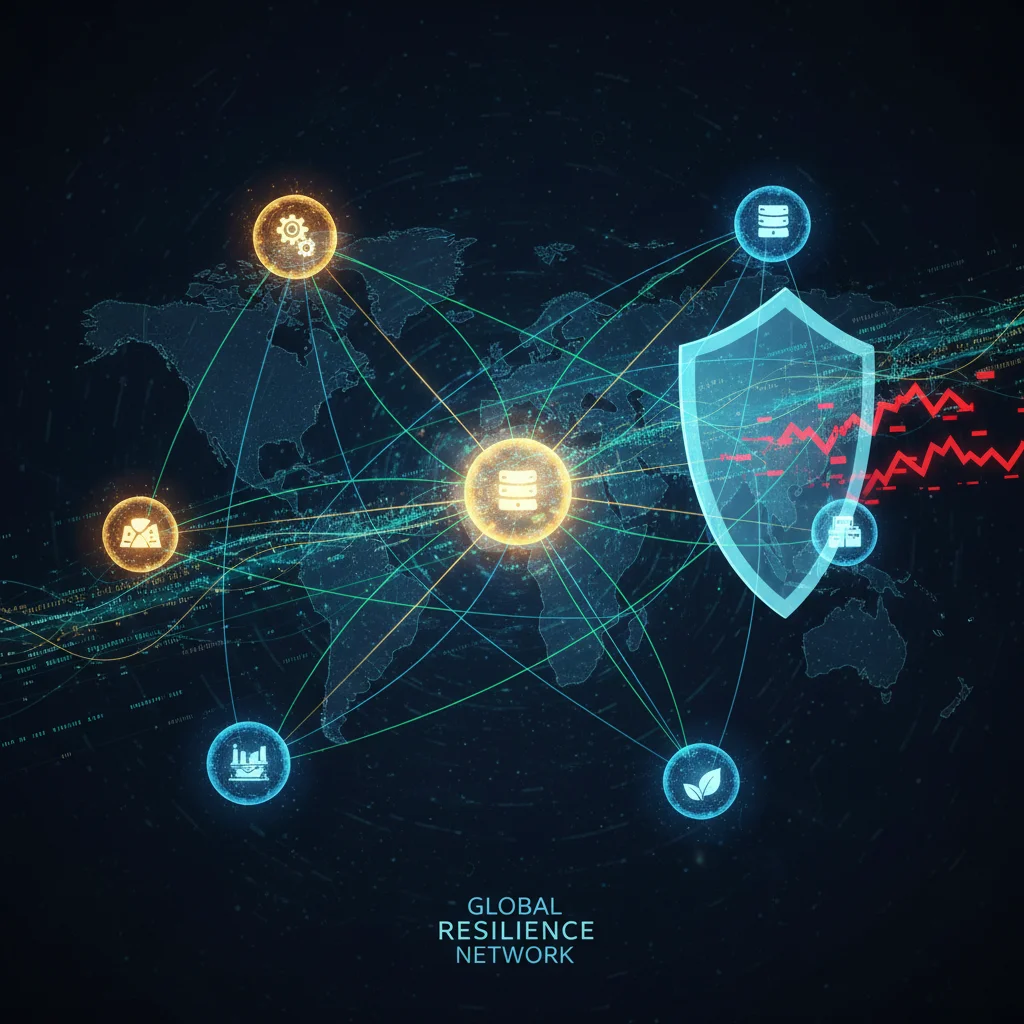
The global economic landscape is in constant flux, marked by geopolitical shifts, technological advancements, and unforeseen environmental events. For US businesses, the imperative to cultivate robust supply chain resilience has never been more critical. As we look towards 2026, the goal is not merely to react to disruptions but to proactively build systems capable of mitigating their impact by a significant 15%. This ambitious target requires a multi-faceted approach, integrating strategic planning, technological adoption, and a fundamental shift in organizational culture. The past few years have served as a stark reminder of the vulnerabilities inherent in highly optimized, yet fragile, global supply networks. From manufacturing delays to shipping bottlenecks and raw material shortages, the ripple effects have been felt across every industry, leading to lost revenue, diminished customer trust, and operational inefficiencies. This article delves deep into actionable strategies that US businesses can implement to fortify their supply chains, ensuring they are not just robust, but truly resilient against the challenges of tomorrow.
Anúncios
Achieving a 15% reduction in disruption impact by 2026 is a measurable and impactful objective. It means fewer stockouts, more stable production schedules, predictable delivery times, and ultimately, enhanced profitability and market competitiveness. This isn’t just about weathering storms; it’s about thriving amidst uncertainty. The journey towards enhanced supply chain resilience begins with a thorough understanding of current vulnerabilities and a commitment to continuous improvement. It involves embracing new technologies, fostering stronger supplier relationships, and developing agile operational frameworks. The strategies outlined here are designed to provide a comprehensive roadmap for US businesses, irrespective of their size or industry, to navigate the complexities of modern global commerce with confidence and strategic foresight.
Understanding the Evolving Landscape of Supply Chain Disruptions
Before implementing solutions, it’s crucial to understand the nature of the threats. Supply chain disruptions are no longer isolated incidents but a complex interplay of various factors. Geopolitical instability, such as trade wars and regional conflicts, can suddenly restrict access to vital markets or resources. Natural disasters, intensified by climate change, frequently halt production and transportation infrastructure. Cyberattacks pose an ever-growing threat, capable of paralyzing digital systems that underpin modern logistics. Economic downturns, inflationary pressures, and labor shortages further complicate the picture, creating a volatile environment where traditional risk management approaches often fall short. The interconnectedness of global economies means that a disruption in one region can quickly cascade across continents, affecting multiple tiers of a supply chain. Therefore, a holistic approach to understanding and anticipating these diverse threats is the foundational step towards building genuine supply chain resilience. Businesses must move beyond simply identifying risks to actively modeling their potential impact and developing proactive mitigation strategies.
The acceleration of digital transformation also introduces new vulnerabilities even as it offers solutions. While technologies like AI and blockchain can enhance visibility and efficiency, they also present new attack surfaces for malicious actors. The reliance on a limited number of specialized suppliers, often driven by cost-efficiency goals, creates single points of failure that can be catastrophically exposed during a crisis. Furthermore, regulatory changes, shifting consumer demands for sustainability and ethical sourcing, and the increasing complexity of international trade agreements all add layers of intricacy to supply chain management. US businesses must develop robust intelligence gathering capabilities to monitor these global trends and integrate this information into their strategic planning. This proactive intelligence, coupled with a flexible and adaptable operational framework, is essential for maintaining competitive advantage and ensuring long-term viability in a turbulent world. The goal of improving supply chain resilience is not to eliminate all risks, which is an impossible task, but to build the capacity to absorb shocks and recover quickly, minimizing the overall damage and maintaining operational continuity.
Pillar 1: Diversification and Regionalization of Sourcing
One of the most effective strategies for enhancing supply chain resilience is strategic diversification and regionalization. Over-reliance on a single supplier or a single geographic region, while potentially cost-effective in stable times, becomes a significant liability during disruptions. The COVID-19 pandemic vividly demonstrated the risks associated with concentrated manufacturing hubs. To mitigate this, US businesses should actively pursue a multi-sourcing strategy, identifying and qualifying alternative suppliers across different geographies. This doesn’t necessarily mean abandoning existing relationships but rather building a network of backup options that can be activated when primary sources are compromised. Diversification extends beyond direct suppliers to include transportation routes and logistics partners, ensuring that if one route is blocked, alternatives are readily available.
Regionalization, or ‘nearshoring’ and ‘friend-shoring,’ is another powerful tool. This involves shifting production or sourcing closer to home or to politically stable, allied nations. While it might entail slightly higher initial costs compared to purely offshore options, the benefits in terms of reduced lead times, lower transportation risks, greater control over quality, and improved responsiveness to market changes often outweigh these expenses. Regional hubs can also facilitate faster innovation and better collaboration between suppliers and manufacturers. For US businesses aiming for a 15% reduction in disruption impact by 2026, investing in a balanced portfolio of global and regional suppliers is paramount. This strategy creates redundancy and flexibility, allowing businesses to pivot quickly when a portion of their supply chain is compromised. It’s about building a web of interconnected options rather than a fragile linear chain, thereby fortifying overall supply chain resilience against a multitude of potential shocks. Furthermore, establishing clear frameworks for supplier risk assessment and performance monitoring across this diversified network is critical to ensure that quality and reliability are maintained regardless of the source location.
Pillar 2: Advanced Technology Adoption for Visibility and Prediction
Technology is a cornerstone of modern supply chain resilience. The ability to see, understand, and predict potential disruptions in real-time is invaluable. US businesses must invest in advanced technologies that provide end-to-end visibility across their entire supply network. This includes leveraging Internet of Things (IoT) sensors for tracking goods in transit and monitoring environmental conditions, ensuring product integrity and timely delivery. Artificial Intelligence (AI) and Machine Learning (ML) algorithms can analyze vast datasets to identify patterns, forecast demand fluctuations, predict potential bottlenecks, and even anticipate geopolitical or environmental events that could impact the supply chain. Predictive analytics moves businesses from reactive crisis management to proactive risk mitigation, allowing for adjustments before problems escalate.
Blockchain technology offers unprecedented transparency and traceability, creating an immutable record of transactions and product movements. This can significantly enhance trust among supply chain partners, simplify compliance, and quickly pinpoint the source of issues like contamination or counterfeiting. Cloud-based supply chain management (SCM) platforms facilitate seamless data sharing and collaboration among all stakeholders, from raw material suppliers to final distributors. Digital twins, virtual replicas of physical supply chains, allow businesses to simulate various disruption scenarios and test mitigation strategies without impacting real-world operations. By adopting these technologies, US businesses can gain a comprehensive, real-time understanding of their supply chain’s health, identify vulnerabilities, and execute informed decisions rapidly. This technological leap is crucial for achieving the 15% disruption mitigation target by 2026, transforming complex, opaque networks into intelligent, adaptive systems capable of self-correction and swift recovery. The integration of these tools creates a powerful ecosystem that not only enhances supply chain resilience but also drives operational efficiency and innovation across the board.

Pillar 3: Robust Risk Management and Scenario Planning
Effective supply chain resilience is built on a foundation of comprehensive risk management and proactive scenario planning. It’s no longer sufficient to merely identify potential risks; businesses must quantify their potential impact, assess their likelihood, and develop detailed contingency plans for each. This involves creating a dedicated risk management framework that is regularly updated and integrated into daily operations. US businesses should conduct regular risk assessments, mapping out critical nodes in their supply chain, identifying single points of failure, and evaluating the vulnerability of key suppliers and logistical routes. This process should involve cross-functional teams, drawing insights from procurement, logistics, finance, IT, and legal departments to ensure a holistic view of potential threats.
Scenario planning takes risk management a step further by simulating various disruption events and testing the effectiveness of proposed mitigation strategies. What if a key port is shut down for weeks? What if a major supplier goes bankrupt? What if a sudden surge in demand overwhelms production capacity? By running through these ‘what if’ scenarios, businesses can identify gaps in their plans, refine their responses, and train their teams to react effectively under pressure. This includes developing clear communication protocols for internal teams, suppliers, and customers during a crisis. Building buffer inventory for critical components, establishing emergency transportation contracts, and having pre-approved alternative production sites are all outcomes of robust scenario planning. The goal is to minimize the time it takes to restore normal operations and reduce the financial and reputational damage caused by disruptions. For US businesses targeting a 15% improvement in supply chain resilience by 2026, consistent and rigorous scenario planning is not an option but a necessity. It transforms theoretical risk awareness into practical preparedness, enabling rapid and effective responses when the inevitable disruptions occur, thereby safeguarding continuity and competitive edge.
Pillar 4: Cultivating Strong Supplier Relationships and Collaboration
Beyond contractual agreements, the strength of a supply chain often lies in the quality of its relationships. Cultivating strong, collaborative relationships with key suppliers is fundamental to enhancing supply chain resilience. This means moving beyond transactional interactions to foster genuine partnerships based on trust, transparency, and mutual benefit. US businesses should invest in building long-term relationships with strategic suppliers, sharing forecasts, exchanging information about potential risks, and collaborating on product development and process improvements. When a crisis hits, these strong relationships can be the difference between a minor setback and a catastrophic failure, as trusted partners are more likely to prioritize your needs and work creatively to find solutions.
Collaboration also extends to sharing best practices, co-investing in new technologies, and jointly developing risk mitigation strategies. This could involve joint inventory management programs, shared data platforms, or even co-locating facilities. Regular communication, performance reviews, and joint training exercises can further strengthen these bonds. Establishing clear lines of communication and emergency protocols with all tiers of suppliers ensures that information flows freely and rapidly during a disruption. Furthermore, assessing supplier financial health and their own resilience strategies should be an ongoing process. For US businesses aiming to achieve a 15% reduction in disruption impact by 2026, recognizing suppliers as extensions of their own operations is crucial. This collaborative ecosystem approach not only bolsters supply chain resilience but also drives innovation, improves efficiency, and creates a more robust and adaptable network capable of withstanding diverse challenges. A truly resilient supply chain is one where every link is a strong, trusted partner, working towards a common goal of uninterrupted flow and mutual success.

Pillar 5: Workforce Training and Organizational Agility
Technology and strategy are only as effective as the people implementing them. A well-trained and agile workforce is a critical component of supply chain resilience. US businesses must invest in continuous training programs for their employees, equipping them with the skills to operate new technologies, analyze complex data, and make rapid, informed decisions under pressure. This includes training in risk assessment, crisis management protocols, and cross-functional collaboration. Empowering employees at various levels to identify potential issues and propose solutions fosters a culture of vigilance and proactivity throughout the organization. Furthermore, developing a deep understanding of the entire supply chain among employees helps them to see beyond their immediate roles and understand the broader impact of their actions.
Organizational agility refers to a company’s ability to adapt quickly to changing circumstances. This involves creating flexible operational structures, empowering decentralized decision-making where appropriate, and fostering a culture that embraces change and continuous learning. Rigid hierarchies and bureaucratic processes can hinder rapid response during a crisis. By contrast, agile organizations can pivot strategies, reallocate resources, and adjust production plans with greater speed and efficiency. This might involve cross-training employees for multiple roles, establishing rapid response teams, or implementing flexible work arrangements that allow for continuity during unforeseen events. For US businesses striving to mitigate disruptions by 15% by 2026, fostering an agile, knowledgeable workforce is indispensable. It ensures that when a disruption occurs, the organization can respond not just with technology and plans, but with human ingenuity and adaptability, turning potential setbacks into opportunities for learning and growth. This human element is often the ultimate differentiator in achieving superior supply chain resilience, transforming challenges into manageable situations through collective expertise and swift action.
Measuring Progress and Continuous Improvement
Achieving a 15% reduction in disruption impact by 2026 requires continuous monitoring and evaluation. US businesses must establish clear key performance indicators (KPIs) to measure their supply chain resilience. These KPIs could include metrics such as lead time variability, supplier reliability rates, inventory turns, recovery time from disruptions, cost of disruptions, and the number of critical incidents averted. Regular audits and performance reviews of both internal processes and external partners are essential to identify areas for improvement. Feedback loops from post-disruption analyses should inform ongoing adjustments to strategies and plans. It is not enough to implement strategies; businesses must also verify their effectiveness and refine them over time.
Benchmarking against industry best practices and learning from the experiences of other companies, both successes and failures, can provide valuable insights. Investing in data analytics capabilities to track these KPIs and generate actionable insights is crucial. This iterative process of planning, implementation, measurement, and adjustment ensures that the journey towards enhanced supply chain resilience is dynamic and responsive to evolving threats. The 15% target should not be seen as a final destination but as a significant milestone in an ongoing commitment to operational excellence. By embedding a culture of continuous improvement and data-driven decision-making, US businesses can not only meet but potentially exceed their disruption mitigation goals, building supply chains that are not only resilient but also become a source of sustained competitive advantage in the years to come. This commitment to ongoing refinement ensures that the initial investment in strengthening supply chain resilience yields lasting benefits and adapts to future challenges.
Conclusion: A Resilient Future for US Businesses
The pursuit of a 15% reduction in supply chain disruption impact by 2026 is an ambitious yet achievable goal for US businesses. It demands a holistic, strategic approach that integrates diversification, advanced technology, robust risk management, strong supplier collaboration, and a highly skilled, agile workforce. The era of lean, fragile supply chains is giving way to a new paradigm of resilient, adaptive networks capable of navigating the unpredictable complexities of the global economy. By proactively investing in these five pillars of supply chain resilience, US businesses can transform vulnerabilities into strengths, ensuring operational continuity, protecting profitability, and enhancing their competitive standing on the world stage.
The benefits extend beyond mere survival; a truly resilient supply chain can become a powerful differentiator, attracting customers who value reliability and stability. It fosters innovation, encourages sustainable practices, and builds a more secure foundation for future growth. The journey to 2026 is an opportunity for US businesses to redefine their operational DNA, embedding resilience not just as a strategy, but as a core organizational value. The time for action is now, to build the unbreakable supply chains that will power American commerce through the next decade and beyond, securing a prosperous and stable future for all stakeholders. Embracing these changes is not merely about avoiding losses; it is about unlocking new opportunities and cementing leadership in a world that increasingly values reliability and adaptability in the face of constant change, making the investment in supply chain resilience a strategic imperative for long-term success.