Global Migration Trends: U.S. Demographics 2026
Anúncios
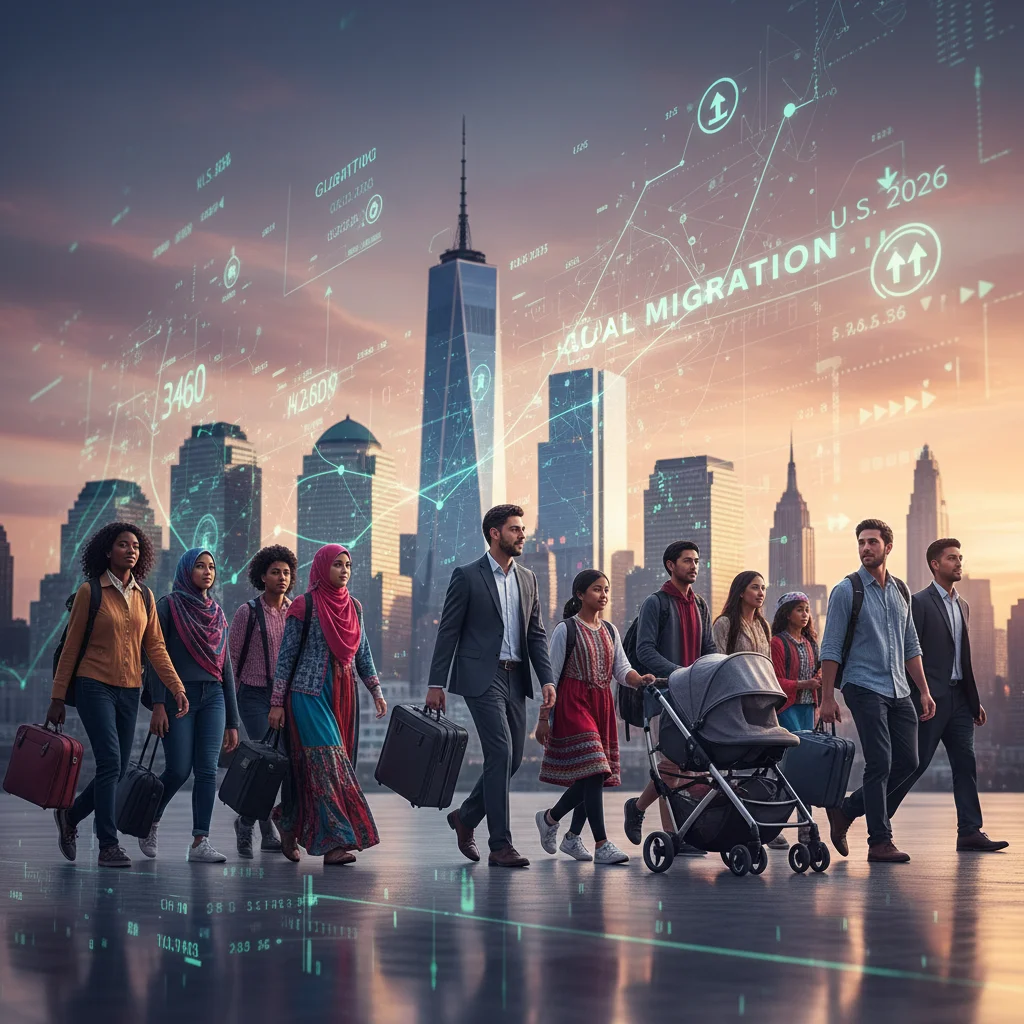
The year 2026 is not far off, and as the world continues to evolve at an unprecedented pace, so too do the demographic landscapes of nations. Among the most significant forces shaping these landscapes is global migration. For the United States, a nation historically built on immigration, understanding these shifts is not merely an academic exercise but a critical imperative for policy-making, economic planning, and social cohesion. This comprehensive article delves into the intricate patterns of global migration and their anticipated impact on US Demographics 2026, examining the multifaceted implications for the economy, society, culture, and political sphere.
Anúncios
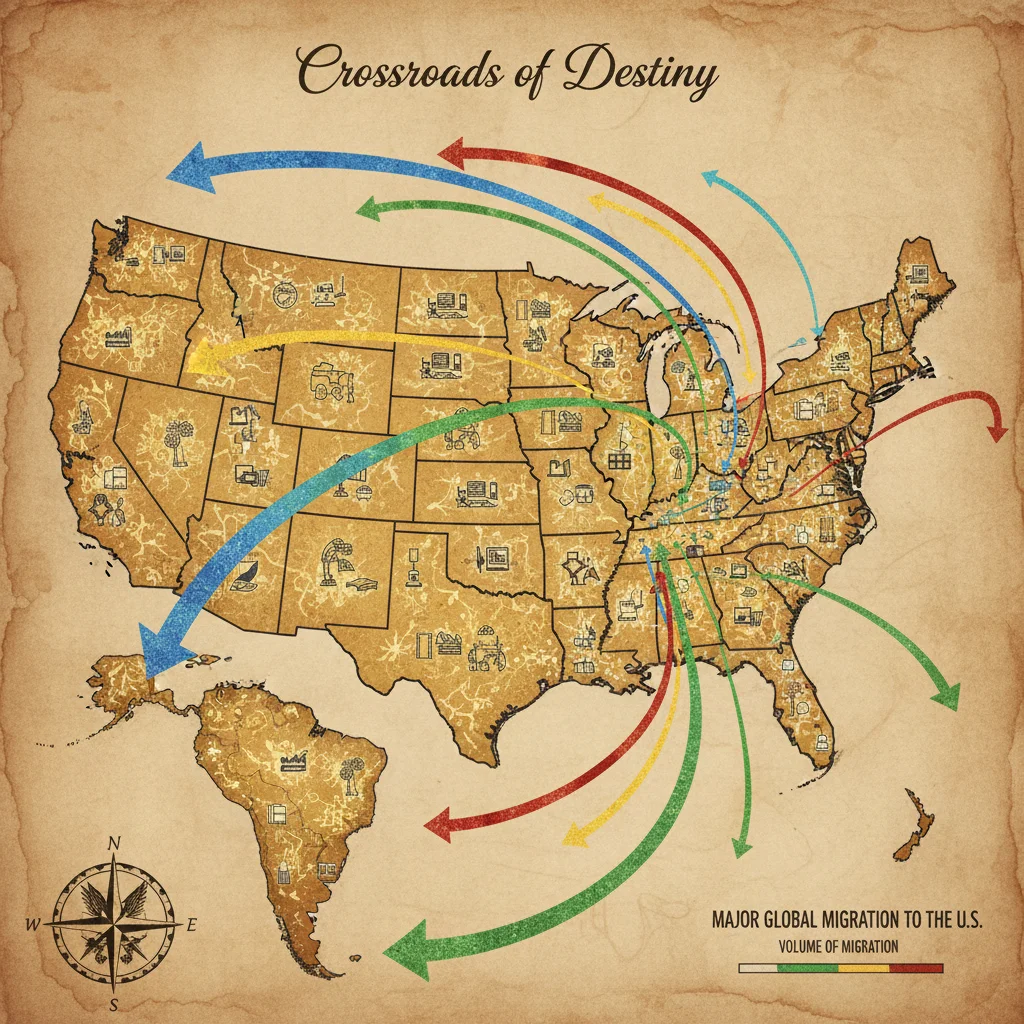
The United States has always been a beacon for migrants seeking new opportunities, refuge, or a better quality of life. This continuous influx has profoundly influenced the nation’s character, contributing to its diverse cultural tapestry and dynamic economic growth. However, the nature and scale of global migration are constantly changing, driven by a complex interplay of factors including geopolitical conflicts, economic disparities, climate change, and technological advancements. These evolving dynamics mean that the impact on US Demographics 2026 will likely differ from past trends, presenting both challenges and opportunities.
Anúncios
Understanding the Drivers of Global Migration Towards the U.S.
To accurately predict the impact on US Demographics 2026, it’s essential to first understand the primary drivers propelling global migration. These drivers can be broadly categorized into push factors (conditions that compel people to leave their home countries) and pull factors (attractions that draw them to a new destination, like the U.S.).
Push Factors: Why People Leave
- Economic Hardship: Poverty, lack of employment opportunities, and income inequality remain significant motivators for migration. Many individuals and families seek to escape dire economic conditions in their home countries in pursuit of better livelihoods and financial stability in the U.S.
- Political Instability and Conflict: Wars, civil unrest, persecution, and authoritarian regimes force millions to flee their homes annually. The U.S., with its history of offering asylum and refugee status, often becomes a destination for those seeking safety and freedom.
- Environmental Disasters and Climate Change: Increasingly, climate-induced events such as droughts, floods, extreme weather, and rising sea levels are displacing communities. These ‘climate migrants’ are a growing demographic, and their numbers are expected to rise significantly by 2026, putting pressure on developed nations like the U.S. to offer sanctuary.
- Lack of Social Services and Opportunities: Inadequate healthcare, education, and social infrastructure in their home countries can also drive individuals to seek better prospects elsewhere.
Pull Factors: Why People Choose the U.S.
- Economic Opportunities: The U.S. economy, despite its fluctuations, is often perceived as a land of opportunity, offering higher wages, diverse job markets, and entrepreneurial possibilities. This remains a powerful draw for skilled and unskilled labor alike.
- Family Reunification: Existing immigrant communities in the U.S. often serve as a strong pull factor, as family members seek to reunite with relatives already established in the country. This network provides crucial support for new arrivals.
- Educational Prospects: The U.S. boasts some of the world’s leading educational institutions, attracting international students who often seek to remain in the country after graduation, contributing to the highly skilled workforce.
- Rule of Law and Democratic Freedoms: The promise of democratic freedoms, human rights protections, and a stable legal system continues to attract individuals from countries with oppressive regimes.
The interplay of these push and pull factors creates complex migration streams that directly influence the composition and growth of US Demographics 2026. Understanding these forces is the first step towards anticipating and preparing for the demographic shifts ahead.
Projected Shifts in U.S. Demographics by 2026
Forecasting demographic changes is inherently challenging due to the dynamic nature of migration, but current trends and expert analyses provide valuable insights into what US Demographics 2026 might look like. Several key areas are expected to see significant shifts.
Population Growth and Composition
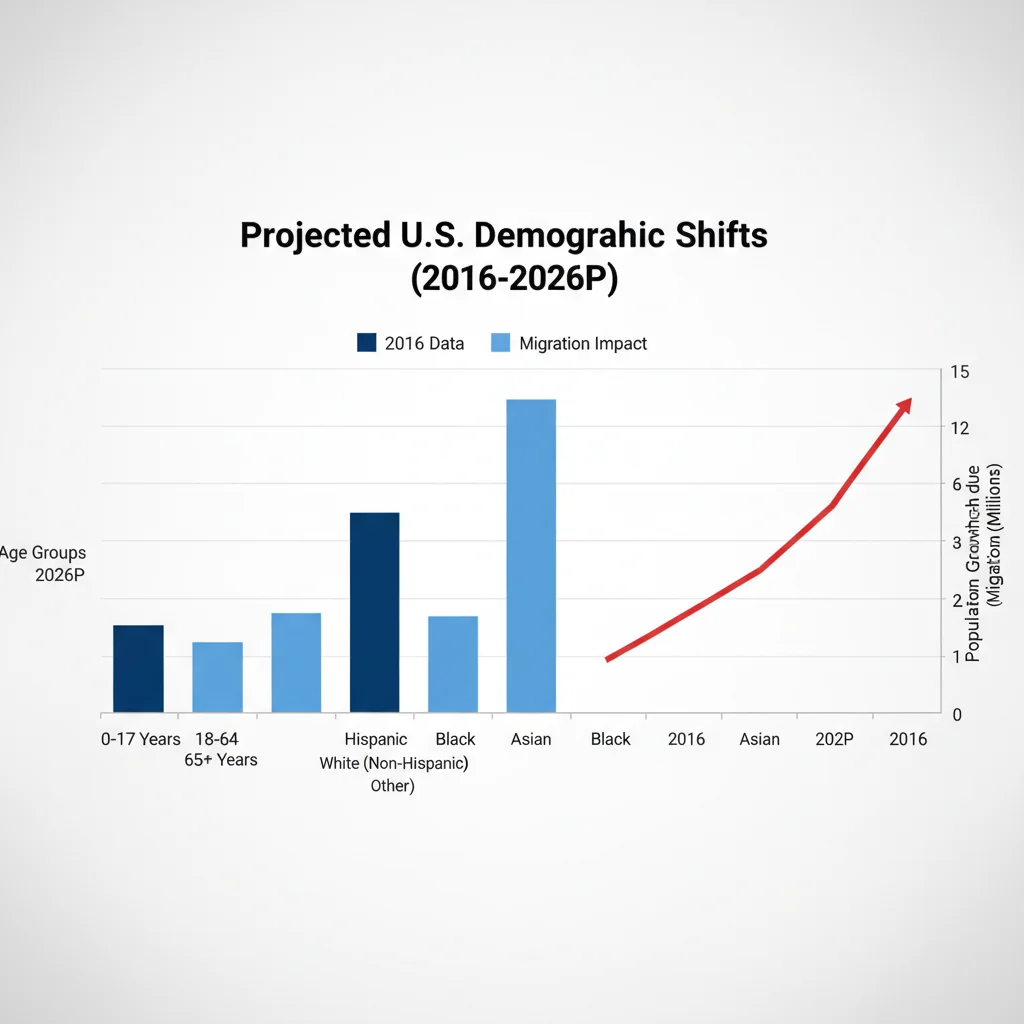
Migration is projected to be the primary driver of U.S. population growth in the coming years, potentially surpassing natural increase (births minus deaths). This means that without significant immigration, the U.S. population would likely stagnate or even decline. By 2026, the overall population is expected to continue its upward trajectory, albeit at a potentially slower rate than in previous decades, largely sustained by immigrant arrivals.
Ethnic and Racial Diversity
The U.S. is becoming increasingly diverse, and global migration will accelerate this trend. Hispanic and Asian populations are projected to be the fastest-growing demographic groups. By 2026, these groups will constitute a larger share of the total population, further enriching the nation’s cultural fabric. The proportion of non-Hispanic white individuals is expected to continue its gradual decline, making the U.S. a truly multiracial and multiethnic society. This shift has profound implications for politics, social services, and market dynamics.
Age Structure and Workforce Implications
One of the most critical impacts of migration on US Demographics 2026 will be on the nation’s age structure. Many developed countries face an aging population and declining birth rates, leading to concerns about workforce shortages and the sustainability of social security systems. Immigrants, who tend to be younger and have higher fertility rates than the native-born population, can help offset these trends. By 2026, immigrants are expected to continue playing a vital role in bolstering the working-age population, contributing to labor force growth, and supporting an aging native-born demographic. This influx of younger workers can help maintain the dependency ratio at a more manageable level, ensuring the continued productivity of the economy.
Economic Impact of Migration on the U.S. by 2026
The economic contributions of immigrants are well-documented and are expected to remain a cornerstone of the U.S. economy through 2026 and beyond. Migration affects various economic sectors, from labor markets to entrepreneurship and consumption.
Labor Market Contributions
Immigrants fill crucial labor gaps, particularly in sectors where native-born workers are scarce or unwilling to work. This includes agriculture, construction, hospitality, and increasingly, specialized fields like healthcare and technology. By 2026, immigrants will continue to be indispensable to maintaining the functionality of these sectors. They often take on jobs that are essential for the economy but may be less appealing to native-born workers, thereby complementing rather than competing with the existing workforce. This complementary effect helps to keep production costs down and contributes to overall economic efficiency.
Entrepreneurship and Innovation
Immigrants have historically demonstrated high rates of entrepreneurship, starting businesses at a higher rate than the native-born population. These businesses create jobs, foster innovation, and contribute to economic dynamism. By 2026, immigrant-owned businesses are anticipated to continue to be a significant source of job creation and economic growth, particularly in urban centers. This entrepreneurial spirit is vital for a competitive and innovative economy, introducing new ideas, products, and services to the market.
Consumption and Tax Revenue
As consumers, immigrants contribute to demand for goods and services, stimulating economic activity. As workers and business owners, they pay taxes—income taxes, property taxes, and sales taxes—which fund public services and infrastructure. The continued influx of migrants by 2026 will therefore contribute significantly to the national tax base, helping to support government programs and reduce fiscal deficits. Their spending patterns help sustain local economies, from small businesses to large corporations.
Challenges and Integration Costs
While the economic benefits are substantial, migration also presents challenges. These can include initial integration costs for public services, potential downward pressure on wages in certain low-skilled sectors (though this is often debated and geographically specific), and infrastructure strain in rapidly growing areas. Addressing these challenges through effective policy and investment will be crucial for maximizing the economic benefits of migration by 2026.
Social and Cultural Transformations by 2026
Beyond economics, global migration profoundly reshapes the social and cultural fabric of the United States. The ongoing diversification of US Demographics 2026 will lead to a more multicultural society with both enriching and challenging aspects.
Cultural Enrichment and Diversity
Immigration introduces new languages, cuisines, traditions, arts, and perspectives, enriching American culture. Cities and communities across the U.S. are becoming vibrant melting pots, offering a broader range of cultural experiences. By 2026, this cultural exchange will be even more pronounced, fostering greater understanding and appreciation of global diversity within American society. This cultural fusion can lead to new forms of artistic expression, innovative culinary trends, and a more cosmopolitan national identity.
Social Cohesion and Integration
The integration of diverse immigrant populations into existing communities is a complex process. Successful integration requires efforts from both immigrants and host communities, including language acquisition, cultural orientation, and addressing issues of discrimination and xenophobia. By 2026, communities that proactively foster inclusive environments are likely to thrive, while those that struggle with integration may face social tensions. Policies supporting bilingual education, community outreach programs, and anti-discrimination measures will be vital in ensuring harmonious social evolution.
Changing Social Norms and Values
As immigrant populations grow and become more established, they inevitably influence social norms and values. This can manifest in shifts in religious practices, family structures, gender roles, and political perspectives. While these changes can be a source of dynamism and adaptation, they can also lead to cultural clashes or debates over national identity. Understanding and managing these evolving social dynamics will be key for the U.S. by 2026.
Political and Policy Implications for 2026
The impact of global migration on US Demographics 2026 has significant political ramifications, influencing electoral outcomes, policy debates, and international relations.
Electoral Politics and Voting Patterns
Changes in the ethnic and racial composition of the electorate will inevitably affect voting patterns and political representation. As Hispanic and Asian populations grow, their political influence will increase, potentially shifting electoral outcomes in swing states and national elections. Political parties will need to adapt their strategies and platforms to appeal to these increasingly diverse voter bases. Understanding the evolving political preferences of different immigrant groups will be crucial for candidates and parties aiming for success in 2026.
Immigration Policy Debates
Immigration policy remains one of the most contentious issues in U.S. politics. Debates around border security, pathways to citizenship, family reunification, and skilled worker visas are likely to intensify as migration pressures continue. By 2026, the need for comprehensive immigration reform that balances economic needs, humanitarian concerns, and national security will be more pressing than ever. The demographic realities will make a purely restrictive approach increasingly difficult to sustain, pushing for more nuanced and adaptable policies.
Foreign Policy and International Relations
Migration also shapes U.S. foreign policy. Relations with countries that are major sources of migrants, as well as those that serve as transit points, become more complex and intertwined. The U.S. may engage in more diplomatic efforts to address the root causes of migration, such as poverty, violence, and instability in other regions. By 2026, the U.S.’s role in global refugee crises and its approach to international humanitarian aid will continue to be influenced by domestic demographic needs and public opinion shaped by immigration.
Preparing for the Future: Recommendations and Strategies
As US Demographics 2026 continue to be shaped by global migration, proactive strategies are needed to maximize the benefits and mitigate the challenges. This requires a multi-faceted approach involving government, civil society, and individual communities.
Invest in Integration Programs
Effective integration programs are crucial for the successful incorporation of new arrivals. These programs should include language training, job placement assistance, cultural orientation, and access to legal aid. Investing in these areas ensures that immigrants can quickly become productive members of society, contributing economically and socially. By 2026, robust integration services will be more vital than ever to prevent social fragmentation and foster a sense of belonging among diverse groups.
Adapt Educational Systems
Educational institutions will need to adapt to serve a more diverse student body. This means investing in bilingual education, culturally sensitive curricula, and support services for immigrant students and their families. Preparing the next generation, regardless of their background, is essential for the nation’s long-term prosperity. By 2026, schools that embrace diversity and provide equitable opportunities will be better positioned to educate future leaders and innovators.
Develop Forward-Looking Economic Policies
Policymakers should recognize and leverage the economic contributions of immigrants. This includes streamlining visa processes for skilled workers, supporting immigrant entrepreneurship, and addressing credential recognition challenges. Economic policies should also consider regional demographic shifts, ensuring that areas experiencing population growth due to migration have adequate infrastructure and resources. By 2026, policies that strategically integrate immigrants into the labor force will be crucial for maintaining economic competitiveness.
Foster Community Dialogue and Understanding
Open and respectful dialogue within communities can help bridge cultural divides and counteract xenophobia. Community leaders, local governments, and non-profits can play a vital role in organizing events, educational initiatives, and platforms for cross-cultural exchange. Promoting empathy and understanding will be essential for maintaining social cohesion in an increasingly diverse America by 2026. Grassroots efforts can be incredibly powerful in building bridges and fostering a welcoming environment.
Reform Immigration Laws
A comprehensive and humane immigration reform is long overdue. This includes securing borders, creating clear and efficient pathways for legal immigration, addressing the status of undocumented immigrants, and ensuring fair and just asylum processes. A stable and predictable legal framework will benefit both immigrants and the host society, reducing uncertainty and allowing for better planning. By 2026, a modernized immigration system will be critical for managing future migration flows effectively and ethically.
Conclusion: A Dynamic Future for U.S. Demographics 2026
The impact of global migration on US Demographics 2026 is poised to be transformative. The nation will continue its trajectory towards greater diversity, with significant shifts in population growth, ethnic composition, and age structure. These demographic changes will have profound effects on the U.S. economy, society, culture, and political landscape. While challenges related to integration, infrastructure, and social cohesion will undoubtedly arise, the opportunities presented by a vibrant, diverse, and youthful immigrant population are immense.
By proactively addressing these shifts through thoughtful policy, strategic investment, and community engagement, the United States can harness the power of global migration to strengthen its economy, enrich its culture, and reinforce its position as a global leader. The future of US Demographics 2026 is not merely a statistical projection; it is a narrative of ongoing evolution, adaptation, and the enduring promise of a nation built by people from all corners of the world. Embracing this dynamic future with an open mind and a strategic approach will be key to national success.