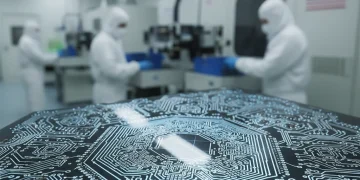
US Microchip Manufacturing: Boosting Domestic Capacity by 30% by 2027

Anúncios
US Microchip Manufacturing: Boosting Domestic Capacity by 30% by 2027
The global economy runs on microchips. From smartphones and cars to advanced defense systems and artificial intelligence, these tiny silicon brains are the bedrock of modern technology. For decades, the United States, once a pioneer in semiconductor innovation, saw a significant portion of its semiconductor production shift overseas. This offshoring, driven by cost efficiencies and globalized supply chains, created a vulnerability that became acutely clear during recent global crises, particularly the COVID-19 pandemic and subsequent supply chain disruptions. The shortages of microchips brought entire industries to a standstill, highlighting the critical need for greater domestic manufacturing capacity.
Anúncios
In response to these challenges, the United States has embarked on an ambitious and strategic endeavor to revitalize its domestic US microchip manufacturing sector. The goal is clear and impactful: to boost domestic microchip manufacturing capacity by a remarkable 30% by 2027. This isn’t just about economic competitiveness; it’s about national security, technological leadership, and securing a resilient future. This comprehensive article delves into the intricacies of this initiative, exploring the driving forces, the monumental investments, the anticipated economic and strategic benefits, and the significant hurdles that must be overcome to achieve this transformative vision.
Anúncios
The Imperative for Reshoring US Microchip Manufacturing
The urgency to reshore US microchip manufacturing is multifaceted. Economically, a robust domestic semiconductor industry translates into high-paying jobs, significant R&D investment, and a strengthened industrial base. Strategically, reducing reliance on foreign fabrication facilities, particularly those in geopolitically sensitive regions, enhances national security. Technologically, having manufacturing capabilities closer to research and design centers fosters innovation and accelerates the development of next-generation technologies. The pandemic-induced chip shortages served as a stark wake-up call, revealing the fragility of global supply chains and the profound impact of even minor disruptions on daily life and critical infrastructure.
Before the current push, the U.S. share of global semiconductor manufacturing capacity had dwindled significantly from nearly 40% in 1990 to approximately 12% in 2020. This decline was not due to a lack of innovation but rather the economic realities of global competition, where other nations offered substantial incentives and lower production costs. However, the long-term strategic costs of this decline became undeniable. A concentrated global manufacturing base, primarily in East Asia, posed significant risks, including geopolitical instability, natural disasters, and trade disputes, all of which could severely impact the global supply of essential chips.
The current initiative aims to reverse this trend decisively. By targeting a 30% increase in domestic capacity, the U.S. seeks to achieve a more balanced and secure position within the global semiconductor ecosystem. This isn’t about complete self-sufficiency, which is neither feasible nor desirable given the global nature of the industry, but rather about building sufficient domestic capacity to mitigate risks and ensure access to critical chip technologies for both commercial and defense applications.
The CHIPS and Science Act: A Catalyst for Change
At the heart of this ambitious endeavor lies the CHIPS and Science Act, signed into law in August 2022. This landmark legislation earmarks approximately $52.7 billion in funding for domestic semiconductor research, development, manufacturing, and workforce development. It represents the most significant government investment in American industrial policy in decades, specifically targeting the semiconductor industry. The act’s provisions are designed to incentivize companies to build and expand fabrication facilities (fabs) within the United States, thereby increasing semiconductor production.
The CHIPS Act includes several key components:
- Manufacturing Incentives: Over $39 billion in financial assistance, including grants, cooperative agreements, and loan guarantees, to incentivize the construction and expansion of semiconductor manufacturing facilities. These funds are crucial for offsetting the higher upfront costs associated with building advanced fabs in the U.S.
- Research and Development: Approximately $11 billion dedicated to R&D programs, including the creation of a National Semiconductor Technology Center (NSTC), advanced packaging manufacturing program, and metrology research. This investment aims to maintain the U.S. lead in semiconductor innovation and ensure that future generations of chips are developed domestically.
- Workforce Development: Significant funding and initiatives focused on developing a skilled workforce for the semiconductor industry. This includes partnerships with educational institutions, apprenticeships, and training programs to address the anticipated labor demands of new fabs.
- Tax Credits: A 25% investment tax credit for capital expenses related to semiconductor manufacturing equipment and facilities. This credit further reduces the financial burden on companies investing in U.S. production.
The CHIPS Act has already spurred considerable investment pledges from major semiconductor companies, including Intel, Samsung, and TSMC, which have announced plans for new or expanded fabs across states like Arizona, Ohio, and Texas. These investments are projected to create tens of thousands of direct jobs and hundreds of thousands of indirect jobs, injecting vitality into local economies and solidifying the U.S. position as a global leader in advanced manufacturing.
Economic Benefits and Job Creation
The revitalization of US microchip manufacturing promises a cascade of economic benefits. Firstly, the construction and operation of new fabs require substantial capital investment, leading to job creation in construction, engineering, and various support services. Once operational, these facilities will generate thousands of high-skilled, high-wage jobs for engineers, technicians, researchers, and manufacturing personnel. These are not just any jobs; they are positions at the forefront of technological innovation, demanding specialized skills and offering significant career growth opportunities.
Beyond direct employment, the ripple effect throughout the economy is substantial. The semiconductor industry has a high multiplier effect, meaning that each job in the sector supports several jobs in related industries, such as equipment suppliers, materials providers, logistics, and even local service industries. Communities hosting these new fabs are expected to experience significant economic growth, with increased tax revenues, improved infrastructure, and a more vibrant local economy. Furthermore, a stronger domestic semiconductor industry reduces vulnerability to global supply chain shocks, providing greater stability for downstream industries like automotive, consumer electronics, and defense, which rely heavily on a consistent supply of chips.

The strategic importance of this economic resurgence cannot be overstated. By bringing manufacturing capacity back to American soil, the U.S. gains greater control over the production of critical components, reducing its reliance on potentially unstable foreign sources. This enhances economic resilience and provides a competitive edge in global markets, fostering innovation and ensuring that the U.S. remains a leader in the technologies that will define the 21st century. The investment in domestic capacity is not merely a subsidy; it is a strategic investment in the nation’s future economic prosperity and technological sovereignty.
Challenges and Hurdles to Overcome
Despite the significant momentum, achieving the 30% increase in US microchip manufacturing capacity by 2027 is not without its challenges. The semiconductor industry is capital-intensive, technologically complex, and requires a highly specialized workforce. Several key hurdles need to be addressed:
Workforce Development and Talent Pipeline
Perhaps the most critical challenge is securing a sufficiently skilled workforce. Building and operating advanced fabs requires engineers with expertise in materials science, electrical engineering, chemical engineering, and process technology, as well as highly trained technicians. The current pipeline of STEM graduates and skilled tradespeople may not be adequate to meet the demands of the rapidly expanding industry. Significant investment in education, training programs, apprenticeships, and partnerships between industry and academia will be essential to cultivate the next generation of semiconductor professionals. Attracting and retaining top talent will also require competitive compensation and a supportive ecosystem for innovation.
High Costs and Regulatory Environment
Manufacturing semiconductors in the U.S. is generally more expensive than in East Asia, largely due to higher labor costs, stricter environmental regulations, and longer permitting processes. While the CHIPS Act provides substantial financial incentives, these costs remain a significant factor. Streamlining regulatory processes without compromising environmental standards, coupled with continued government support, will be crucial to ensure the long-term competitiveness of U.S. fabs. The sheer scale of investment required for each new fab, often in the tens of billions of dollars, also necessitates sustained commitment from both the public and private sectors.
Supply Chain Resilience Beyond Fabs
While building new fabs is essential, the semiconductor supply chain is vast and intricate, extending far beyond the final fabrication step. It includes raw materials, specialized chemicals, manufacturing equipment, and advanced packaging. A truly resilient domestic industry requires strengthening the entire ecosystem, not just the wafer fabrication segment. Efforts must also focus on reshoring or diversifying critical upstream and downstream components of the supply chain to prevent new bottlenecks from emerging as fab capacity increases. This means investing in research and production for everything from ultra-pure silicon to advanced lithography machines.
Global Competition and Geopolitical Landscape
The U.S. is not alone in its efforts to bolster domestic semiconductor production. Other nations and regions, including the European Union, Japan, and India, are also implementing their own incentive programs to attract semiconductor investment. This global race for chip dominance means that the U.S. must remain agile, innovative, and competitive to attract and retain cutting-edge manufacturing. Furthermore, the geopolitical landscape, particularly regarding relations with major semiconductor-producing regions, will continue to play a significant role in shaping the industry’s future. Maintaining strong international partnerships while pursuing domestic resilience will be a delicate balancing act.
The Path Forward: Sustaining Momentum and Innovation
Achieving the ambitious goal of a 30% increase in US microchip manufacturing capacity by 2027 requires sustained effort and a long-term vision. The initial momentum generated by the CHIPS Act is critical, but the journey will demand continuous adaptation and strategic investment. Key areas for focus include:
- Continuous Investment in R&D: Maintaining a leading edge in semiconductor technology requires relentless innovation. Continued public and private investment in research and development, particularly in areas like quantum computing, AI chips, and advanced materials, will be vital to ensure the U.S. remains at the forefront of technological advancement.
- Strengthening Educational Pipelines: Beyond immediate workforce needs, a sustainable semiconductor industry requires a robust and diverse talent pipeline. This involves promoting STEM education from K-12, expanding university programs, and creating clear career pathways for both technical and non-technical roles within the industry.
- Fostering Public-Private Partnerships: The scale of investment and complexity of the semiconductor industry necessitate strong collaboration between government, industry, and academia. These partnerships can facilitate knowledge transfer, accelerate technology commercialization, and ensure that policy decisions are informed by industry realities.
- Addressing Environmental Sustainability: As new fabs are built, integrating sustainable manufacturing practices and minimizing environmental impact will be increasingly important. Developing energy-efficient processes and investing in renewable energy sources for fabs can enhance the industry’s long-term viability and public acceptance.
- Global Collaboration and Standardization: While prioritizing domestic capacity, the U.S. should also continue to engage in global collaboration and promote international standards for semiconductor manufacturing. This ensures interoperability, facilitates trade, and fosters a healthy global ecosystem that benefits all participants.

Conclusion: A New Era for US Microchip Manufacturing
The drive to boost US microchip manufacturing capacity by 30% by 2027 marks a pivotal moment in American industrial history. It is a strategic response to past vulnerabilities and a proactive step towards securing future prosperity and technological leadership. The CHIPS and Science Act has laid a strong foundation, catalyzing unprecedented investment and renewed national focus on this critical sector. While the challenges are significant, including workforce development, high production costs, and complex supply chain dynamics, the commitment from both government and industry is robust.
Successfully achieving this goal will not only create thousands of high-paying jobs and stimulate economic growth but also fortify national security, enhance supply chain resilience, and ensure that the United States remains at the cutting edge of innovation. The journey ahead will require continuous collaboration, strategic investment, and a steadfast dedication to cultivating the talent and infrastructure necessary for a thriving domestic semiconductor industry. As the silicon frontier expands, the U.S. is poised to reclaim its position as a global powerhouse in microchip manufacturing, building a more secure and technologically advanced future for generations to come.